Signature flavour · Guangzhou & Hong Kong · 广州与香港 · China
Xinhui tangerine peel新会陈皮
Tangerine peel dried in the sun and aged for years: a pinch flavours soups and sweet soups.
The story
Chenpi, 陈皮 chénpí, is tangerine peel dried in the sun and then aged. 陈 means old. Peel from Xinhui, in Jiangmen, is the best known and is called Xinhui chenpi, 新会陈皮, or guang chenpi. In 2021 the craft of making it joined China's national intangible-heritage list. The steps are picking, opening the peel, turning it, drying it in the sun and ageing it for years.
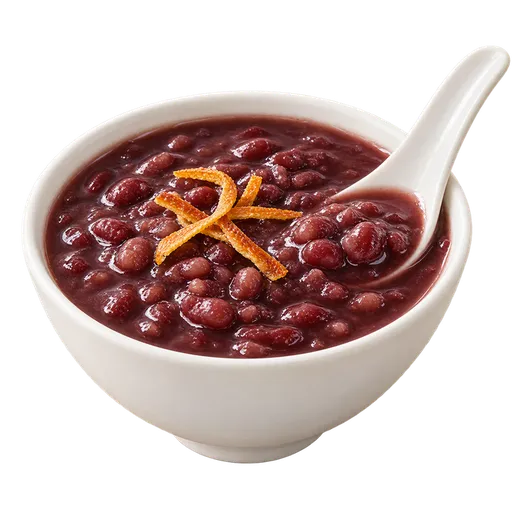
The taste is slightly sweet first, with a bitter, pungent aftertaste, and it improves with age. A cook soaks the peel briefly in cold water, scrapes off the white pith and uses the rest. It goes into red bean soup, 红豆沙, and green bean soup, and into braised duck and tea.
These trays hold peel drying in the sun. Look for it in a bowl of red bean soup at a dessert shop.
What people make with it
- Red bean sweet soup红豆沙A warm, smooth soup of red beans cooked down with sugar, often flavoured with a piece of aged tangerine peel.
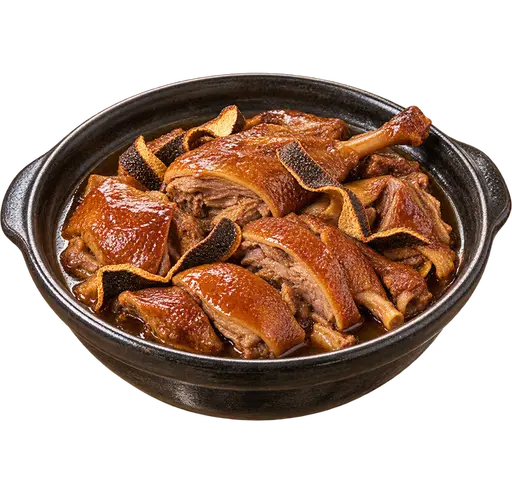 Tangerine peel duck陈皮鸭Duck braised slowly with strips of aged tangerine peel, which perfume the meat with a slightly bitter citrus note.
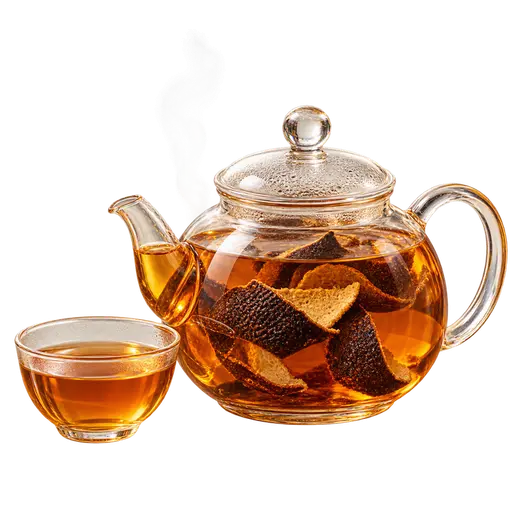 Chenpi tea · aged tangerine-peel tea陈皮茶A strip of aged peel steeped in hot water, giving a fragrant, slightly sweet and slightly bitter cup.