around 1900
United Kingdom · Britain
This Britain route follows everyday meals, regional ingredients and working kitchens from London to Kent, Yorkshire, Wales, Cornwall and Scotland.
The story
Britain through its food
What grows, keeps and travels
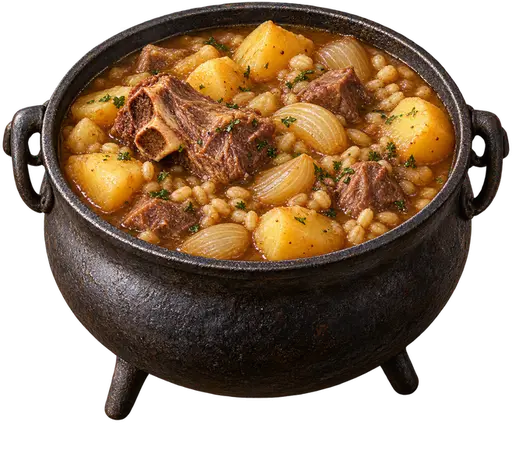
Cool weather, long coasts and industrial towns shaped the food on this route. Oats and barley suited the north. Sheep grazed the hills, apples grew in the west and fishing ports cured their catch with salt and smoke. Pies, puddings, stews and pickles helped households turn these foods into filling meals.
London and the docks
Markets, cafes and food carried through the docks
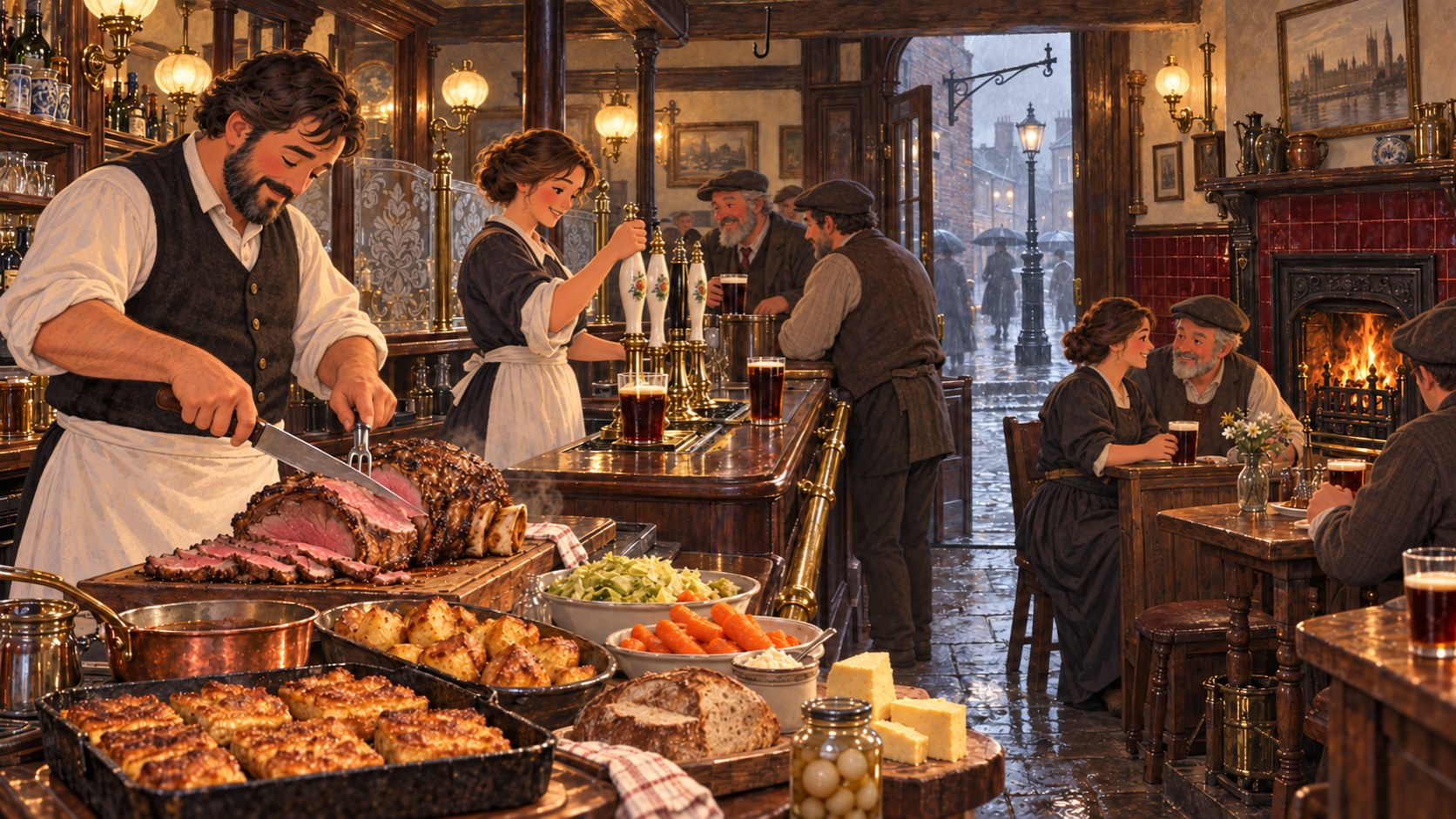
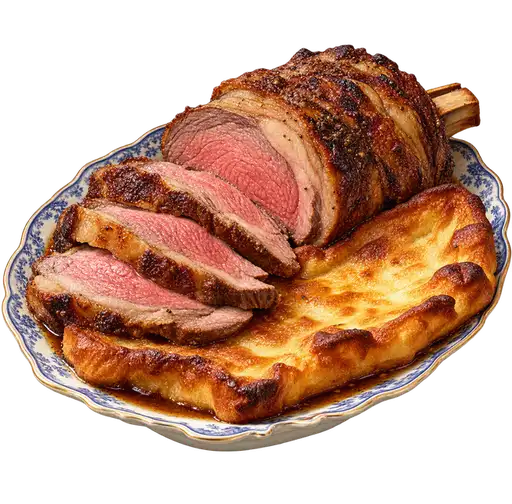
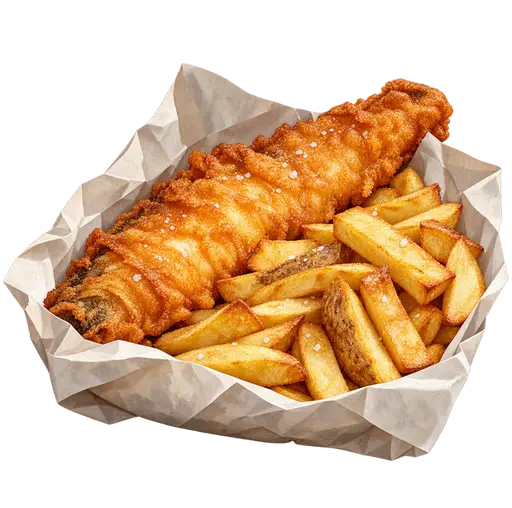
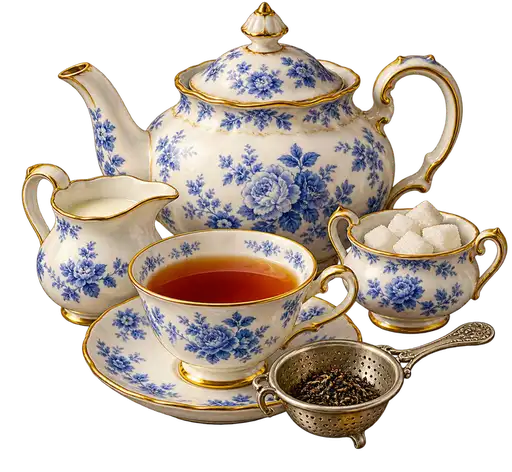
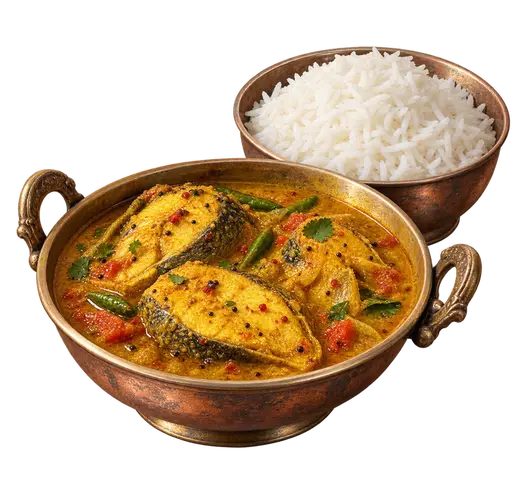
London's route moves from a Sunday pub roast and a tea room to pie and mash, fish and chips and an early-morning cafe breakfast. In Shadwell, Bengali seamen cooked fish curry with rice, dal and spiced potatoes. Their lodging-house kitchens helped prepare the way for the curry cafes and restaurants now found across Britain.
Wales, Cornwall and Yorkshire
Food tied closely to its landscape
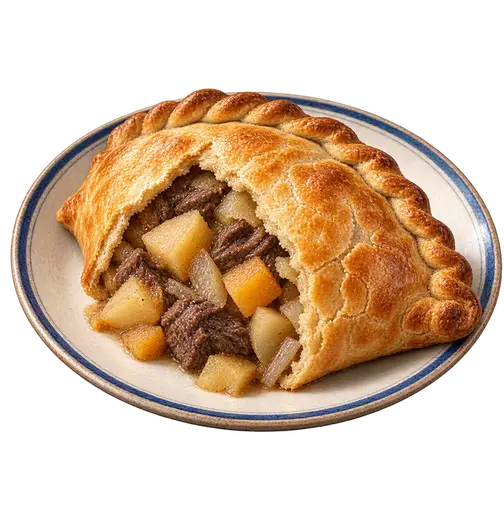
Welsh cooks pair cockles with bacon and laverbread, a soft paste made from edible seaweed. Cornwall gives the route pasties, saffron buns and fish pies. Yorkshire brings Wensleydale cheese, forced rhubarb and mutton from upland farms. These foods still appear in markets, bakeries, pubs and regional festivals.
Scotland
Oats, smoked fish and a substantial breakfast
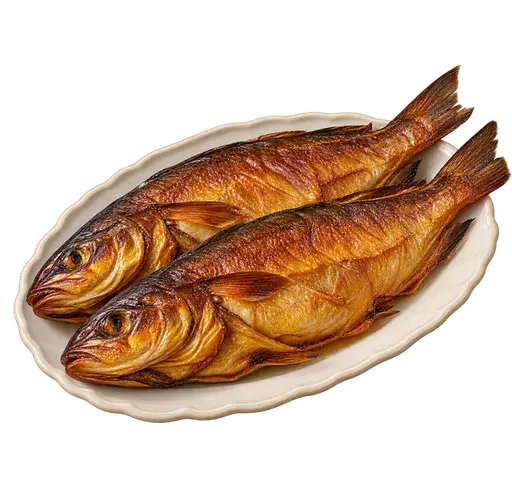
Scottish cards follow porridge and oatcakes, haggis, Cullen skink and east-coast smoked haddock. A full breakfast may include Lorne sausage, a square slice of minced meat, plus black pudding and tattie scones, which are flat potato cakes. Find these foods in cafes, pubs, bakeries, fishmongers and hotel breakfasts, then visit a distillery for the story of malted barley and whisky.
In this world
- London · Westminster & the DocksWestminster on the Thames, and downstream the docks, Tower Bridge and the East End6 rooms · 6 cards
- The Weald · Kenthop gardens, oast houses, the woods and the pickers' cookhouse1 room · 2 cards
- The Dales & Mill Towns · Yorkshirethe dale dairy, the flock, the fried fish shop and the forcing sheds2 rooms · 2 cards
- The West Country · Cornwall & the Bristol Channelthe pasty bakehouse, the cockle sands, the cider orchard and the engine house2 rooms · 3 cards
 The Firths & Herring Coast · Scotlandthe curing yard, the distillery, the herring quay, the oat mill and the Forth Bridge2 rooms · 3 cards