Eating in China
What to eat in Guangzhou · 广州 Guǎngzhōu
Guangzhou starts the day with a pot of tea and two small dishes, and ends it with roast meats, claypot rice or a late bowl of congee.
What to order
Main dishes to order
A Cantonese dinner is shared. Choose a roast meat or a steamed fish, a plate of greens and rice, and add a dish at a time. For seafood, ask the price per jin (斤 jīn) before the fish leaves the tank.
Claypot rice is cooked pot by pot over a flame and charcoal, with a crust of rice at the bottom. It is traditionally a winter dish, though many shops now serve it all year. Expect to wait, as each pot is cooked to order.
At a seafood restaurant you choose a live fish or shellfish from the tank, and the staff suggest how to cook it. Steaming is the usual way for fish. Seafood is priced by weight, often by the catty (斤 jīn), so ask the price per jin first.
Little eats (小吃 xiǎochī), any time of day
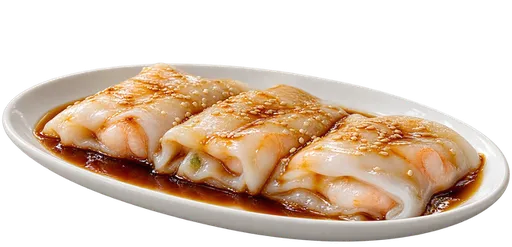
Snacks are easy to share: a rice roll, a bowl of wonton noodles, then a sweet soup or a pudding to finish. One bowl each is enough.
Double-skin milk comes from Shunde, in Foshan, and its making is listed as provincial intangible heritage. Shunde joined the UNESCO Creative Cities Network for gastronomy in 2014, and Macao in 2017.
Breakfast
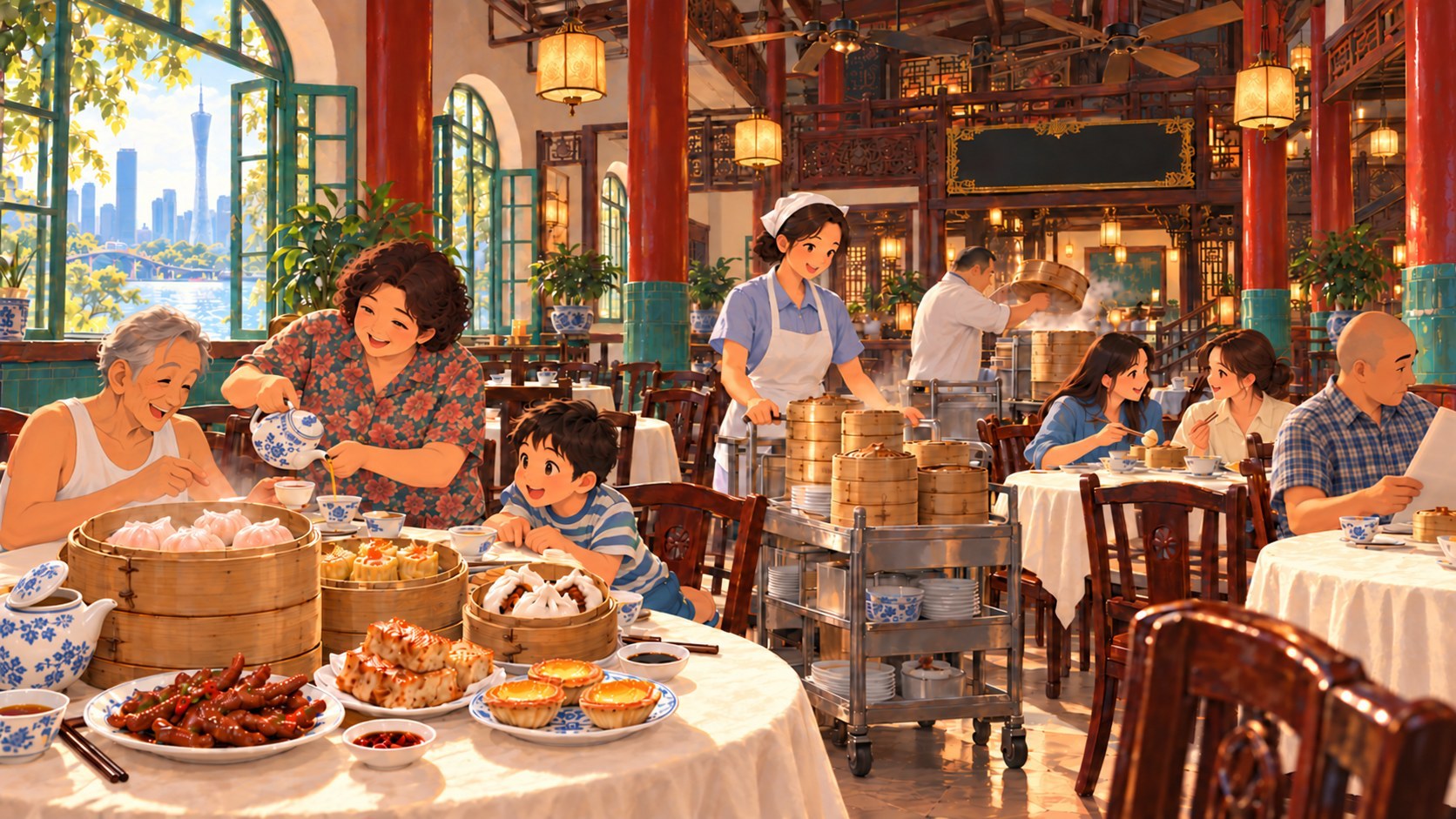
Morning tea is a table of tea and small dishes. Start with a pot and two dishes (一盅两件), tick the order sheet, lift the lid for more hot water and tap two fingers on the table to say thanks.
Morning tea, 早茶 zǎochá, is a meal of tea and small dishes, eaten in a group. The classic order is 一盅两件 yì zhōng liǎng jiàn: a pot of tea and two dishes. Staff ask which tea you want, and the dumplings are steamed to order.
- 早茶 zǎochá morning tea
- 一盅两件 yì zhōng liǎng jiàn one pot of tea and two dishes
When the pot runs dry, prop the lid on the rim or the handle, and staff refill it with hot water. To thank whoever pours, tap your fingers on the table. Order on a paper sheet with tick boxes, and at the end staff count the plates or the stamped marks. Some places still push trolleys and call out the dishes.
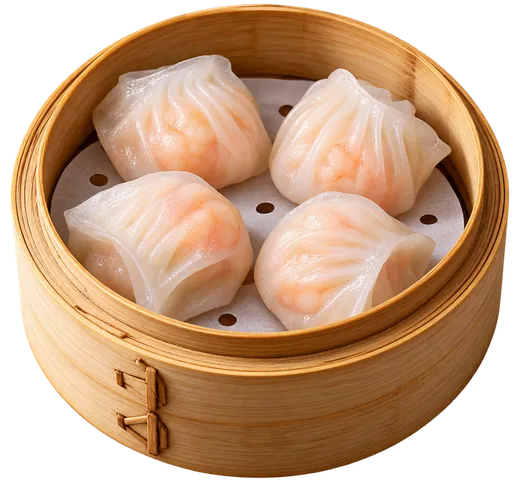
Four dishes are called the four heavenly kings of the dim sum table: har gow, siu mai, char siu bao and egg tarts.
Guangzhou issued a regulation to protect early tea, in force on 1 May 2026. A restaurant that charges a tea fee, 茶位费, must offer a choice of teas such as black, green, oolong, pu-erh or chrysanthemum, and must show its charges clearly. The fee is a few yuan per person and is set by the restaurant.
- 茶位费 cháwèi fèi tea charge
Tradition traces the tea fee to the Xianfeng years of the Qing, in Foshan and Guangzhou tea houses called 一厘馆 and 二厘馆, which charged one or two li (厘), a tiny coin, for the tea.
After dark
A congee shop is open for a late supper as well as breakfast. Order a bowl, and add a stick of fried dough on the side.
Congee is eaten at breakfast and as a late supper, often with a stick of fried dough.
According to a Guangzhou newspaper account, boat congee began with Tanka boat families who sold it from small boats on Lichi Bay in the Guangxu years, and whatever was caught went in the pot. The boats are gone, and it is now a restaurant dish.
Where it comes from
Guangfu tea drinking (广府饮茶), the Cantonese custom of tea with dim sum, is on Guangdong's provincial intangible heritage list, as the press reported in 2022.
Diet notes
Seafood
Rice rolls are often filled with shrimp, and congee can hold fish, shrimp or dried seafood. Ask before you order if you avoid seafood.
Vegetarian · Anywhere in China
A dish called vegetarian can still use meat stock, lard or a little meat, and chicken may not count as meat to a cook. Buddhist restaurants (素食 sùshí, often near temples) are the usual choice for a fully meat-free meal. Say 我吃素. More lines are on the phrases page.
Dishes to look for
Ordering and paying
The same notes hold in every city.
Rooms to visit in 3D
- Morning tea at the tea houseA pot of tea, a steamer of har gow and a table of friends: Guangzhou's morning meal.
- The rice-roll stallA thin rice sheet steamed in a drawer, rolled around shrimp or beef and poured with sweet soy.
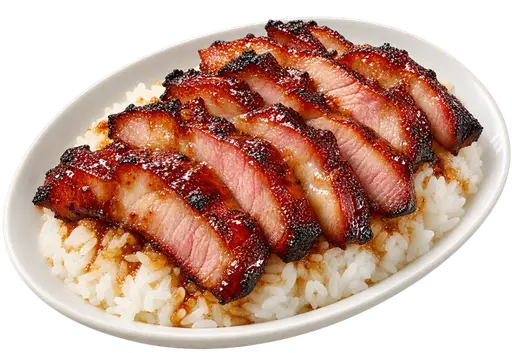
- The roast meat shopGlazed barbecued pork and roast goose hang in the window and land on a plate of rice.
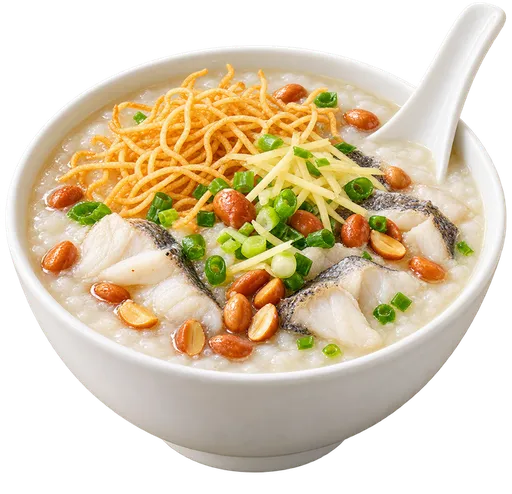 The congee shopA pot of smooth rice porridge, ladled with fish, squid, peanuts and crisp fried dough.
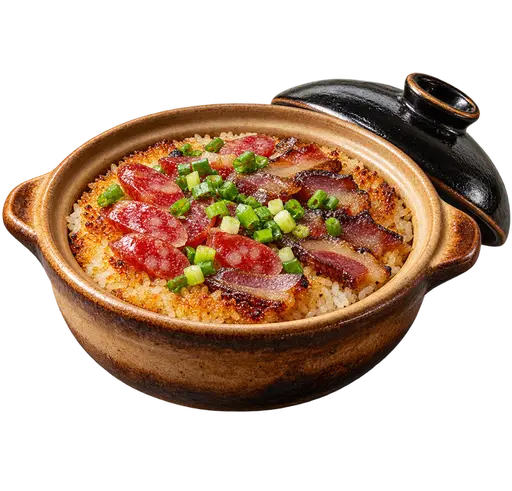 The claypot rice streetRice cooked in a small clay pot over charcoal until a golden crust forms at the bottom.
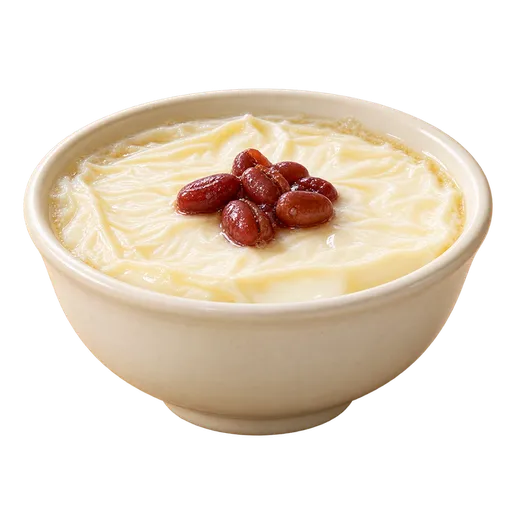 The dessert shopMilk puddings and warm sweet soups, spooned slowly from small bowls.
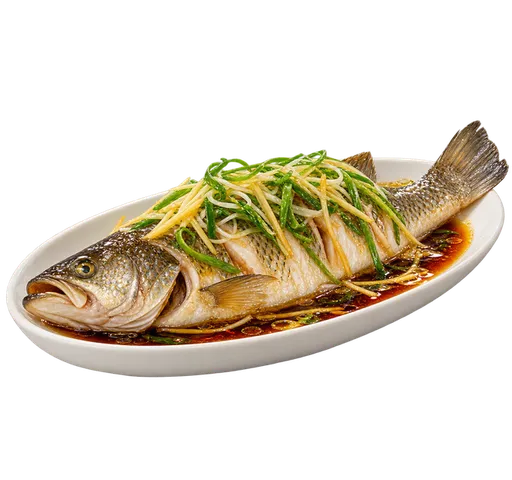 The seafood restaurantYou point at a fish in the tank, and the kitchen steams it with ginger and scallion.
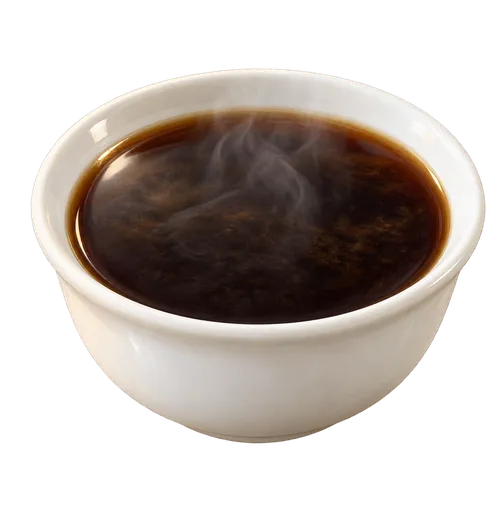 The herbal tea stallDark herbal tea from a brass tap, served in a bowl and meant to cool the body.
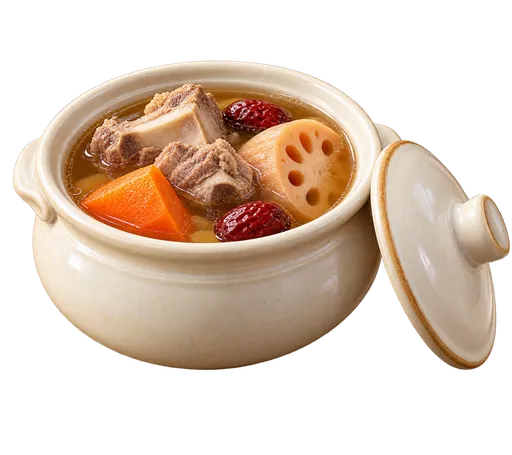 A Guangzhou home kitchenSoup simmered for hours, with a plate of greens and a steamed egg beside it.
Sources
Checked October 2026
- Chinese Wikipedia, 煲仔饭 (claypot rice)
- Wikipedia, Claypot rice
- NZ Herald Viva, Chef Tony Tan's guide to Hong Kong seafood (11 May 2019)
- Wikipedia, Cantonese cuisine
- Wikipedia, Double skin milk
- Macao SAR government, UNESCO Creative Cities of Gastronomy (Chengdu 2010, Shunde 2014, Macao 2017)
- China News Service, Guangfu tea drinking and one pot, two pieces (16 Jun 2022)
- HK01, the tea charge and where it began
- The Paper, Guangfu tea drinking and its customs (14 Jun 2022)
- Time Out Hong Kong, dining etiquette guide (2 Jun 2020)
- Guangzhou Daily (Dayoo), Cantonese dim sum (5 Aug 2026)
- China News Service, Guangzhou early-tea regulation (2 Apr 2026)
- Guangming Online, Guangzhou early-tea regulation (2 Apr 2026)
- Wikipedia, Congee
- Guangzhou Daily (Dayoo), sampan congee (29 May 2024)
- Chinese Wikipedia, 艇仔粥 (sampan congee)
- Wikipedia, Rice noodle roll
- Shanghai government, Learn Chinese: vegetarians and allergies (8 Apr 2024)
- StudyCLI, vegetarian in China
- China Vigators, vegetarian in China