Street stall · Xinjiang · Shinjang · China
The skewer stallKawap
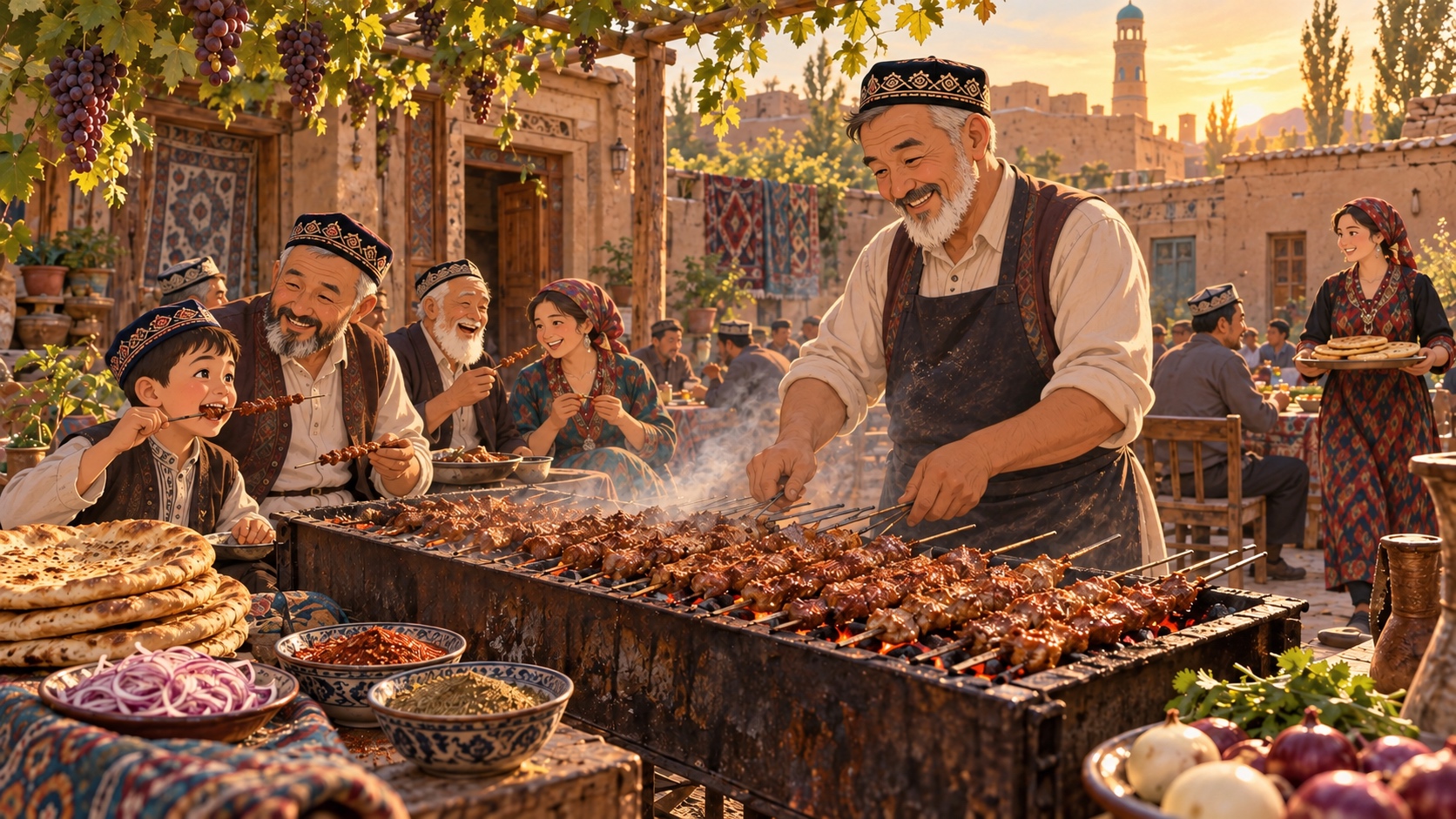
Lamb and tail fat on iron skewers over charcoal, cumin and chilli thrown on as they turn, the smoke drifting into the vines at dusk.
What to look for
Small pieces cook quickly
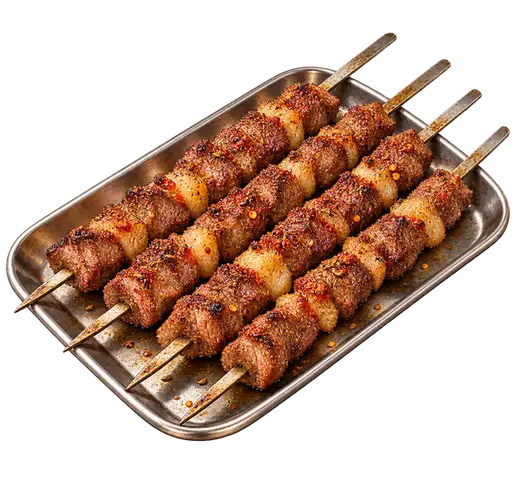
Cutting meat into small, similar-sized pieces helps a skewer cook evenly. The thin skewer also makes it easy to turn every piece together over the coals.
Bread catches the good bits
Bread served with kebabs can catch meat juices and loose seasoning. Onion brings a crisp, sharp bite alongside the rich grilled meat.
The story
Fat and lean lamb on long skewers over charcoal, dusted with cumin and chilli, under the vines.
Kawap, the Uyghur skewer, is lamb cut into cubes with a piece of tail fat between the lean, threaded on long iron or wooden skewers, grilled over a trough of charcoal and dusted with cumin, chilli flakes and salt as it turns. It is eaten with nan bread and raw onion, standing at the stall or sitting under a trellis with tea, and the smoke of it is the smell of every Xinjiang evening.
Lamb is the meat of the oases and the mountain pastures alike; the fat-tailed sheep of the region were bred for the winter, and a whole roast sheep, a lamb stewed with potatoes and peppers, or lamb in polo are the feast dishes. Cumin came along the Silk Road from Persia and stayed as the region's signature spice.
Uyghur cooks carried the skewer east from the 1980s on, and it became a street food across China.
What this kitchen cooks
- Lamb kawap · lamb kebab烤羊肉串Cubes of lamb threaded with a piece of tail fat between them, dusted with cumin and chilli as the skewers turn.
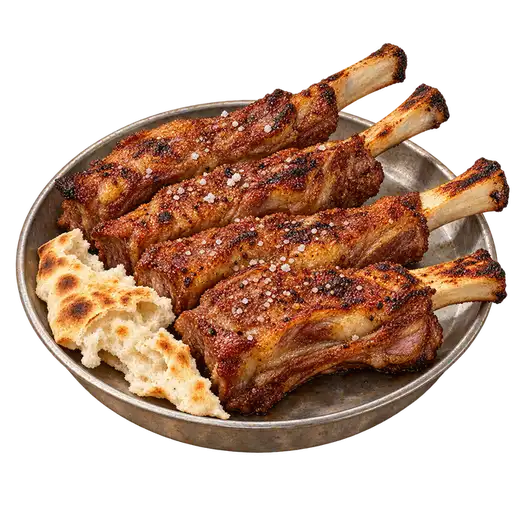 Rib kawap · rib kebab烤羊排Whole ribs salted and laid over the coals, cut apart at the table and eaten with torn nan.
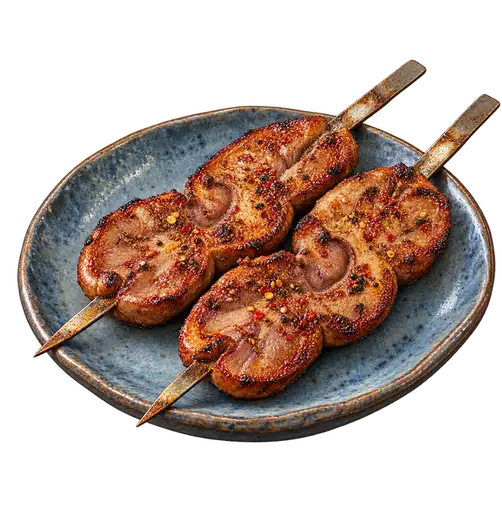 Kidney kawap · kidney kebab烤腰子Split kidneys grilled quickly so they stay soft inside, ordered by the pair late in the evening.
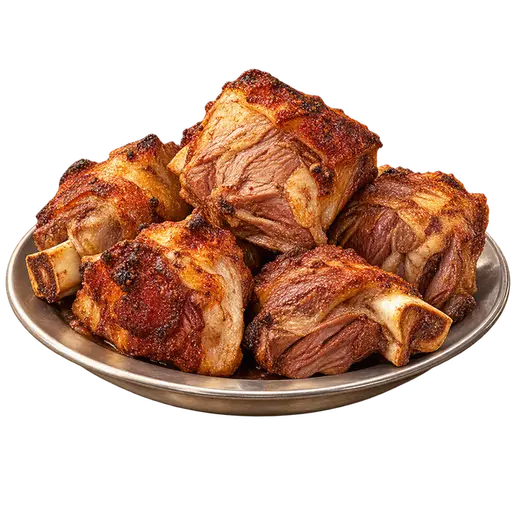 Tonur-roasted lamb · oven-roasted lamb馕坑肉Chunks of lamb hooked inside the bread oven after the nan comes out and roasted in the falling heat.