Market / shop · Xinjiang · Shinjang · China
The nan bakeryNan
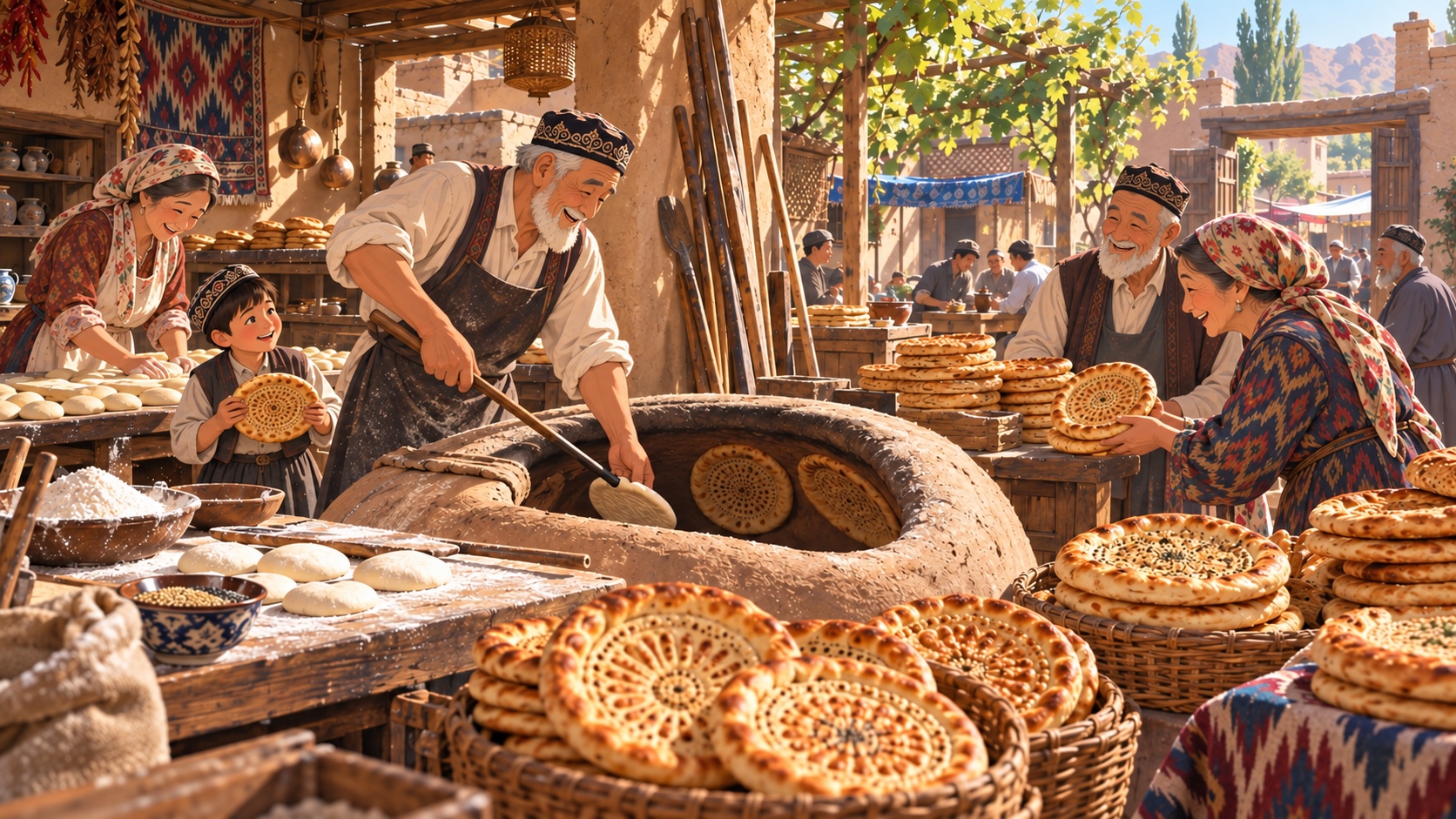
Rounds stamped in the centre and slapped onto the wall of the tonur; a minute later they come out crisp on the paddle.
What to look for
Why dough fights the rolling pin
Freshly worked wheat dough can spring back because of its gluten network. A covered rest makes shaping easier and keeps the surface from drying out.
The stamp controls the puff
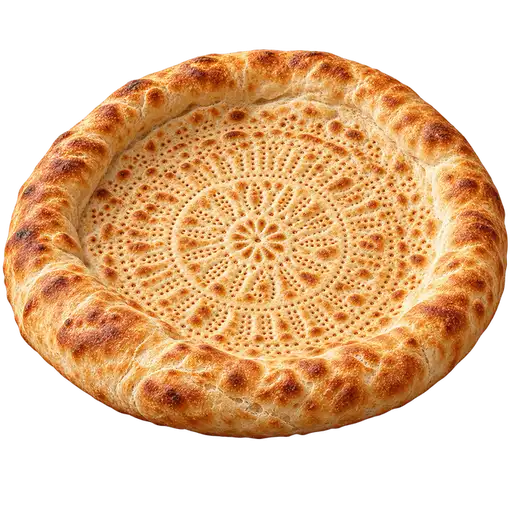
Pricking the centre of a round nan keeps it flat while the thicker rim rises. So the pattern does a job in the oven as well as looking good.
The story
Round breads stamped in the centre, slapped onto the wall of a clay tonur and pulled out crisp.
Nan is the daily bread of Xinjiang: a wheat dough shaped into rounds, the centre pressed thin and stamped with a pattern of holes with a chekich, the rim left thick, brushed with onion water or sesame, and baked in seconds against the inside wall of a tonur, a clay oven fired with wood or coal. Every town has bakeries at the roadside with breads stacked in the window, and a family may bake fifty at a time; a dry nan keeps for weeks and is softened in tea.
There are dozens of kinds: the big thin Kashgar nan the size of a cartwheel, the small thick Hotan kind, oiled rounds, meat-filled nan, sweet ones with grape juice. Nan is never thrown away or stepped on, and a loaf is torn and shared before a meal.
The oven and the bread are the region's oldest cooking, older than the Silk Road: wheat has been grown in these oases for four thousand years, and the tonur is the same idea as the tandoors of Central and South Asia.
What this kitchen cooks
- Big thin nan大馕A round the width of a cartwheel, pressed thin in the middle, stamped with a chekich, a spiked stamp, and baked against the oven wall.
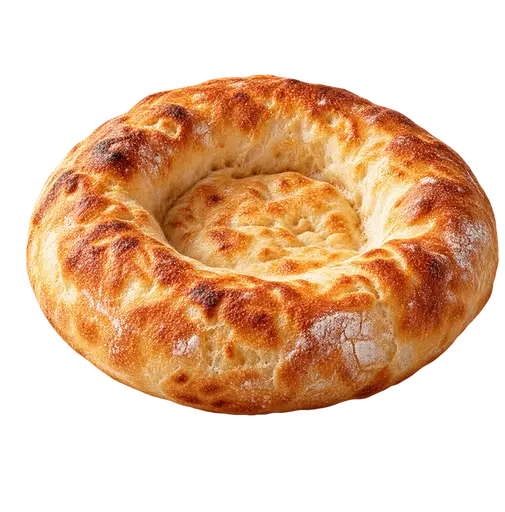 Girde nan · small thick flatbread窝窝馕Small and thick with a deep dimple, the everyday loaf of Hotan, torn up and softened in tea.
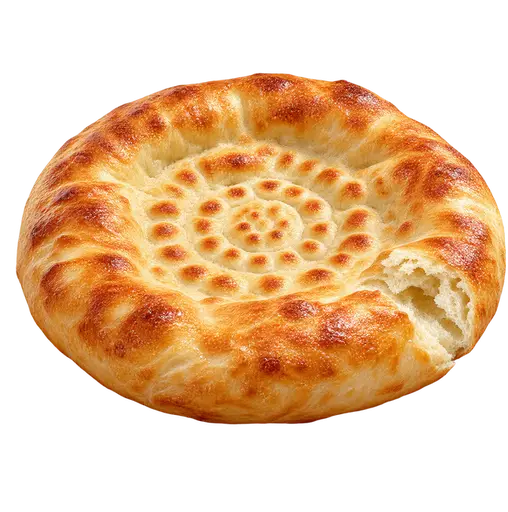 Oil nan油馕Dough worked with mutton fat so it stays soft for days, which is what a family takes on a journey.
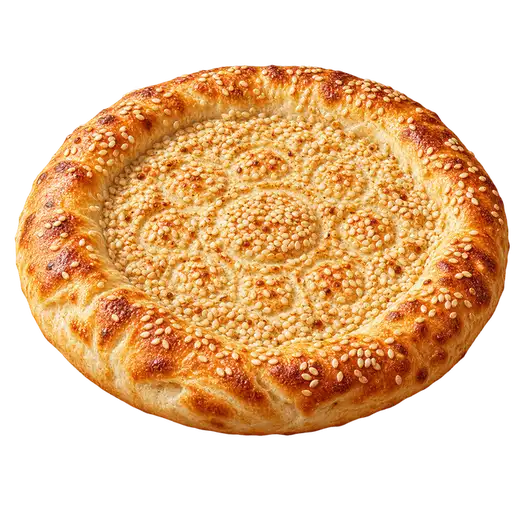 Sesame nan芝麻馕Brushed with onion water and covered in sesame, the round sold hot at the roadside window.
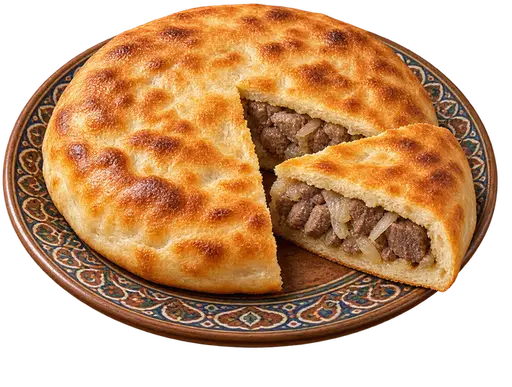 Meat nan肉馕Diced lamb and onion sealed inside the dough before it goes on the wall, and eaten as a meal on its own.
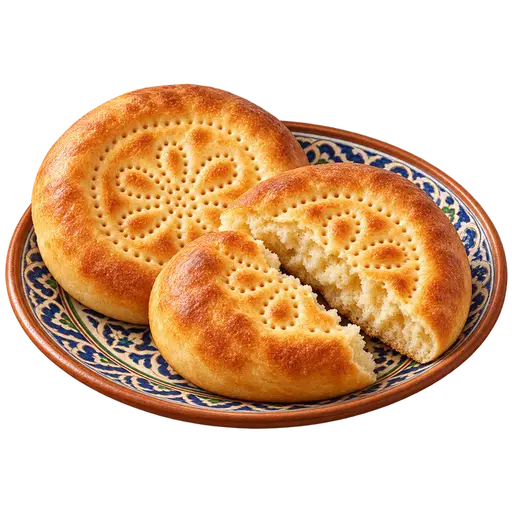 Sweet nan甜馕Made with grape juice or sugar in the dough, baked for festivals and for the children.