Restaurant · Xinjiang · Shinjang · China
The polo kitchenPolo
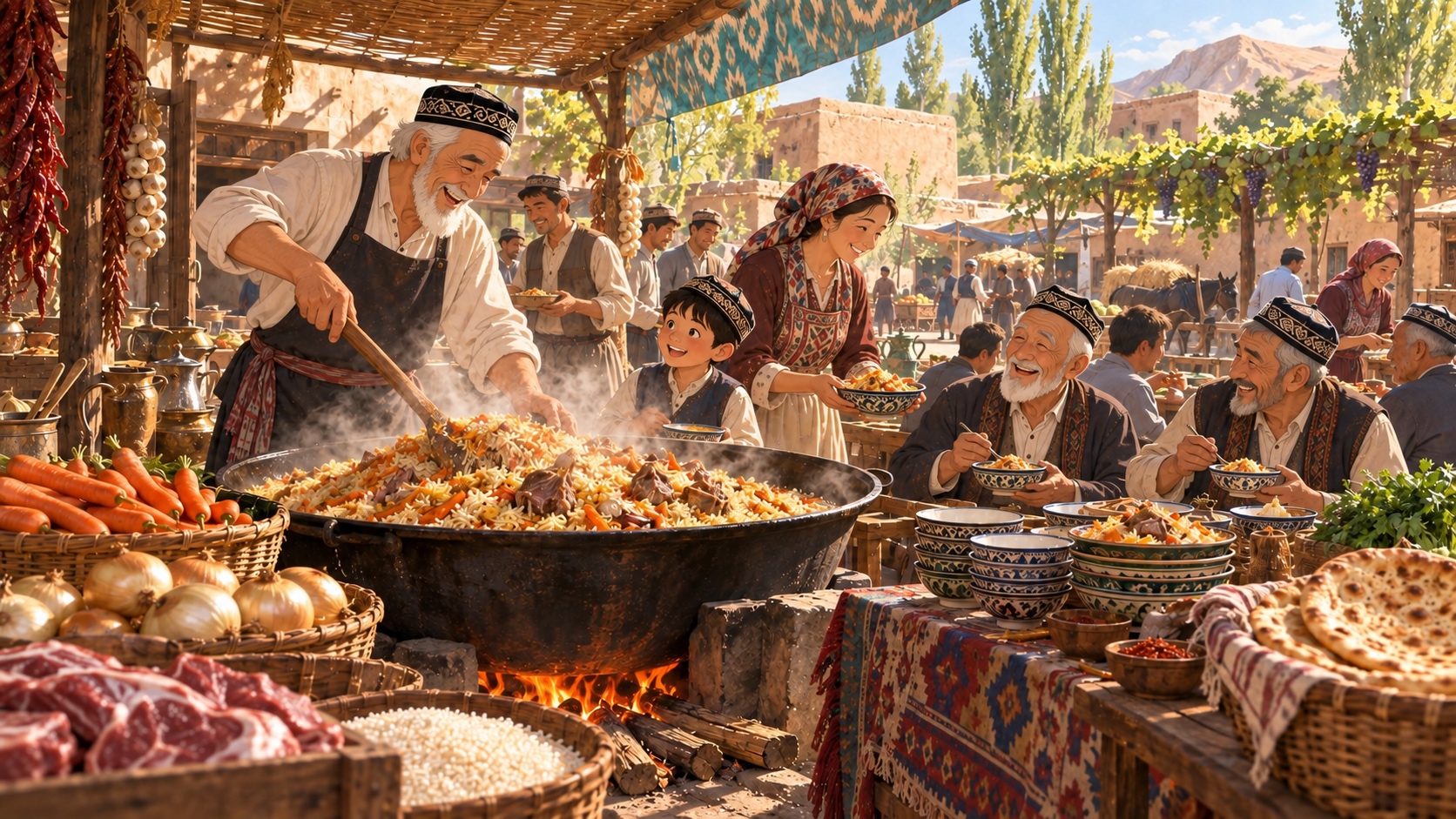
One kazan for the whole street: lamb, onion and a great deal of carrot under the rice, the fire kept low until the rice has taken the fat.
What to look for
One pot flavours the rice
In polo, rice cooks with the flavours of the meat, onions and carrots. As it absorbs liquid, it takes those flavours into the grains.
Carrots can be yellow
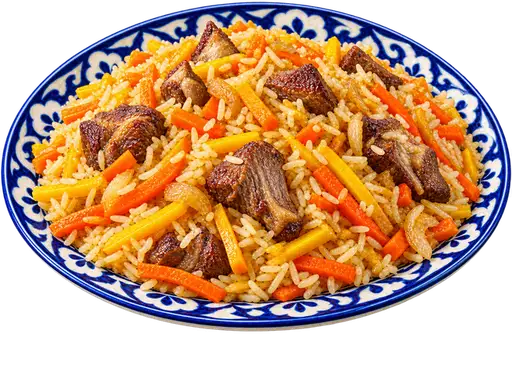
Carrots are not always orange: yellow varieties are also used in Xinjiang polo. Cooking the carrots brings sweetness to a dish built around rice and meat.
The story
Rice, lamb, carrots and onion cooked together in one cauldron for the whole street.
Polo, 抓饭, is the celebration dish of the oases: lamb browned in a kazan, a wide iron cauldron, with onion and a great deal of yellow and orange carrot, then rice laid on top, water added just to cover, and the whole thing steamed under a lid until the rice has taken the fat and the carrots have gone sweet. Raisins, chickpeas or quince go in for weddings; a piece of the lamb sits on top of each bowl. It is eaten with a spoon, or by hand, its old name meaning grabbed rice.
One cauldron feeds a street, and polo is cooked outside for weddings, festivals and funerals, the men stirring with a paddle while everyone waits with a bowl. Rice came to the oases along the trade roads from both directions, and the dish is the same family as the pilafs of Uzbekistan and Persia.
The kazan is the central pot of the Xinjiang kitchen.
What this kitchen cooks
- Lamb polo · lamb pilaf羊肉抓饭Lamb browned in the kazan with onion and a great deal of carrot, rice laid on top and steamed until it takes the fat.
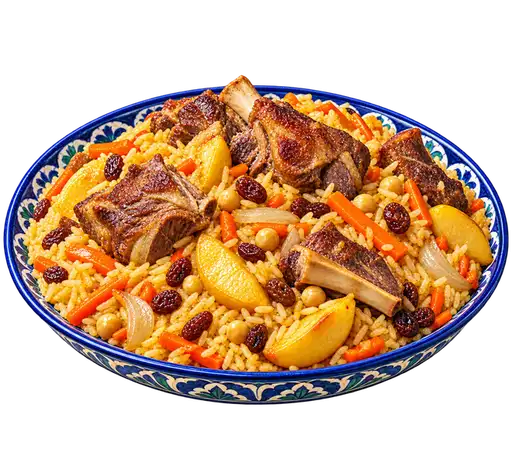 Wedding polo · festive pilaf婚宴抓饭The same pot made for a whole street: raisins, chickpeas and quince stirred in, a piece of lamb on every bowl.
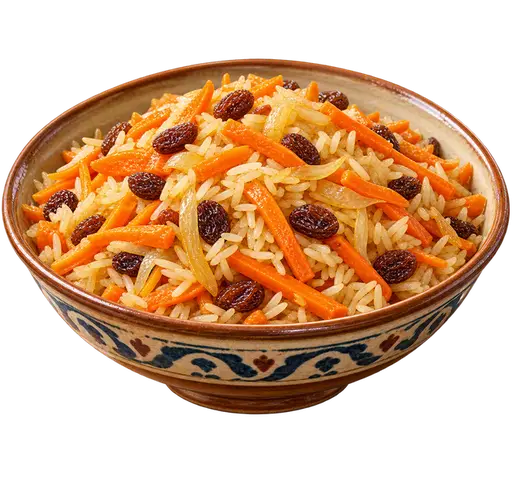 Vegetable polo · vegetable pilaf素抓饭Carrot, onion and raisins without the meat, cooked when there is no lamb in the house.
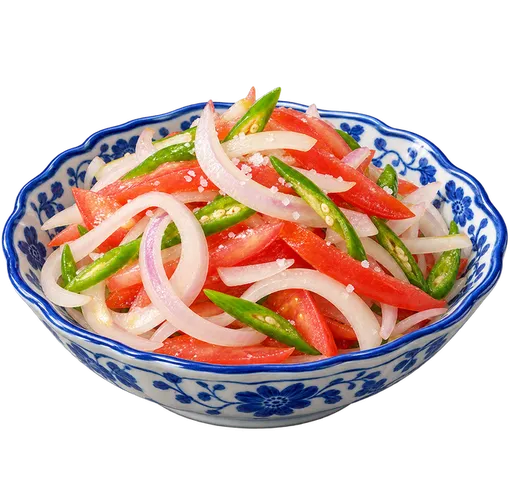 Pilaz salad · onion tomato salad皮辣红Onion, tomato and green chilli cut thin and salted, set beside the rice to cut the fat.
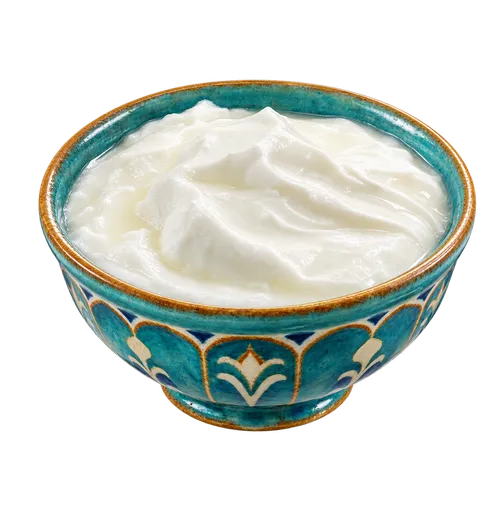 Yoghurt酸奶Set in bowls and eaten with the rice or straight after it, sharp enough to answer a plate of fat lamb.