Workshop / producer · Burgundy, Lyon & the Alps · Bourgogne · Lyon · Alpes · France · around 1900
The mustard millMoutarderie
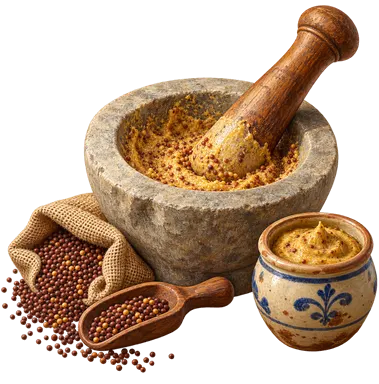
Brown seed ground with verjuice into a sharp paste.
The story
Dijon mustard is brown mustard seed, ground and blended with an acid. In 1856 Jean Naigeon of Dijon replaced the usual vinegar with verjuice, the sour juice of unripe grapes. That gives the paste its sharp, clean bite.
Most Dijon mustard today is made with white wine or vinegar in place of verjuice. The name is generic, and no appellation limits it to Dijon.
In Burgundy the jar sits on the table beside the braised beef and the other wine dishes. Spread a thin layer on a slice of roast beef or stir a spoon into a vinaigrette.
Today
Most seed used by Dijon makers now comes from Canada. A shortage in 2022 pushed makers to grow more seed in Burgundy.
What this kitchen cooks
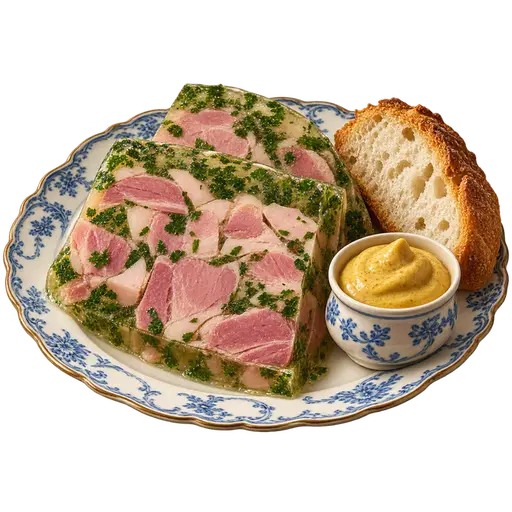 Parsleyed hamLe jambon persilléCooked ham set in a parsley jelly and sliced cold, eaten with bread and a spoonful of Dijon mustard.
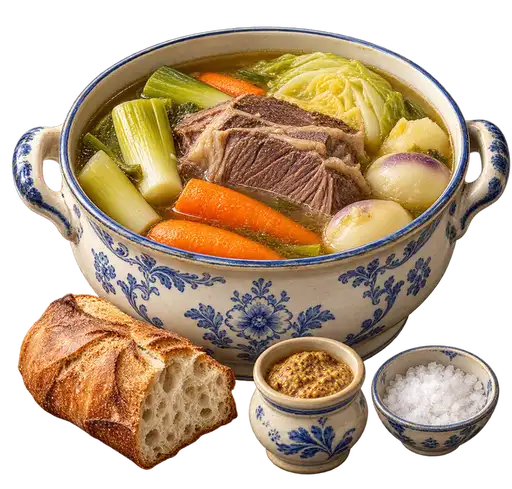 Boiled beef and vegetablesLe pot-au-feuBeef simmers for hours with carrots, leeks, turnips and cabbage, served in broth with mustard, coarse salt and bread.
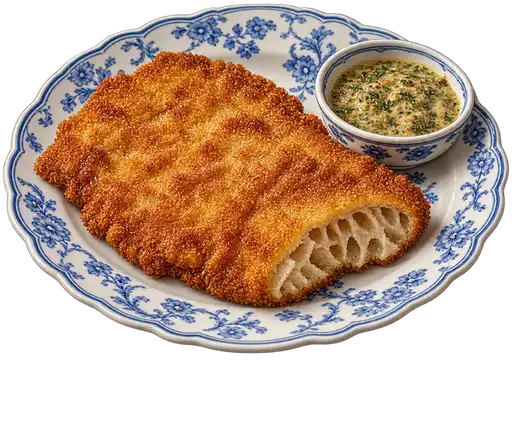 Breaded tripeLe tablier de sapeurTripe marinated in white wine, breaded, fried crisp and served with a sharp, herb-and-mustard sauce.