Workshop / producer · Sicily · Sicilia · Italy · around 1900
The tonnara kitchenTunnara
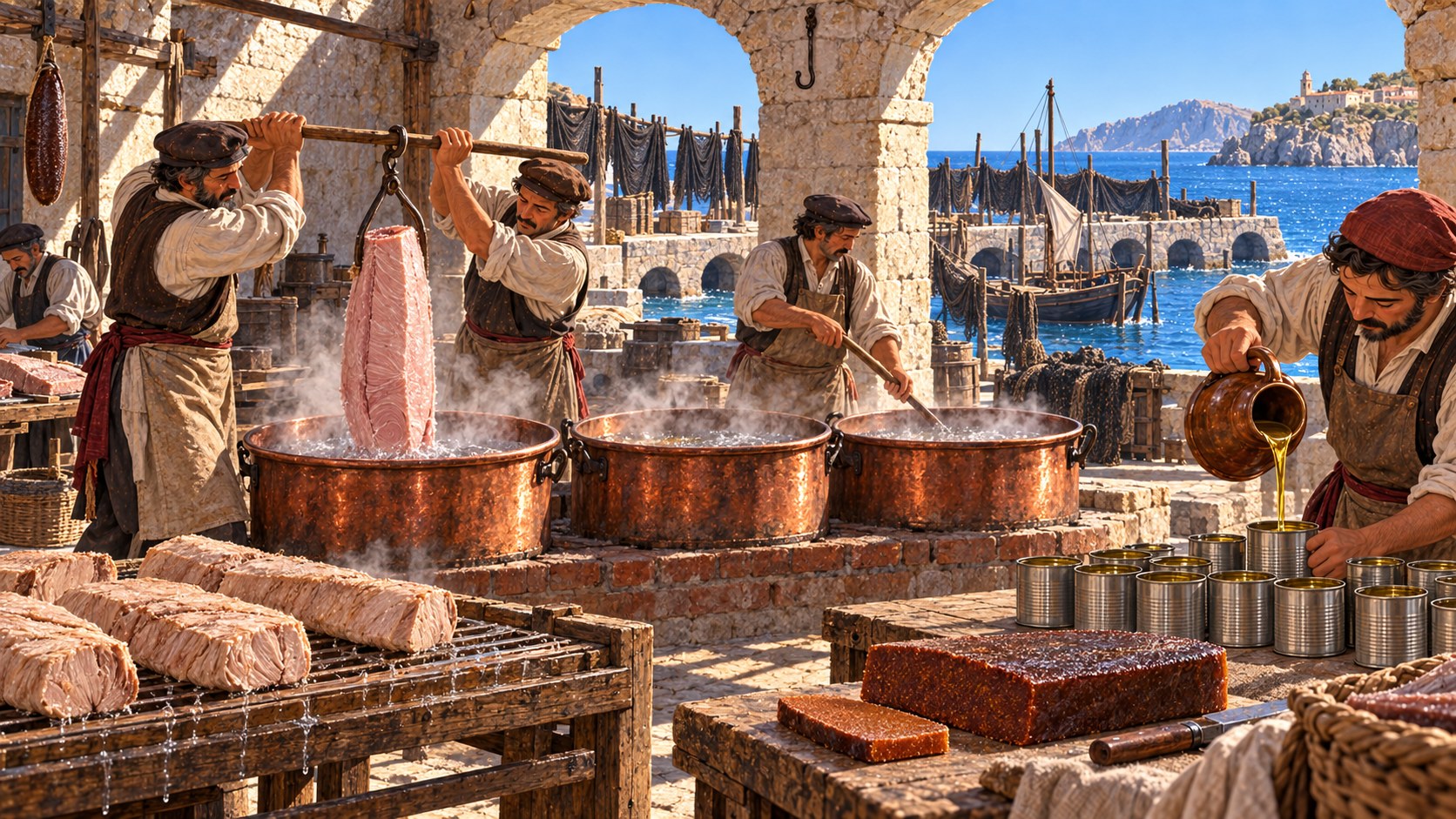
Favignana: one fish, boiled, tinned and covered in oil, and nothing of it thrown away.
What to look for
Lower the loin
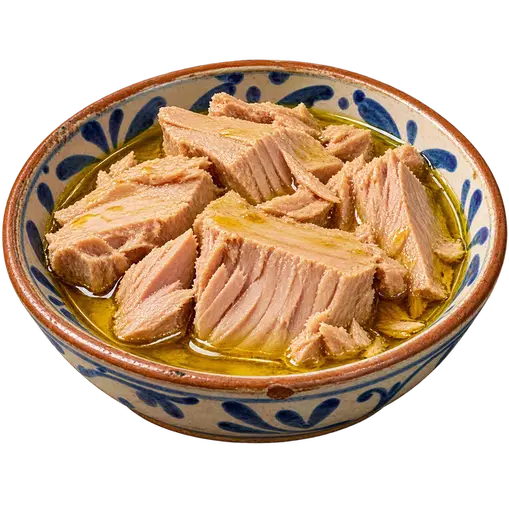
The tuna loins are boiled first, then packed in tins and covered with oil. This plant is credited with being the first to do it in that order on an industrial scale.
Pour the oil
Ignazio Florio bought these islands in 1874 to make tuna boiled and canned in olive oil, and Giuseppe Damiani Almeyda rebuilt the works to make it.
Shave the pressed roe
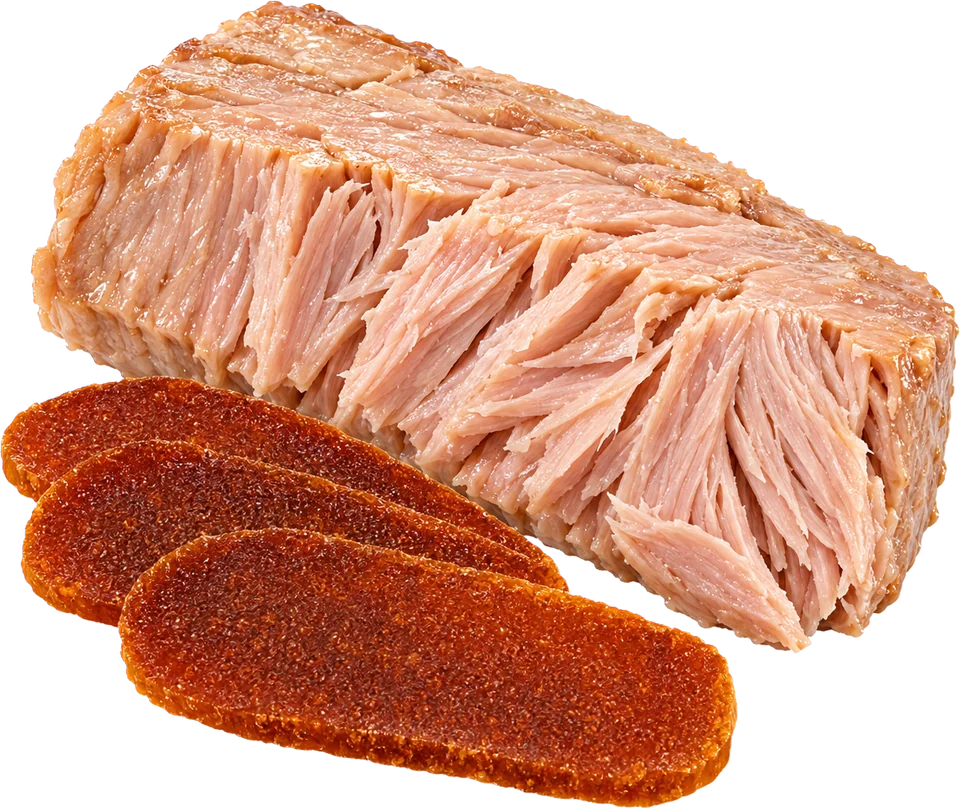
The tuna's roe sac is salted, pressed and dried into bottarga, hard enough to shave. It keeps for months and is shaved or grated over pasta.
The story
Bluefin tuna preserved in oil, salt and dry coastal air.
A Sicilian tonnara processed the bluefin caught during the early summer migration. Workers boiled the loins, packed them into tins and covered them with olive oil. Other cuts were salted or dried. The roe became bottarga, firm enough to slice or grate.
This seasonal work connected fishing crews, factory workers, salt makers and olive growers. Preserving turned a short catch into food that could travel and be eaten throughout the year. Every useful part of the fish went into a different product.
Along the Sicilian coast, some former tonnare now show visitors how this work was done. In restaurants and food shops, look for tuna in oil, bottarga or lesser-known cuts, and ask where the fish was processed.
Today
The last traditional tuna hunt, the mattanza, took place off Favignana in 2007. The old Florio cannery there is now a museum.
What this kitchen cooks
- Tuna in olive oilTunnina sutt'oghiuTuna boiled, packed into tins and covered with olive oil at Favignana, which is how the Florio house sold it.
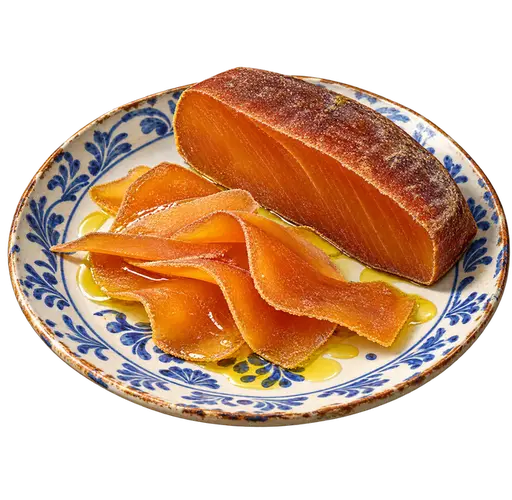 Pressed tuna roeBottarga di tonnoThe roe sac salted, pressed and dried to a hard amber block, then shaved over pasta or sliced with oil.
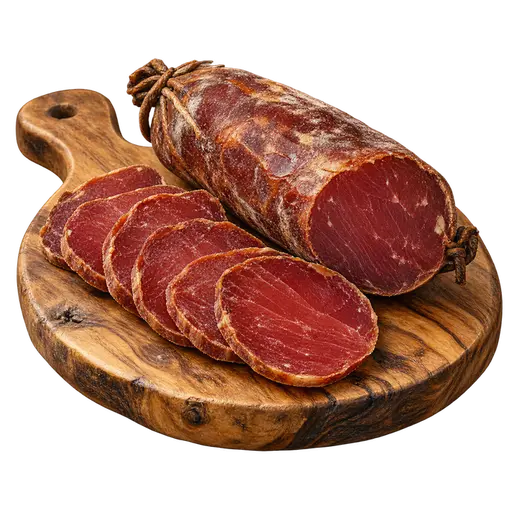 Cured tuna sausageFicazzaThe trimmings salted and cured in a casing like a salami, the part of the catch the crew keeps.
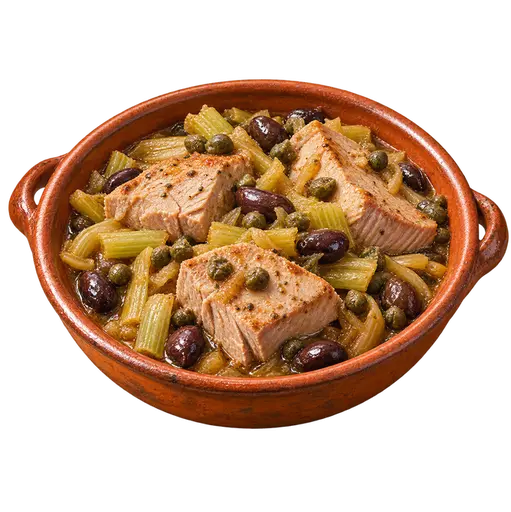 Tuna with celery and capersTunnu a stimpirataTuna steaks cooked with celery, olives, capers and vinegar, sweet and sour like most fish on this coast.
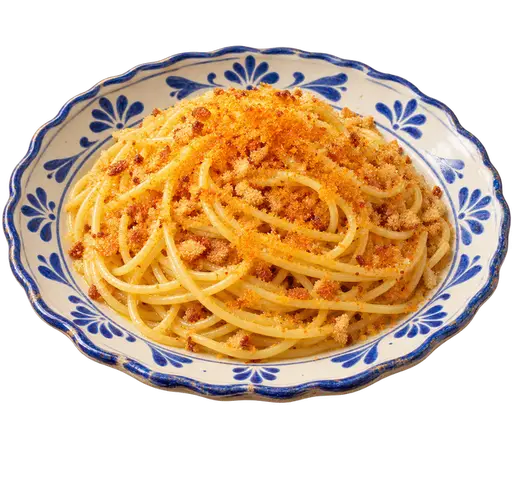 Pasta with bottargaPasta câ bottargaDried roe grated over oiled spaghetti with toasted breadcrumb and no cheese at all: the plainest way to eat it.
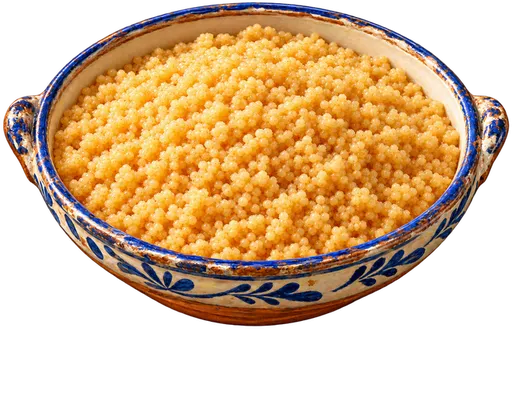 Fish couscousCùscusu di pisciSemolina rolled by hand and steamed over fish broth at Trapani, a dish that came over from North Africa and stayed.
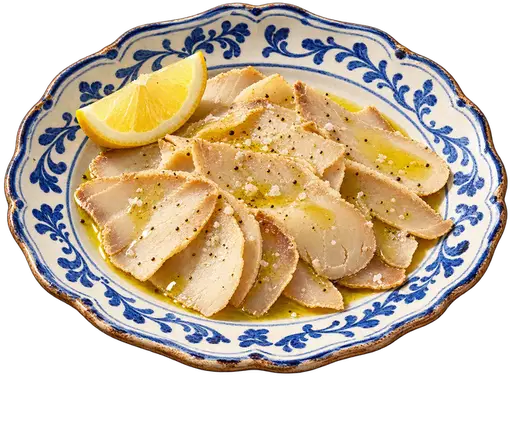 Salted tuna miltLattumeThe milt of the male fish salted and dried, sliced thin with oil and lemon; nothing here is thrown away.