Ingredient · Andalusia · Andalucía · Spain · around 1900
The holm-oak dehesaLa dehesa
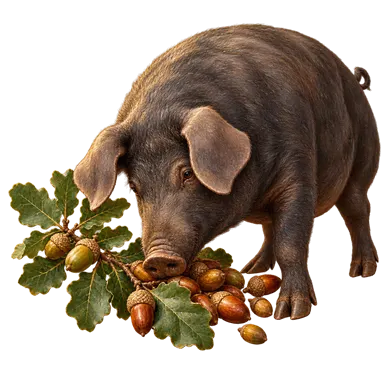
Up to ten kilos of acorns a day, under an old oak.
The story
The dehesa is a wood and a field at once. It is open grazing land under widely spaced holm oaks and cork oaks. People have thinned and kept it that way for centuries, and it is the largest system of its kind in Europe, with trees, grass and animals sharing the same ground. Published Spanish figures for how much ground it covers differ widely with the definition used, but it runs across the south and the west of the country and on into Portugal.
The season that matters for ham is the montanera, from October to February, when the acorns drop and the Iberian pigs are turned out to find them. A pig on montanera can eat 7 to 10 kilos of acorns and 2 to 6 kilos of grass a day, and it walks a long way between trees to do it, which is what works the fat into the muscle.
The same ground carries merino sheep and retinta cattle alongside the pigs, and the cork is stripped from the alcornoques every nine years or so.
Today
Only a minority of Iberian pigs are now fattened on acorns, and a 2014 national rule sets the label colours, black for acorn-fed ham from pure Iberian pigs.
What people make with it
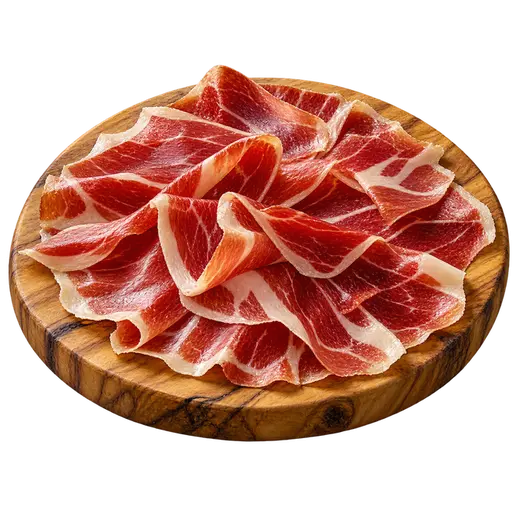 Acorn-fed Iberian hamJamón ibérico de bellotaThe leg held in its stand: a pig fattened on acorns, salted and dried for years, cut against the grain.
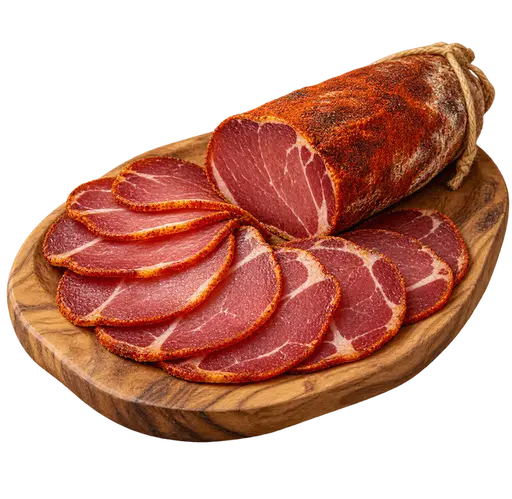 Cured loinCaña de lomo ibéricoThe whole loin rubbed with paprika and garlic and dried in a casing; the 2014 standard names it beside the hams.
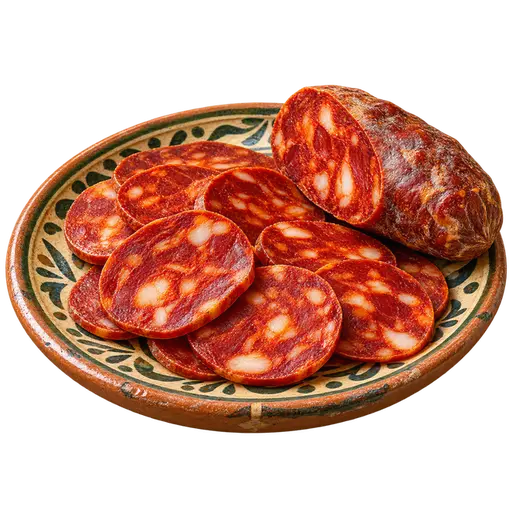 Iberian chorizoChorizo ibéricoThe same meat with pimentón worked through it, which is what makes it red rather than hot.