Landmark · Andalusia · Andalucía · Spain · around 1900
FlamencoFlamenco
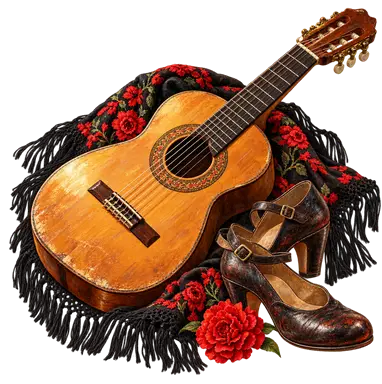
Guitar, palms and a stamping heel, from the Gitano quarters of Andalusia.
The story
Flamenco took shape among the Gitanos of Seville, Jerez and Cádiz in the 1700s and 1800s, in courtyards and back rooms before it ever reached a stage. It is three things at once: the cante, the singing, which came first; the toque, the guitar; and the baile, the dance, with the hands and the heels keeping the rhythm.
It is built on compás, a cycle of beats with the accents in unusual places, and on palos, the forms: soleá slow and heavy, bulería fast and joking, seguiriya for grief, alegrías from Cádiz for the opposite. A singer starts, the guitar answers, and the clapping around the edge keeps the time.
In 2010 UNESCO inscribed flamenco on the Representative List, naming Jerez, Cádiz and Seville among the towns associated with its formation. That is the same corner of Andalusia as the sherry and the ham, so a night out in Jerez or Seville can bring all three.
Today
Today it is performed at tablaos and peñas, and Seville holds the Bienal de Flamenco every two years.