Workshop / producer · Andalusia · Andalucía · Spain · around 1900
The grove and the oil millOlivar y almazara
Sixty-six million trees in one province.
The story
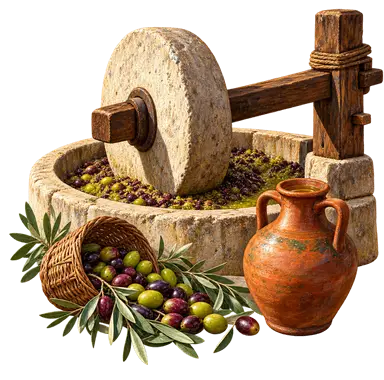
Spain is the largest olive oil producer in the world, and one province does most of the work. Jaén carries more than 550,000 hectares of grove and about 66 million trees, almost all of them the Picual variety, and produces roughly half of the country's oil. From a hill there the grove does not end; it goes over the next ridge and the one after.
The fruit is knocked or shaken down onto nets between November and January and taken to the almazara, the mill, the same day if the oil is to be good. It is washed, crushed stone and all, worked to a paste, and the oil separated out without heat. What comes off first is aceite de oliva virgen extra, green, bitter and peppery in the throat.
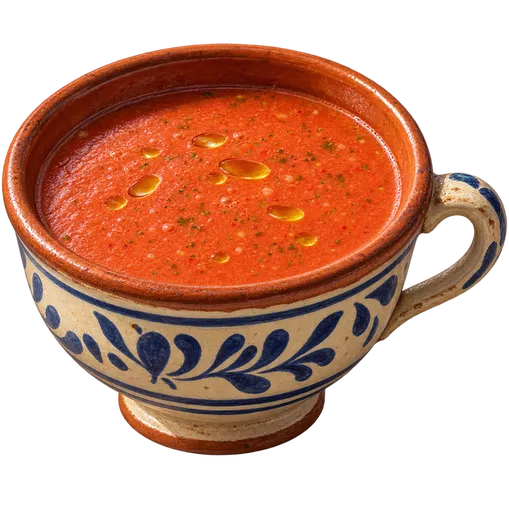
Olive oil softens the potatoes for the tortilla, fries the churros, dresses the octopus, goes into the cold soup and onto the rubbed bread, and is poured raw over everything else. A Spanish kitchen measures it by the glug.
Today
Trunk shakers now do much of the harvest, and new groves are planted in dense rows built for machines.
What this kitchen cooks
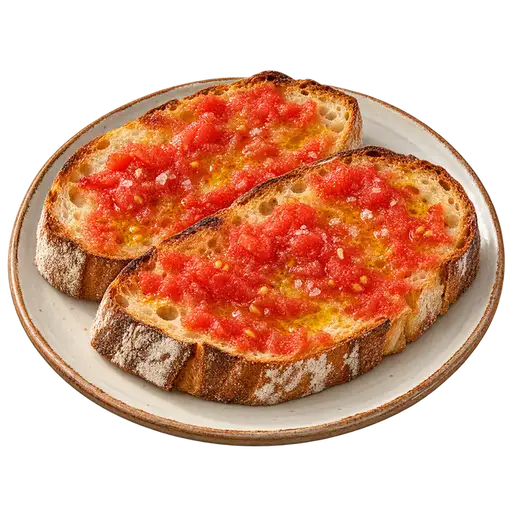 Bread with tomatoPa amb tomàquetCountry bread rubbed with a cut tomato, then oil, then salt, in that order and no other.
- GazpachoGazpacho andaluzBread, oil, garlic, vinegar and tomato, pounded together and drunk cold in the shade of the patio.
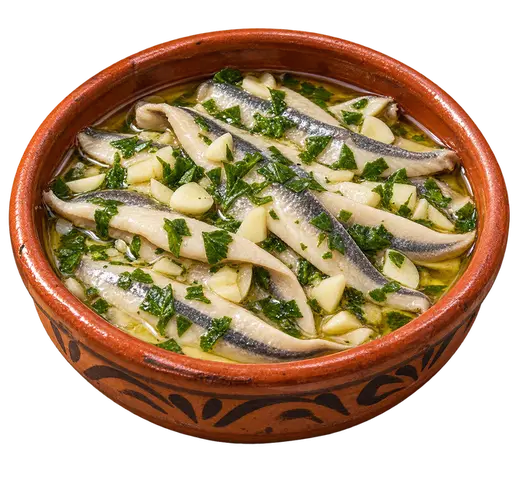 Marinated anchoviesBoquerones en vinagreFresh anchovy filleted and cured in vinegar, garlic and parsley, served cold in oil beside the vermouth.