Ingredient · The south and the Andaman · ภาคใต้ · Thailand · around 1900
Coconutมะพร้าว
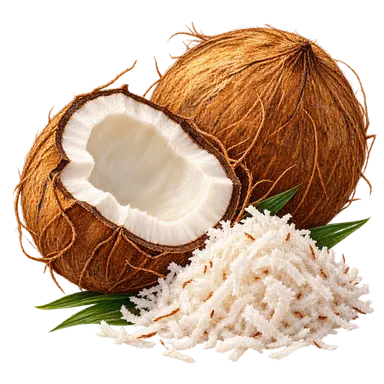
The milk is the flesh, squeezed twice.
The story
Coconut palms stand in groves the length of the peninsula and along every canal, and almost nothing in a Thai kitchen is untouched by them. The commonest misunderstanding is the first to clear up: the milk is not the water inside the nut. It is the mature white flesh, grated on a toothed stool and squeezed through a cloth.
It is squeezed twice, and the two pressings do different work. The first, hua kathi, is thick cream, and it is fried in a pan until its oil separates out of it before any paste is added; that step is what makes a curry taste right. The second, thin and paler, becomes the sauce the meat and vegetables cook in. Neither is interchangeable, and a cook with only one of them has half a curry.
The rest of the tree is used too. A young nut has its top struck off with a cleaver and the water drunk from the shell, then the soft flesh scraped out with a piece of husk. The old nut gives oil and flesh for sweets, the leaf roofs a house, and the husk scours a floor.
Today
Fresh coconut cream is still pressed at wet markets, and canned or boxed milk is now sold everywhere. Young coconuts for drinking are sold chilled from street carts.
What people make with it
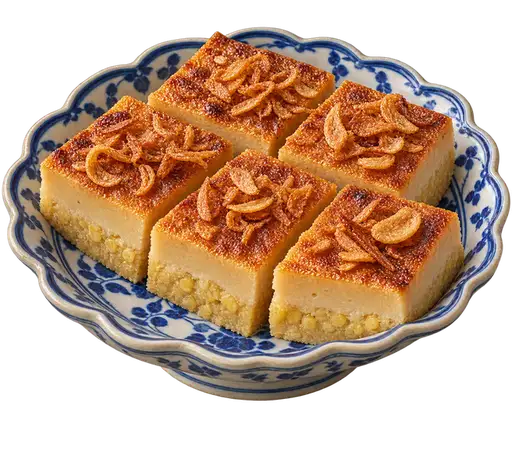 Khanom mo kaeng · baked coconut custardขนมหม้อแกงA baked custard of duck egg, coconut milk and palm sugar over mung bean, browned under fried shallot.
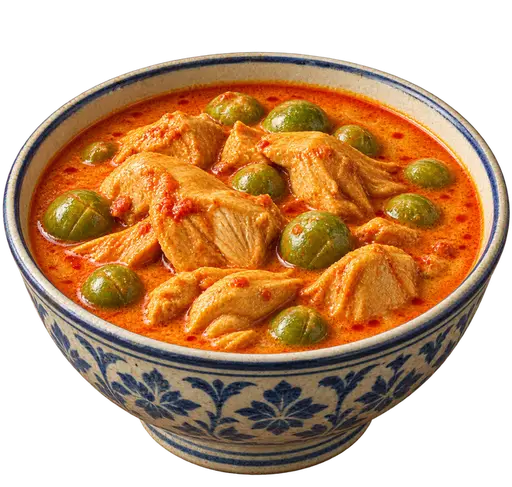 Red curryแกงเผ็ดDried red chillies soaked and pounded, fried in split coconut cream, then thin milk, meat and pea aubergine.
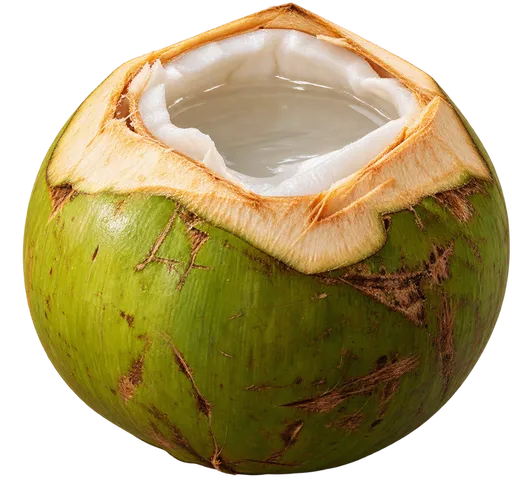 Young coconutน้ำมะพร้าวอ่อนThe top struck off with a cleaver and the water drunk from the shell, then the soft flesh scraped out.