Home kitchen · Bangkok and the river · กรุงเทพฯ · Thailand · around 1900
The shophouse kitchenร้านตึกแถว
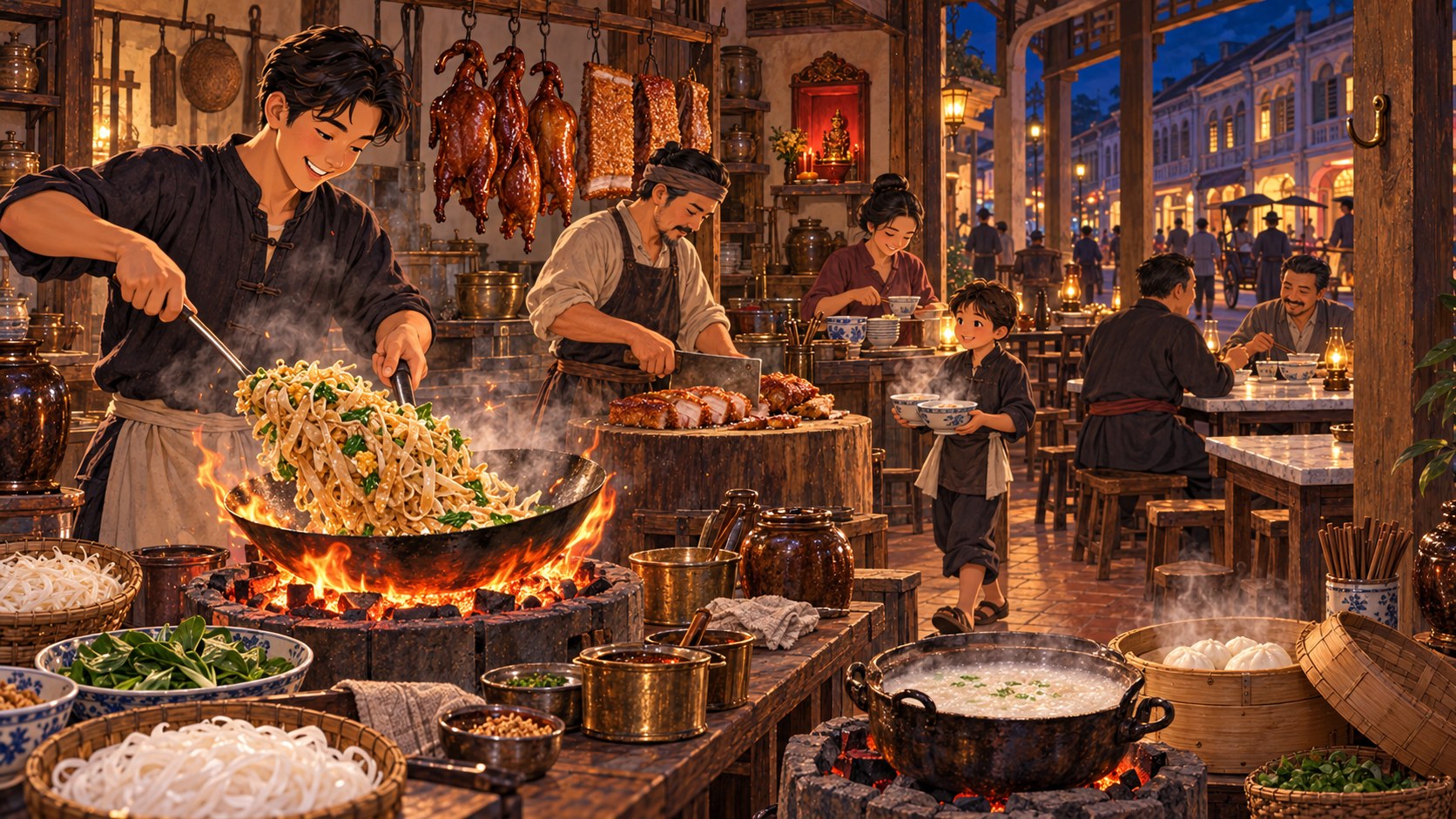
Sampheng’s Teochew kitchen on the newly cut Yaowarat street: the wok, the noodle, the roast meats, the charcoal.
What to look for
Toss the wok
The Chinese population of Siam rose from about 230,000 in 1825 to about 792,000 in 1910, Teochew the largest group, and the wok, the noodle and the roast meats came with those people.
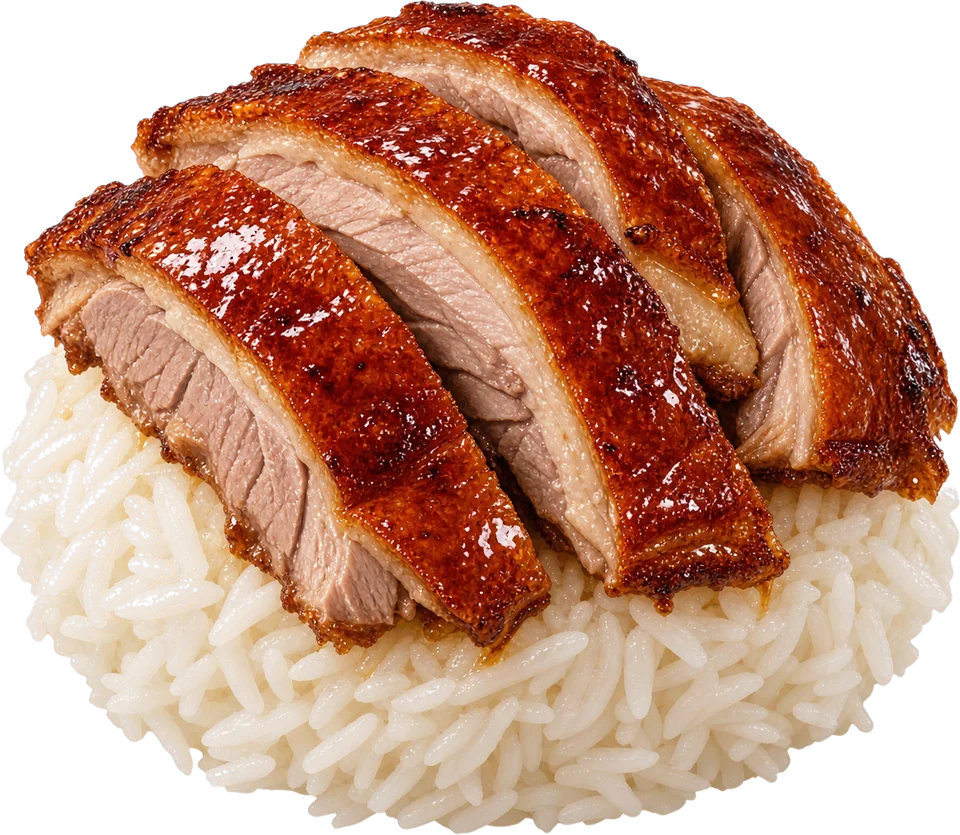
Look at the duck
Yaowarat Road was cut through the old Sampheng lane between 1892 and 1900 by decree of King Chulalongkorn, and the business of the quarter moved out of the lane and onto the new street.
Lift the steamer lid
What a visitor now calls Thai street food is reported to have begun in these Chinese quarters in the early twentieth century and to have become general only in the 1970s. The account is widely repeated, but no document dates it.
The story
A Bangkok shophouse where Chinese and Thai cooking meet at the wok.
Bangkok's Teochew and other Chinese communities built busy food streets around narrow shophouses. The kitchen faces the pavement, with a wok, stockpot and chopping block close to the customers. Rice noodles, roast meats, stir-fried greens and rice porridge sit beside Thai chillies, fish sauce and fresh herbs.
Chinese cooks shaped everyday Bangkok food. Walk through Yaowarat or an older market district and look for shops specialising in one craft, such as duck noodles, fish-ball soup or wok-fried rice noodles. The sign usually names the dish.
Today
Yaowarat, Bangkok's Chinatown, still has shophouse cooks working over woks, and its street stalls are busiest after dark.
What this kitchen cooks
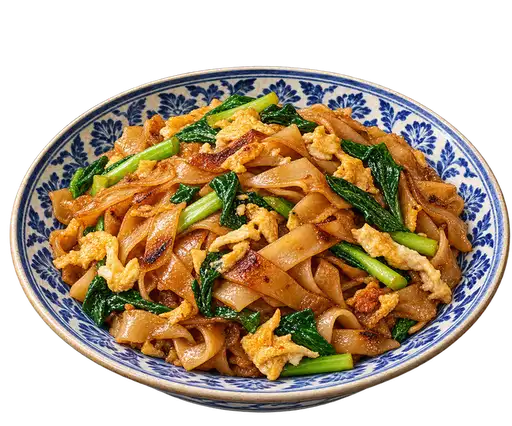
- Fried rice noodlesก๋วยเตี๋ยวผัดFlat noodles tossed in a charcoal-fired wok with soy, egg and greens; the ancestor of the pad thai of the 1940s.
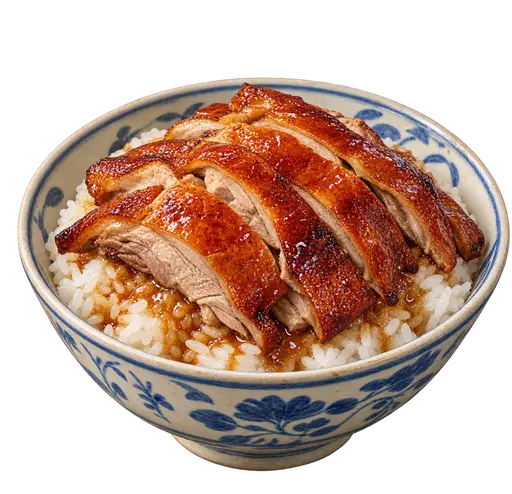 Roast duckเป็ดย่างHung on a hook over the block, chopped through the bone to order and laid over rice with its juices.
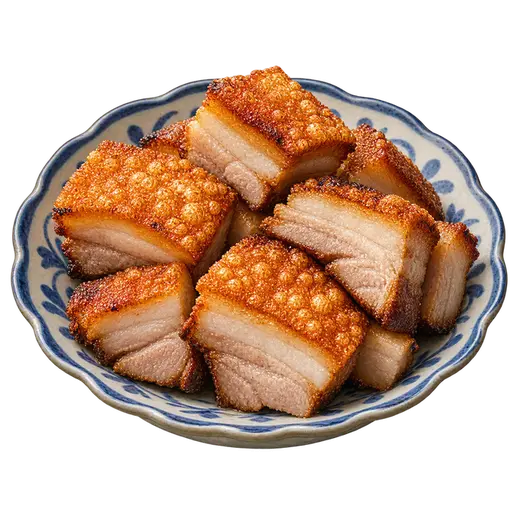 Crisp pork bellyหมูกรอบSkin dried, salted and blistered over charcoal, then chopped into squares that crack under the cleaver.
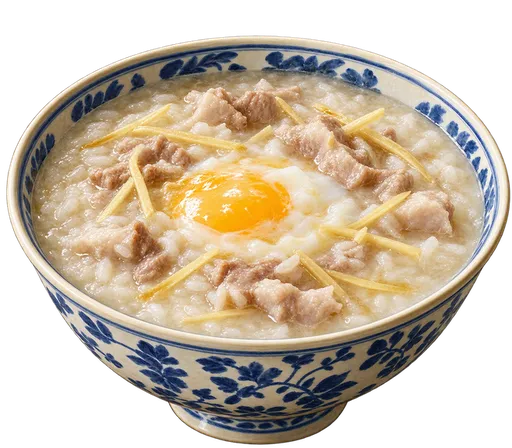 Rice congeeโจ๊กRice boiled until the grains dissolve, with pork, ginger and a raw egg broken in at the counter.
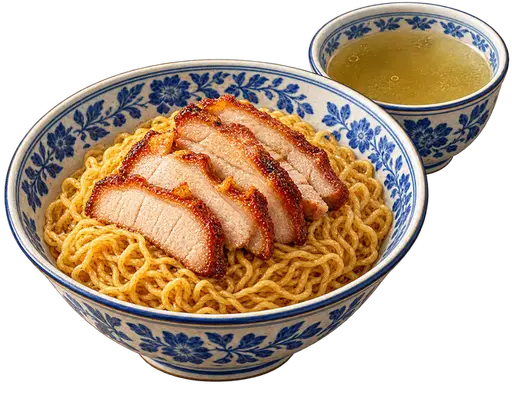 Bamee egg noodlesบะหมี่Chinese wheat-and-egg noodles served dry with roast pork, with a bowl of broth beside.
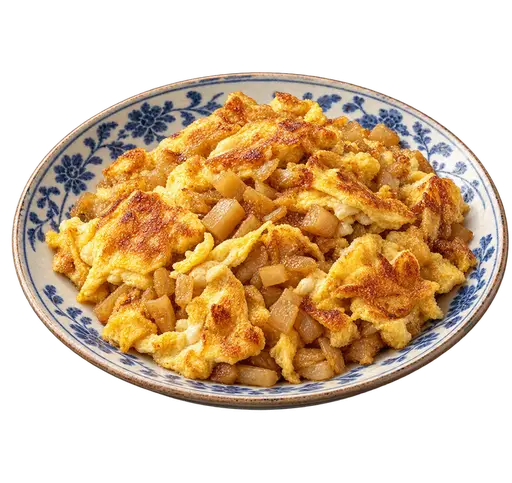 Salted radish omeletteไชโป๊วผัดไข่Preserved radish from the jar fried hard into egg, a Teochew breakfast eaten with congee at the marble table.
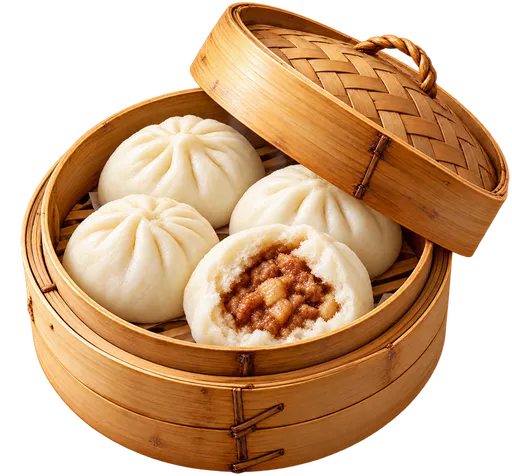 Steamed bunsซาลาเปาPork or sweetened bean inside a white yeasted bun, steamed in a stack with the lid lifted in front.
 Fried dough sticks with soy milkปาท่องโก๋กับน้ำเต้าหู้Twin sticks of fried dough torn and dipped in warm sweet soy milk, a breakfast the Teochew brought to the shophouse streets.
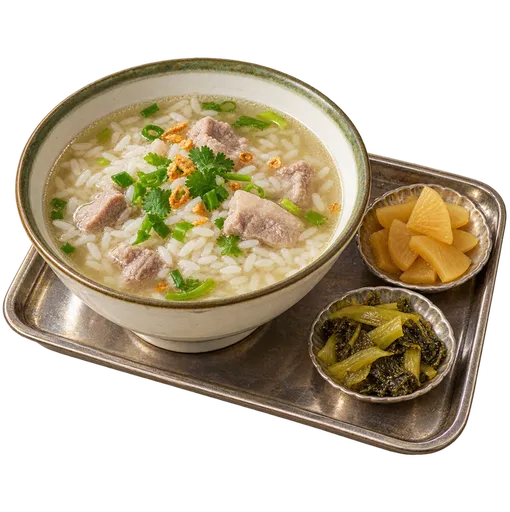 Rice soupข้าวต้มWhole rice grains in a clear pork broth, with salted radish, pickled greens and salted egg in saucers round it, morning and night.
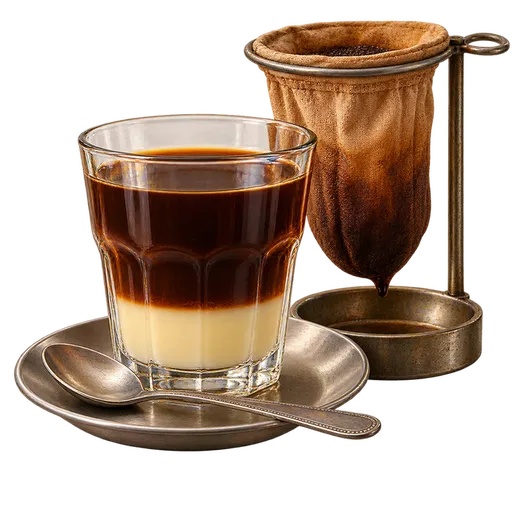 Old-style coffeeกาแฟโบราณCoffee strained through a cloth sock onto a layer of sweetened condensed milk, stirred together at the marble table of a Chinese coffee shop.
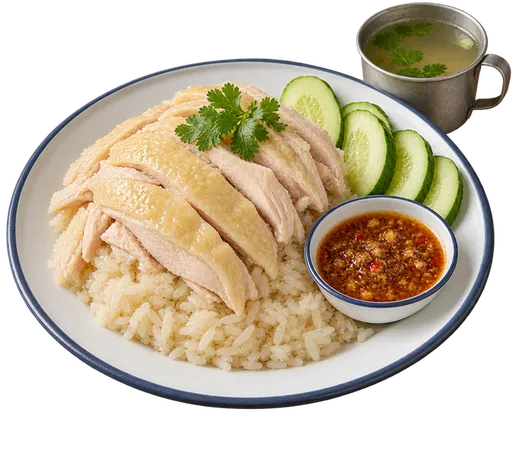 Chicken riceข้าวมันไก่Poached chicken sliced over rice cooked in its fat and stock, with ginger sauce and broth: the Hainanese plate of the shophouse street.
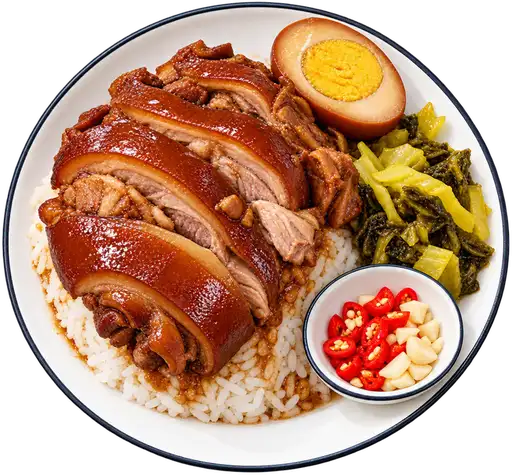 Stewed pork leg on riceข้าวขาหมูPork leg stewed for hours in soy and five-spice, sliced over rice with half an egg, pickled mustard greens and raw chilli.
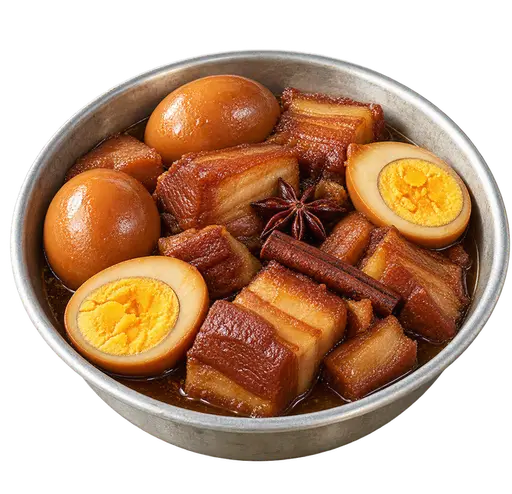 Five-spice egg and pork stewไข่พะโล้Eggs and pork belly stewed in a sweet-salty soy broth with five-spice and cinnamon, a Teochew pot kept warm all morning.
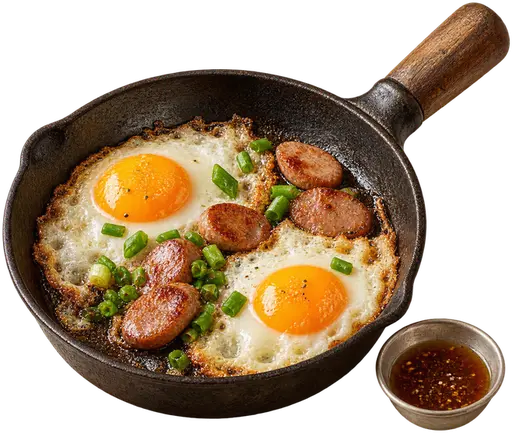 Eggs in a panไข่กระทะBorn later: eggs and sliced sausage fried in a small iron pan and brought to the table in it, now a Bangkok café breakfast.