Street stall · Istanbul · İstanbul · Turkey · around 1900
Simit by the ferrySimitçi
Sesame rings, a glass of tea, and the next ferry across the Bosphorus.

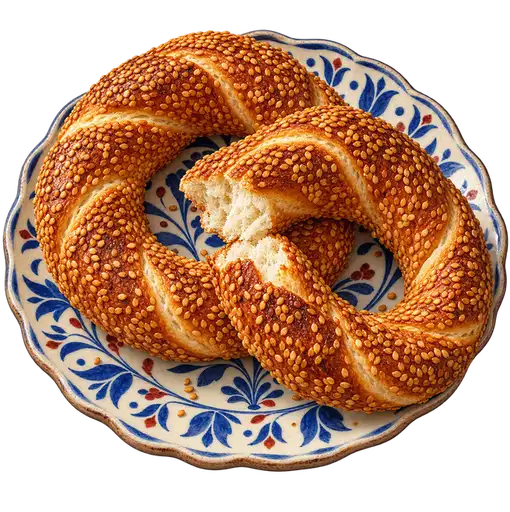
What to look for
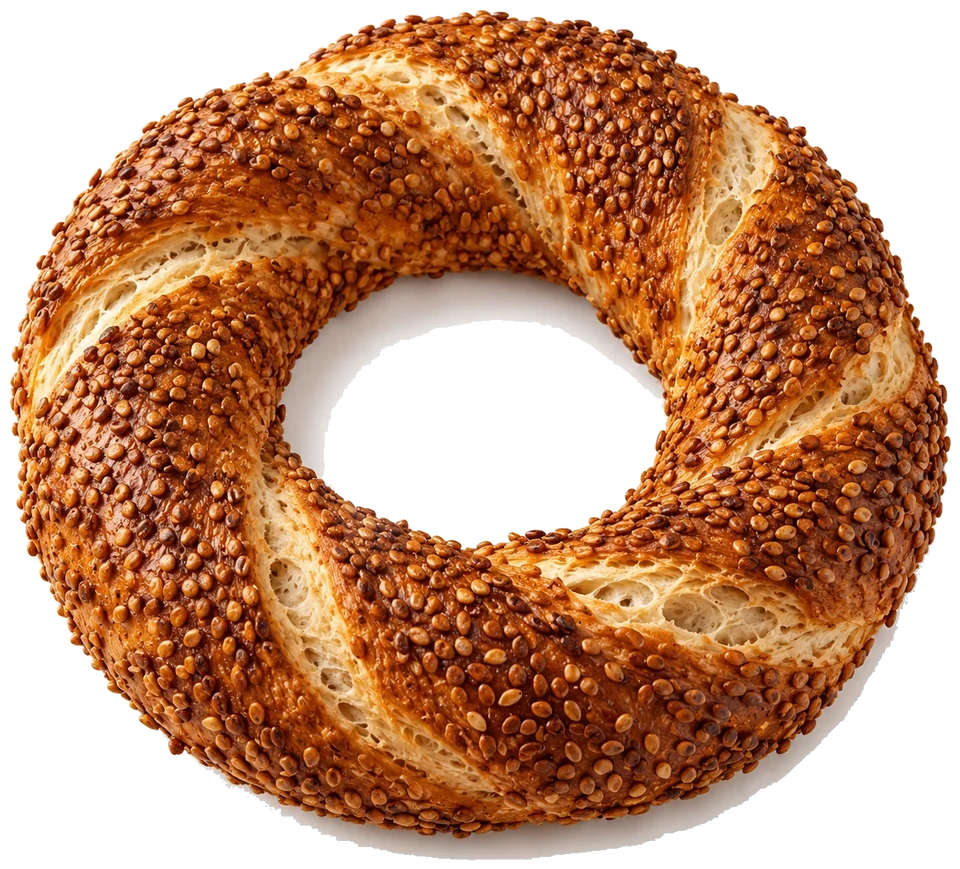
Break a sesame ring
A simit gets its glossy crust from a molasses dip before it is rolled in sesame. Pick up a ring for the ferry, or sit down with cheese and tea.
Tea before the crossing
Steam curls from the tea glass. There is time for a sip before the ferry leaves.
Watch the Bosphorus
Ferries come and go all day, and the simit seller keeps serving the next customer.
The story
A sesame ring for the crossing.
Warm simit, cheese and tea are an ordinary Istanbul morning. The ring is dipped in grape molasses, rolled in sesame and baked until the crust turns dark gold, then sold from red carts along the quay and on board the ferries.
A court record from Üsküdar in 1593 lists simid-i halka, ring-shaped simit with a fixed price and weight. Earlier sixteenth-century records use the word too, but they may mean a fine white bread without the ring. In the next century the traveller Evliya Çelebi counted simit sellers among Istanbul’s trades.
A ring is eaten on the walk to the ferry, or slowly at breakfast with white cheese and a glass of tea. Break through the sesame crust and the inside is chewy. Sellers keep the rings in a glass-sided cart, and a plain ring costs so little that many people buy one just for a single ferry ride. The Greek koulouri is a close cousin with the same sesame crust, and in Istanbul a ring with a slice of white cheese is the classic quick breakfast.
Today
Simit is still sold from red street carts and bakeries across Istanbul, and on board the city's commuter ferries.
What this kitchen cooks
- SimitSimitA ring of dough dipped in grape molasses, rolled in sesame and baked; the cart sells nothing else.