Home kitchen · The Weald · Kent · United Kingdom · around 1900
The hop-pickers' cookhouseHopping
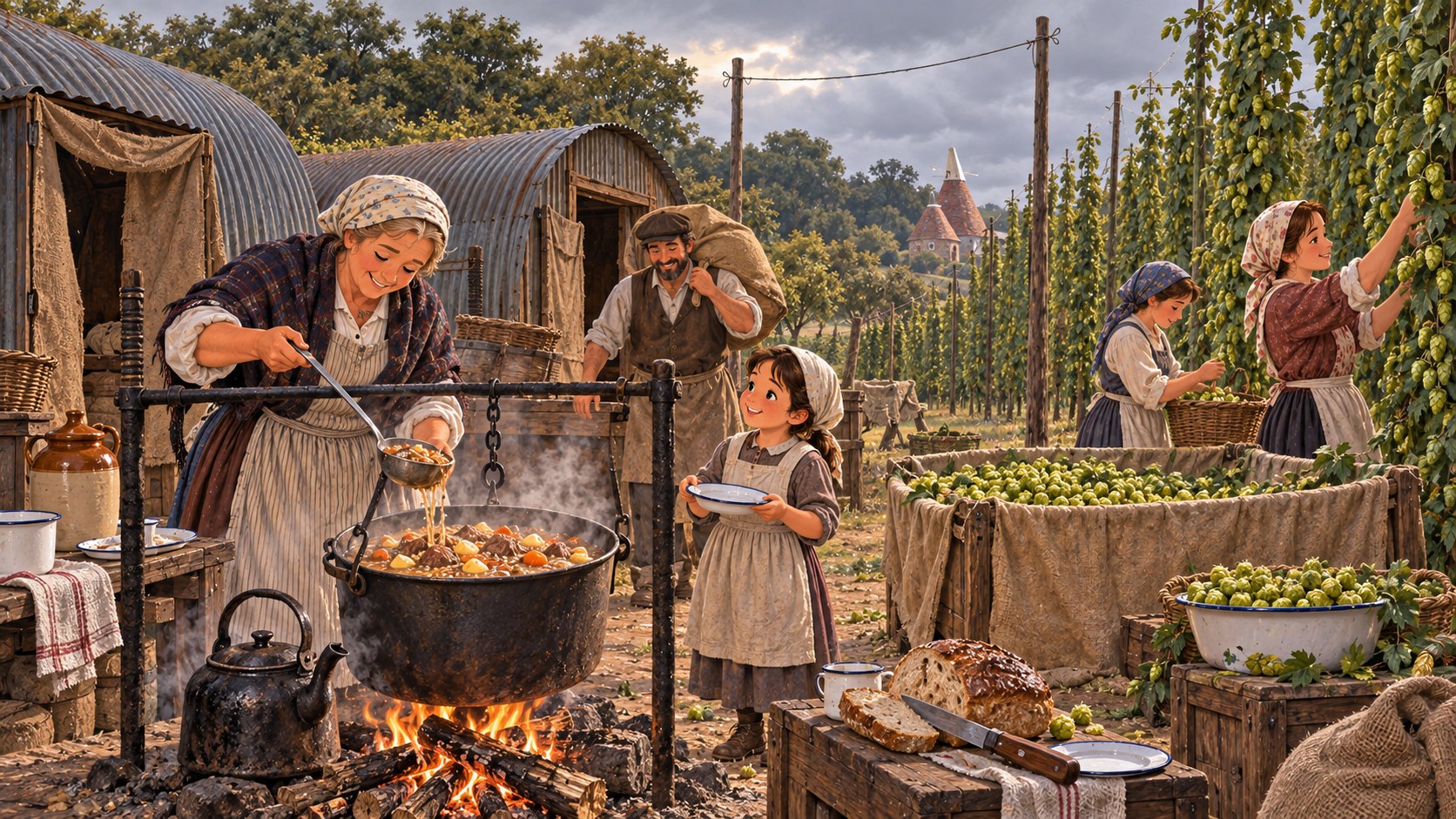
September in Kent: a pot on its chain over an open fire, and as many as a quarter of a million Londoners living in the fields.
What to look for
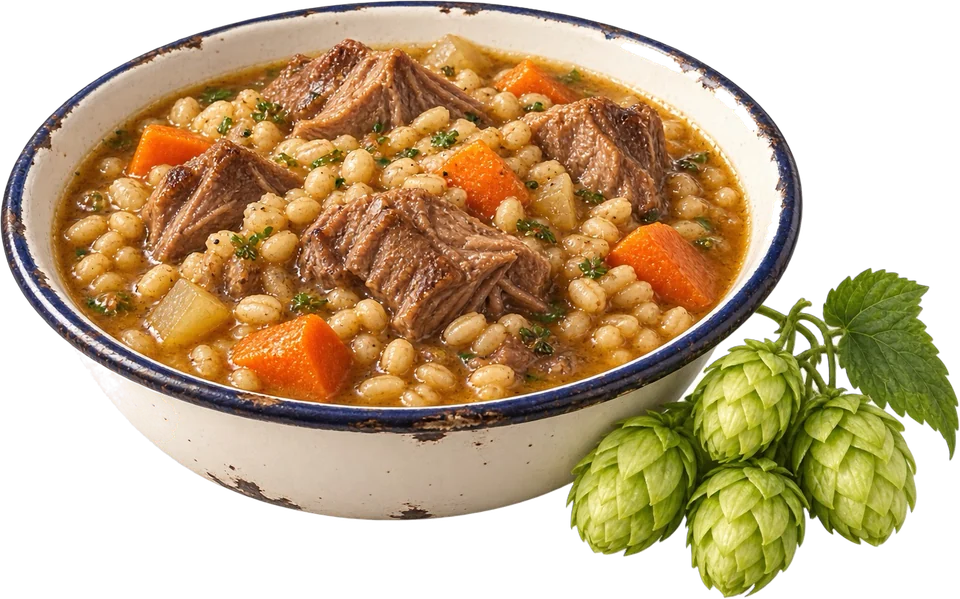
Swing the pot
From the late nineteenth century until the 1960s, Londoners went down to Kent every September to pick hops. Estimates of how many came run from tens of thousands to two hundred thousand, and one puts it at a quarter of a million by the early twentieth century.
Look in the hop bin
English hop fields reached their peak in 1878: 71,789 acres, about forty thousand of them in Kent, spread over some three hundred parishes. That is why Kent has so many oasts, the kilns where hops were dried. Pickers were paid by the bushel, and the measurer's word settled the day's wage.
Cut the loaf
Pickers lived in hopper huts, and in many places a hut was a single room of corrugated iron with a straw-filled mattress. They cooked outside on a fire like this one. The same families went back to the same farm for generations and called it their holiday.
The story
Mutton stew, bread and tea for families picking hops in Kent.
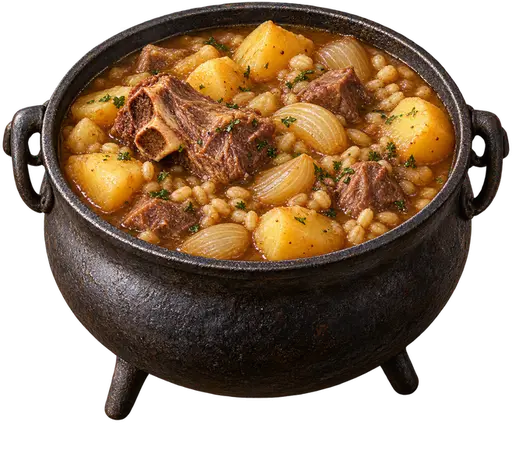
Each September, families travelled from London to pick hops in Kent. At the cookhouse, neck of mutton simmered with potato, onion, carrot and pearl barley in a large iron pot. Bread, bacon and tea kept the pickers going through long days in the hop garden.
Many pickers were women and children from the East End. They lived in simple huts, cooked over shared fires and were paid by the amount they picked. The trip was remembered as a holiday because it offered fresh air and a break from the city, while the work itself remained hard and poorly paid.
Kent still grows hops for British beer. Old oast houses (kilns for drying hops) with their white roof cowls still stand across the county, and local ales go well with a simple lamb or barley dish.
Today
Machines took over the hop harvest in Kent by the 1960s, and the family trips from London ended.
What this kitchen cooks
- Mutton stew over the fireThe hop-pickers' potNeck of mutton, potato, onion and barley in an iron pot on a chain, cooked all day beside the bin.
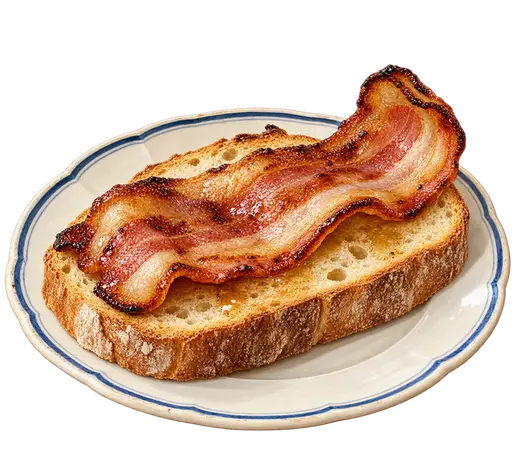 Bacon on a toasting forkOver the flameA rasher held over the brushwood fire on a fork until it curls, eaten on bread with the fat run in.
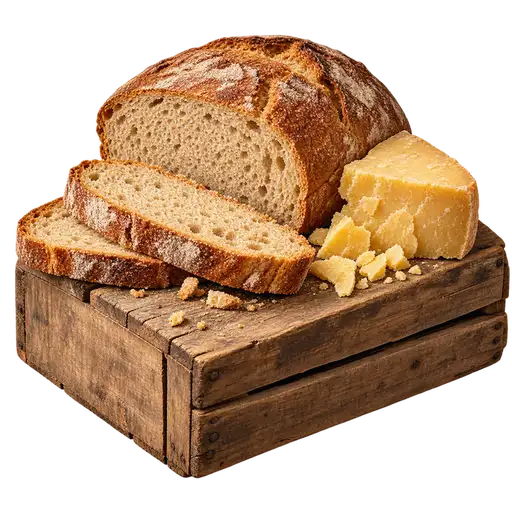 Bread and cheeseCut at the binA loaf cut on an upturned crate with a clasp knife, eaten where the picking stops for ten minutes.
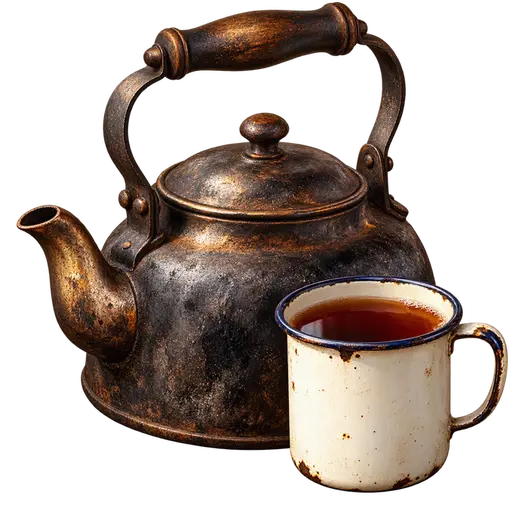 Smoked kettle teaBoiled on the fireTea boiled in a kettle on the same fire and drunk out of enamel, always tasting faintly of wood smoke.
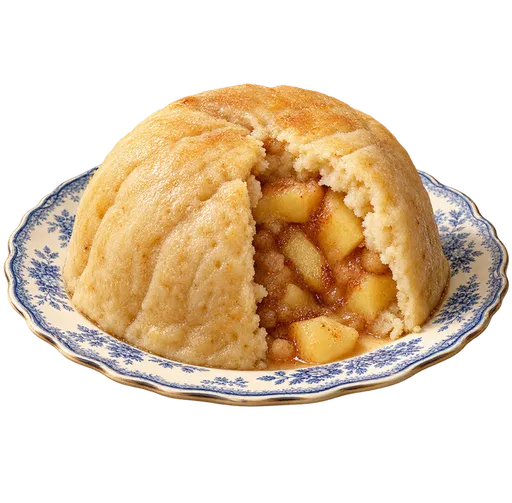 Apple puddingWindfallsApples that had fallen in the orchard at the end of the row, boiled in a cloth with suet and eaten hot.
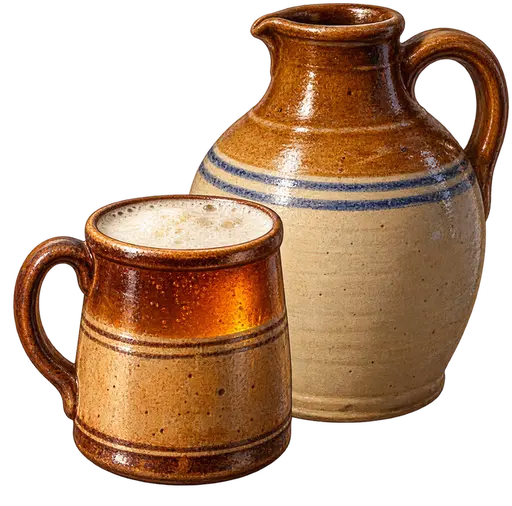 Beer from the stone jarThe farm's ownBeer brewed from the hops in this garden, fetched from the farm and passed round when the measurer has gone.