Signature flavour · The Weald · Kent · United Kingdom · around 1900
The hop garden and the oastFuggle and Golding
Kentish hops bring bitterness, aroma and keeping power to beer.
The story
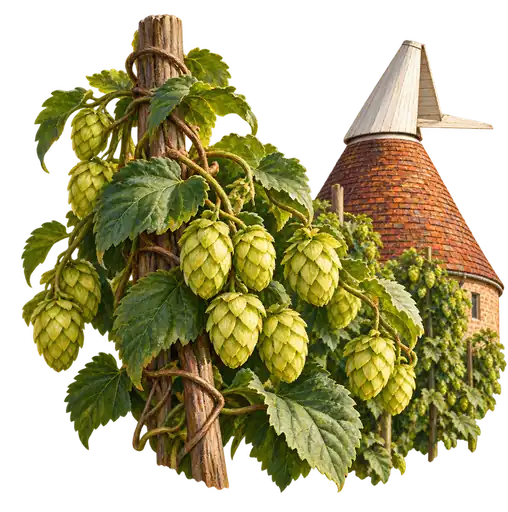
Hop bines climb tall strings through summer. In September the cones are picked and dried quickly in an oast house, a kiln built for hops, where warm air rises through a slatted floor and escapes through the turning roof cowl. Fuggle and Golding became important English varieties.
Hops balance the sweetness of malt and helped beer keep during transport. Kent's fields supplied breweries across Britain and beyond. Modern brewers still use English hops for earthy, floral and gently bitter ales. Kent pubs and local breweries still name the hop that gives each beer its aroma.
Today
Kent grows far fewer hops than it did around 1900, and most oast houses have been converted into homes.
What people make with it
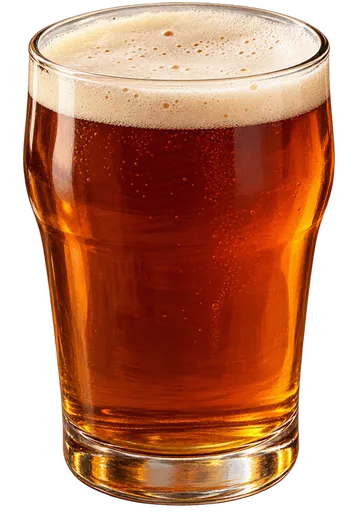 English bitterA cask ale in which earthy, floral English hops balance the sweetness of malt.
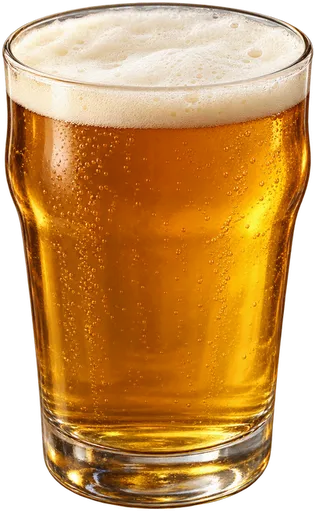 Pale aleA paler, more hop-forward beer whose aroma changes with the hop variety and when it is added.
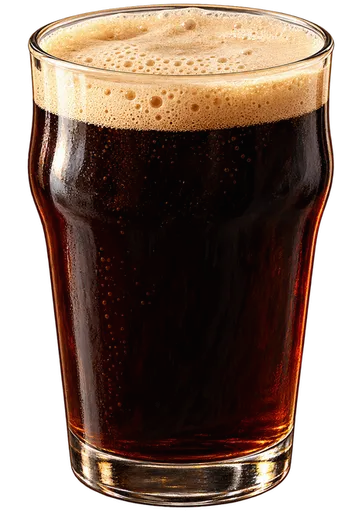 PorterA dark beer built from roasted malt, with hops adding bitterness and helping the beer keep.
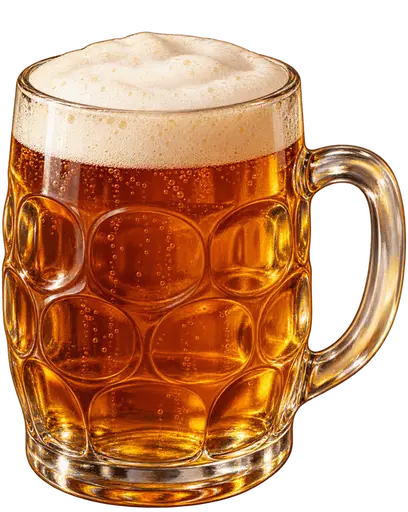 Fresh hop beerBeer brewed soon after harvest with undried hop cones for a short-lived green, herbal aroma.