Market / shop · The West Country · Cornwall & the Bristol Channel · United Kingdom · around 1900
The Cornish bakehousePasti
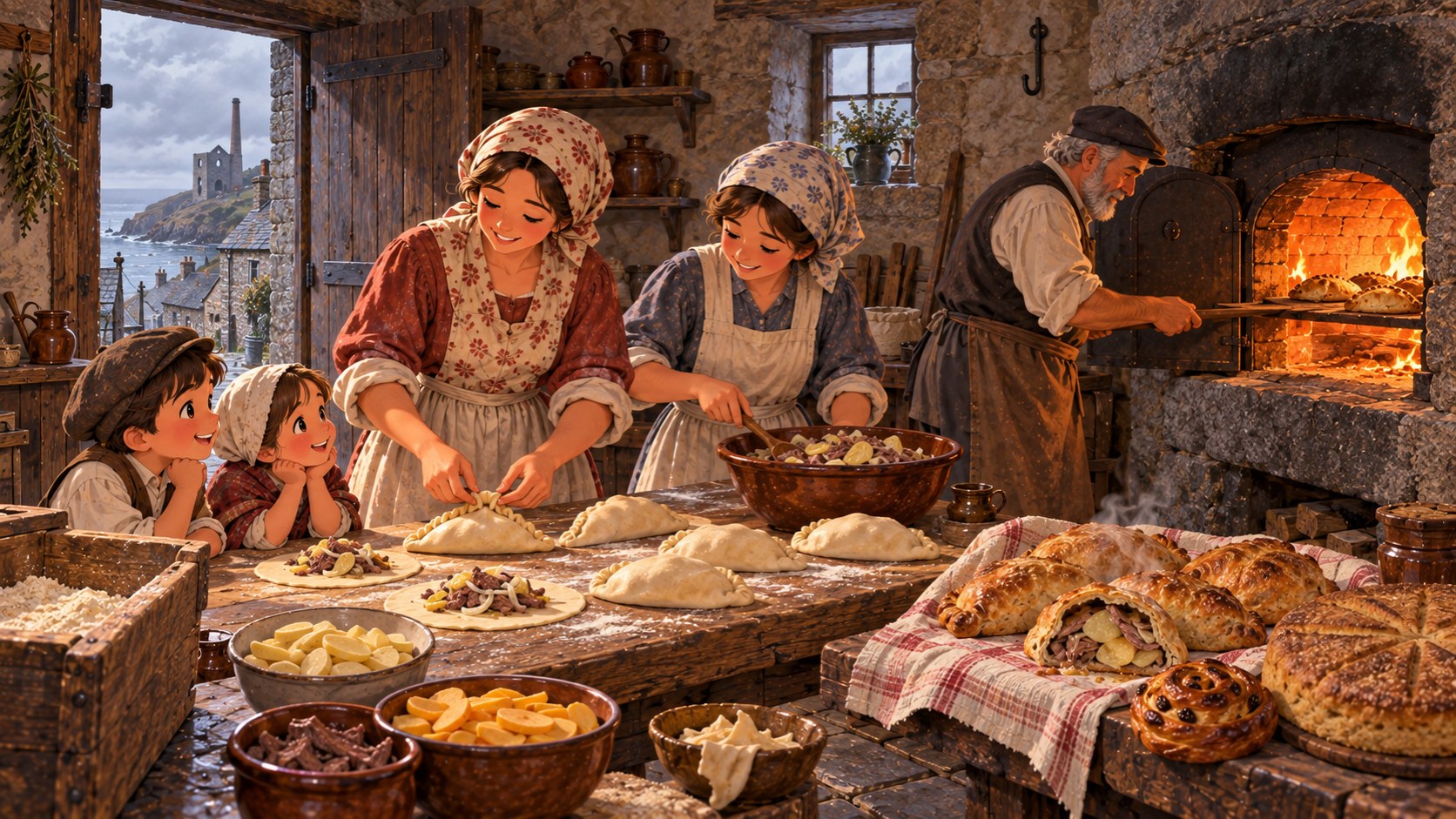
A granite oven above the cove, pasties crimped along the side, and a dinner with a handle going into the oven on a long paddle.
What to look for
Follow the crimp
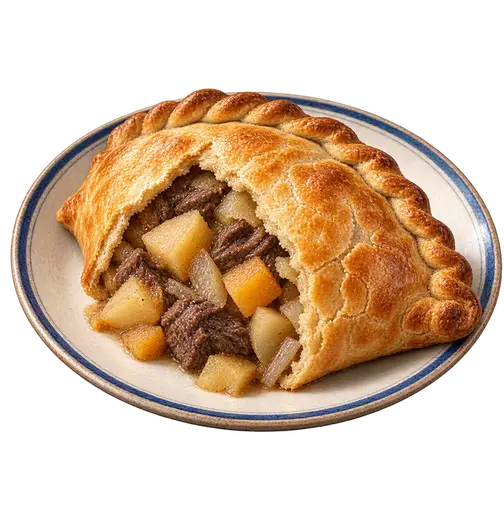
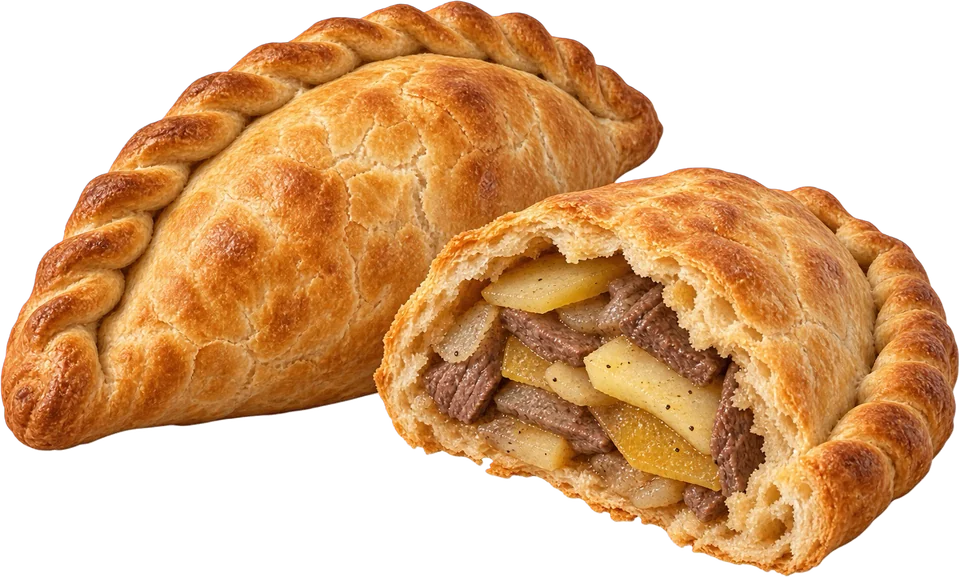
The crimp is the pinched, folded seam. On a Cornish pasty it runs along the side, never over the top. In Cornwall it is said to have been a handle for a miner whose hands carried arsenic, and initials are said to have been marked on one corner. Both are tradition, with no record from the time.
Break one open
The recognised filling is beef, potato, swede and onion, seasoned, and it goes in raw so that it cooks in its own steam inside the pastry. Swede and potato are sliced rather than diced, and there is no carrot in it at all.
Look into the oven mouth
The earliest known Cornish pasty recipe is in a letter of 1746 held by the Cornwall Record Office, and it describes something quite unlike this one. The name was given Protected Geographical Indication status in 2011, which fixed both the shape and the filling.
The story
Beef, potato, swede and onion sealed into a Cornish working lunch.
A Cornish pasty wraps raw beef skirt, potato, swede and onion in sturdy pastry. Salt and plenty of pepper season the filling as it steams inside. The side crimp seals the edge and gives the pasty its familiar shape. Initials pressed into the pastry are said to have helped families tell each miner's dinner apart.
Pasties travelled well into the mines and stayed warm inside a cloth. Their fame followed Cornish miners to other mining regions around the world. Pasties were baked in village bakehouses, where one oven could feed a whole community of workers.
Bakeries across Cornwall still sell pasties, and protected Cornish versions follow agreed ingredients and methods. Choose one baked that morning and eat it warm near the coast or an old mining town.
Today
The last Cornish tin mine, South Crofty, closed in 1998. Pasties sold as Cornish have had protected status since 2011 and must be made in Cornwall.
What this kitchen cooks
- The pastyPastiBeef skirt, potato, swede and onion, put in raw, folded in shortcrust and crimped along the side.
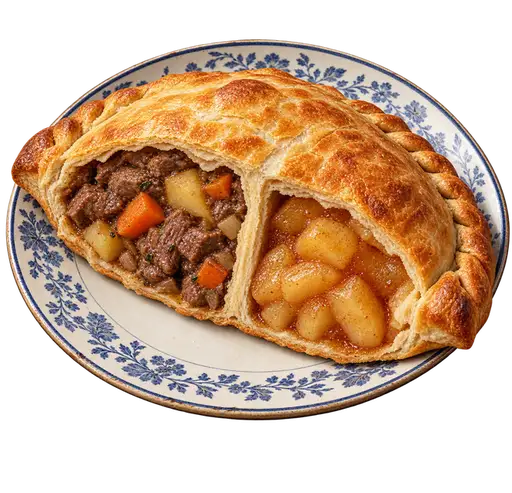 Sweet-ended pastyTwo dinners in oneMeat at one end and apple or jam at the other, divided inside, so a man carried his pudding too.
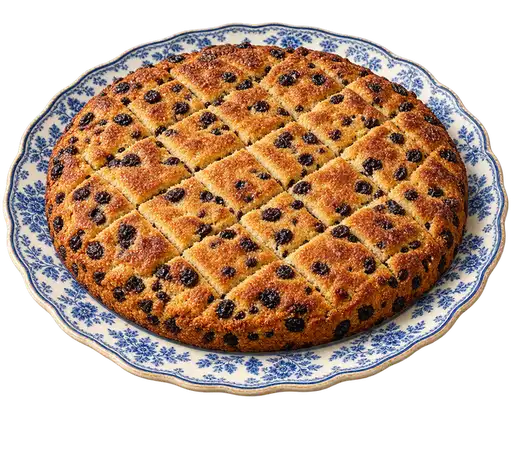 Hevva cakeHeavy cakeA flat currant cake scored in a net pattern, baked when the huer, the lookout on the cliff, called the pilchard shoals in.
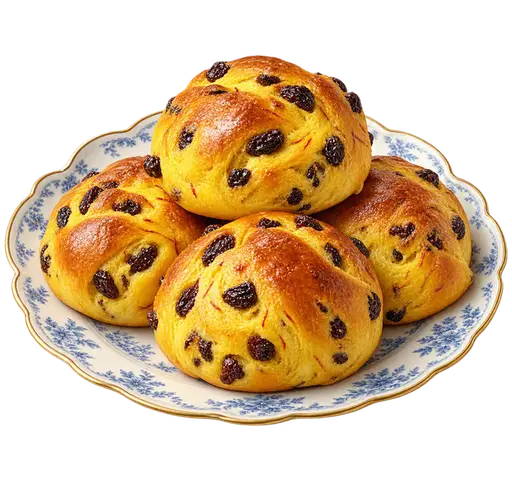 Saffron bunTea treat bunYeasted dough coloured and scented with saffron and studded with currants, baked for chapel outings and fairs.
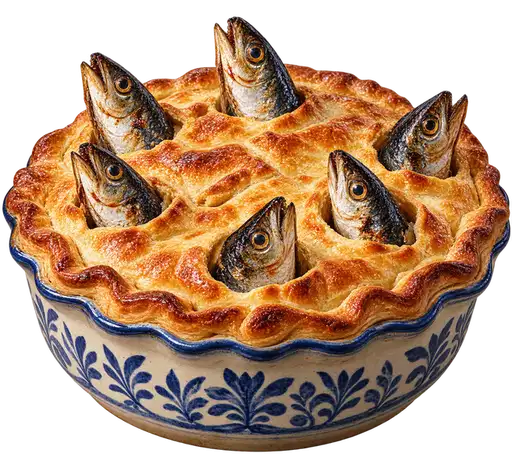 Star-gazy piePilchards looking upWhole pilchards baked under a crust with their heads through it, so the oil runs back into the fish.
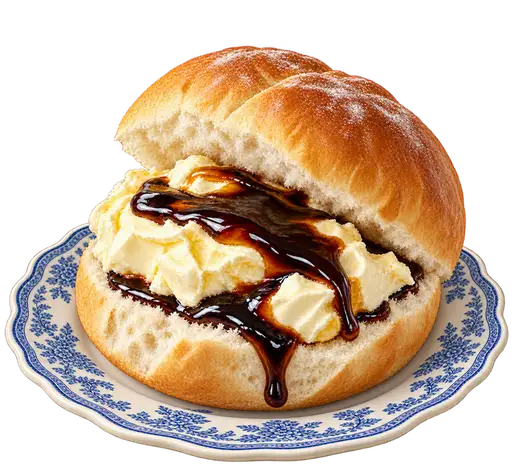 Cornish splitThunder and lightningA soft white roll split open and spread with clotted cream and black treacle, a pairing also called thunder and lightning.