Ingredient · Hanoi & the Red River · Hà Nội · Sông Hồng · Vietnam · early 1900s
The herb traysRau thơm
Sold loose, by the bundle, and eaten raw by the handful.
The story
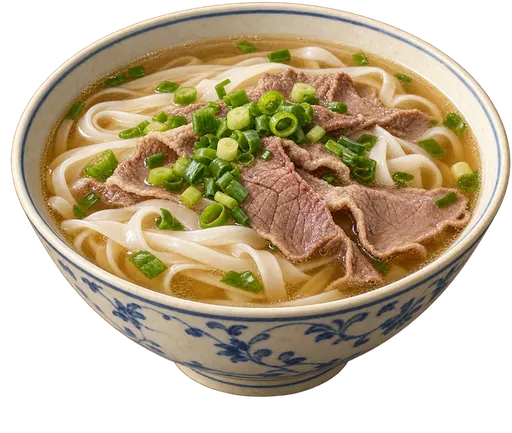
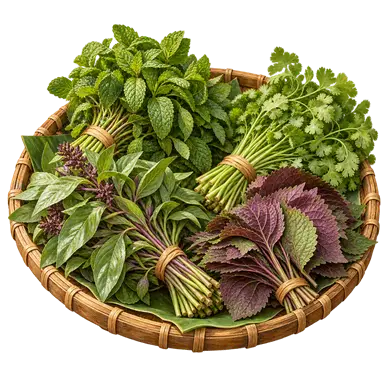
A Vietnamese bowl is finished at the table. Mint, coriander, basil and shredded banana flower come on a plate beside it (with bún chả, phở and mì Quảng), and the eater adds them leaf by leaf. That plate of rau thơm is the last seasoning.
The leaves are kept separate and kept whole. Mint, coriander, sawtooth coriander, perilla and Vietnamese basil with its purple stem are tied into their own bundles, stood in shallow water and pinched off in the amount asked for. Nothing is chopped, because a cut leaf loses its smell before it reaches the table.
Thai cooks pound lemongrass, galangal and lime leaf into a paste. Vietnamese cooks leave the herbs raw and loose, and add them last.
Today
A plate of fresh herbs still comes with phở, bún and bánh xèo, and markets across Vietnam sell the herbs by the bunch.
What people make with it
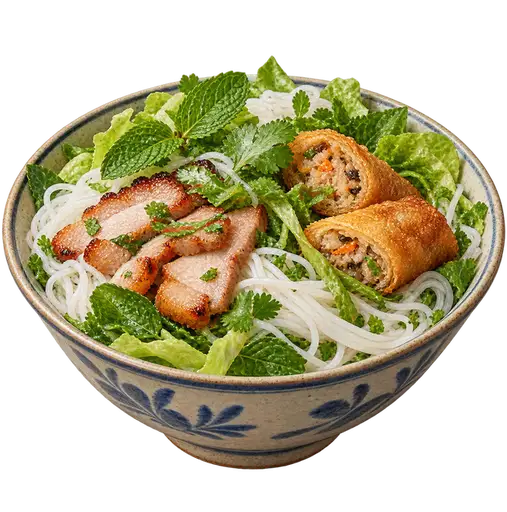 Fresh herb vermicelliBún rau sốngCool vermicelli with mint, coriander and crisp lettuce, eaten between bites of pork and fried roll.
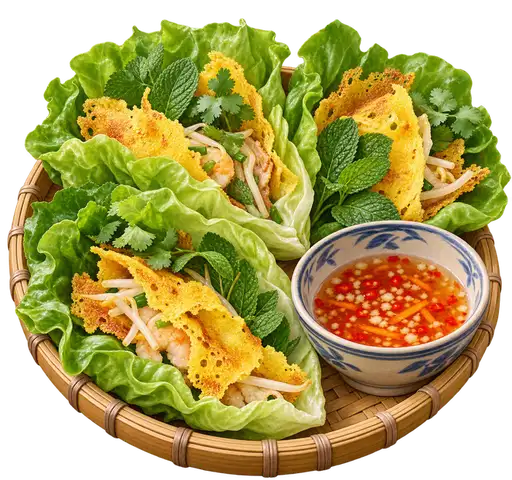 Fresh herb wrapsRau sống cuốn bánh xèoPieces of crisp crêpe are wrapped in lettuce with mint and coriander, then dipped in fish sauce.
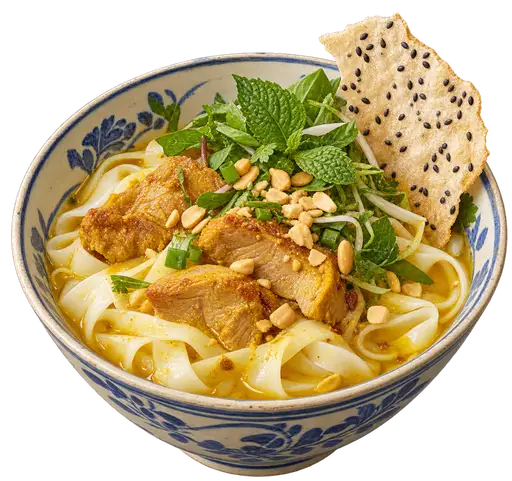 Quảng-style noodles · turmeric rice noodlesMì QuảngBroad rice noodles take one shallow ladle of turmeric broth, pork or shrimp, herbs, peanuts and sesame cracker.