Landmark · Huế & Hội An · Huế · Hội An · Vietnam · early 1900s
The Huế gateKinh thành Huế
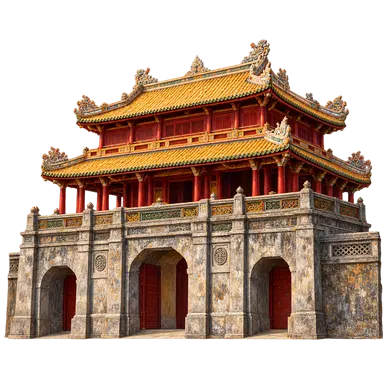
A walled city on the river, with its gate open to the kitchen gardens outside.
The story
The Nguyễn dynasty made Huế the capital of a unified Viet Nam in 1802, and it stayed the political, cultural and religious centre until 1945. In 1993 UNESCO listed the Complex of Huế Monuments, the first Vietnamese World Heritage site. The listing describes the Perfume River winding through the Capital City, the Imperial City, the Forbidden Purple City and the Inner City.
From this bank the city shows brick and earth ramparts, a tiled gate with a flag over it, a moat, and a boat working the river below. The city was laid out to be seen this way, from the water, and the gardens outside the walls are where its food is cooked.
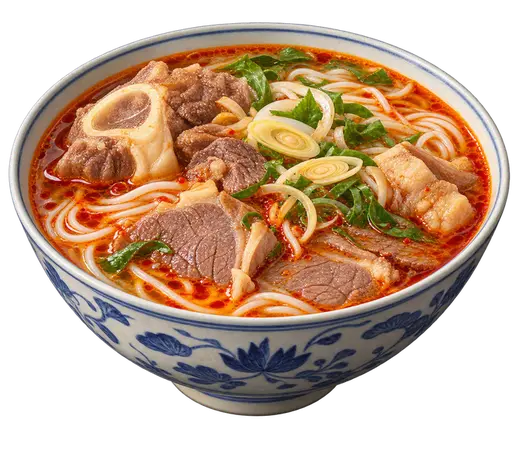
The link to the kitchens is care. Huế's cooking is known for many small, exactly made dishes and careful seasoning, which suits a city that was a capital for so long. That does not make a market bowl of noodles a court dish.
Today
The Complex of Huế Monuments has been a UNESCO World Heritage Site since 1993. Parts of the citadel were badly damaged in the fighting of 1968 and are still being restored.