Ingredient · The Mekong Delta · Đồng bằng sông Cửu Long · Vietnam · early 1900s
Rice in four formsGạo
One grain, and then a noodle, a sheet, a cake and a flake.
The story
Viet Nam has two great rice zones. In the northern and central lowlands most farmers transplant seedlings by hand, while the Mekong Delta is often sown directly. That is why Red River fields look worked by hand and delta fields look flooded and open.
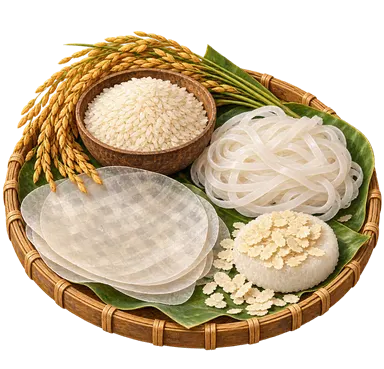
At the table the grain rarely stays a grain. Soak it, grind it wet and steam it on cloth, and you get the see-through sheet of bánh cuốn. Cut that sheet into wide strips and it is flat bánh phở. Press the batter into strands and dry them, and they are round bún. Dry the batter thin and hard and it is the bánh tráng wrapper. Cut young, roasted and pounded, the rice is the green cốm of a northern autumn.
Delta paddies have been farmed for a very long time, with fish and prawns raised in the same water. The fish, the grain and the rice-paper wrapper made from it all come from one flooded field, at different times of the year.
Today
The Mekong Delta is still Vietnam's main rice region. Machines now harvest much of the crop, and Vietnam exports millions of tonnes of rice a year.
What people make with it
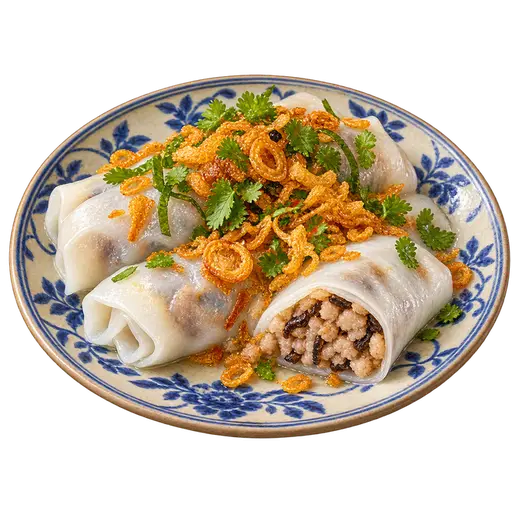 Steamed rice rollsBánh cuốnA thin rice sheet lifts from stretched cloth, wraps minced pork and mushroom, then takes shallots and herbs.
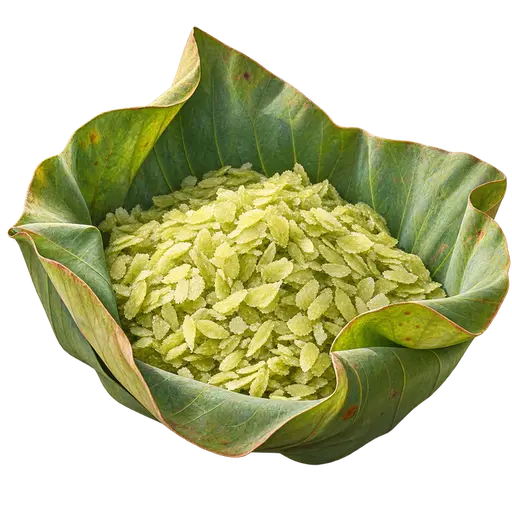 Young green riceCốmYoung sticky rice is roasted, pounded and winnowed into soft green flakes, then folded inside lotus leaf.
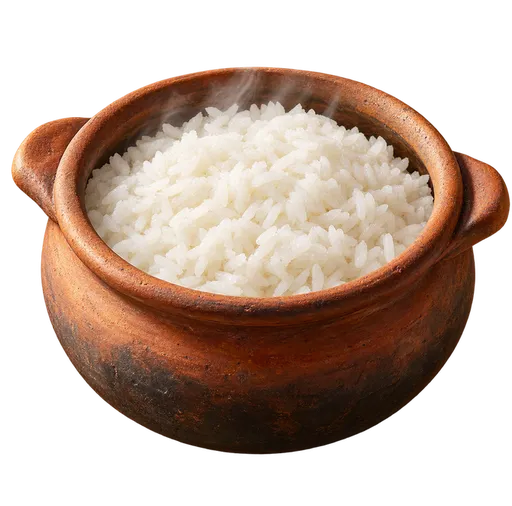 Steamed riceCơm trắngA clay pot of plain rice goes in the middle of the table, to be eaten with the broth, the glaze and every other dish.