Signature flavour · Chengdu & Chongqing · 成都与重庆 · China
Sichuan pepper花椒
The tingle behind Sichuan food.
The story
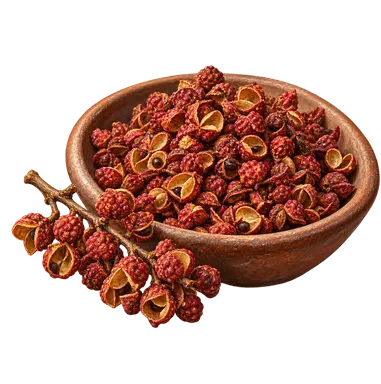
Sichuan pepper, 花椒, is the dried husk of the prickly-ash berry, a shrub native to China and one of its oldest seasonings, used since at least the Zhou dynasty, long before chillies arrived. Han emperors had their empresses' rooms plastered with pepper paste for warmth and fragrance, the 椒房, the pepper chambers.
It does not burn; it tingles. A molecule in the husk, sanshool, makes the lips buzz at about fifty times a second, the way a battery does on the tongue, and it smells of citrus and pine. The red husk, 红花椒, from Hanyuan is the classic; the green kind, 青花椒 or 藤椒, from the hills south of Chengdu is fresher and more lemony and has only been fashionable since the 1990s.
Cooks toast it in oil for fragrance, grind it with salt for 椒盐 to dip fried things in, scatter the powder over mapo tofu at the last second, and drop whole husks into hotpot broth and braises. With chilli it makes 麻辣, numbing-hot, the pairing Sichuan is known for; alone it is the older, quieter half.
What people make with it
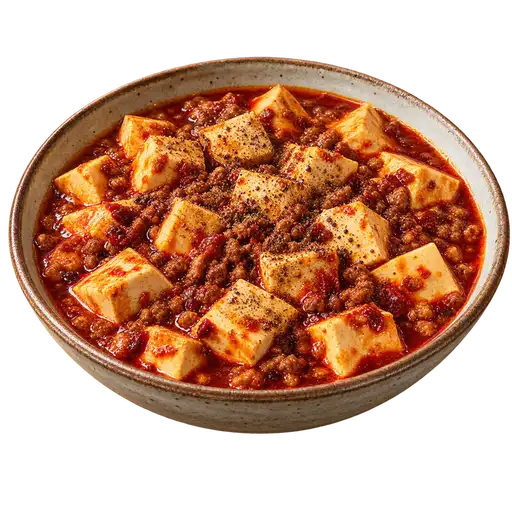 Mapo tofu麻婆豆腐Tofu simmered in chilli-bean paste with minced meat and a heavy dusting of ground Sichuan pepper at the end.
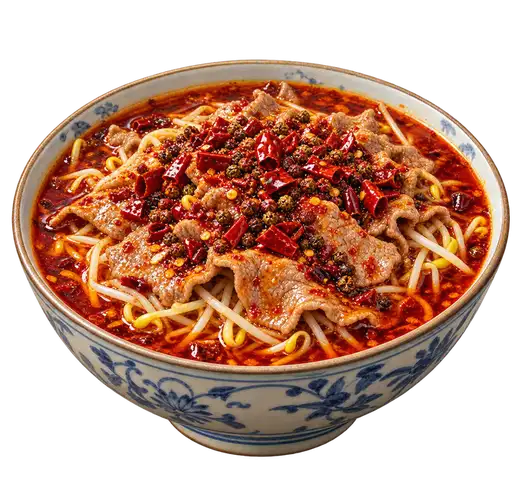 Water-boiled beef水煮牛肉Beef poached in a red broth over bean sprouts, finished by pouring smoking oil over the chilli and pepper on top.
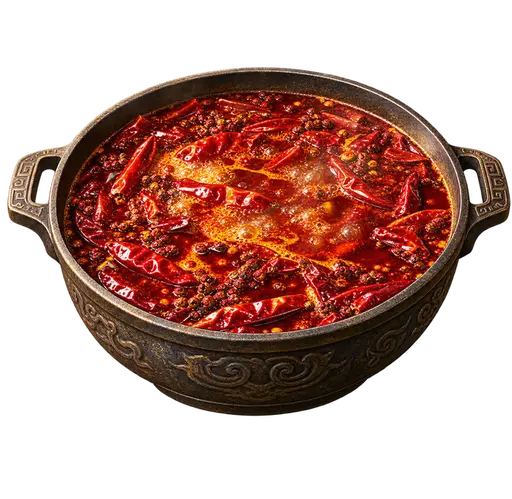 Málà hotpot · numbing-spicy hotpot麻辣火锅The house pot: beef tallow, chilli and Sichuan pepper boiled down into the broth everything else is cooked in.