Signature flavour · Chengdu & Chongqing · 成都与重庆 · China
Chilli辣椒
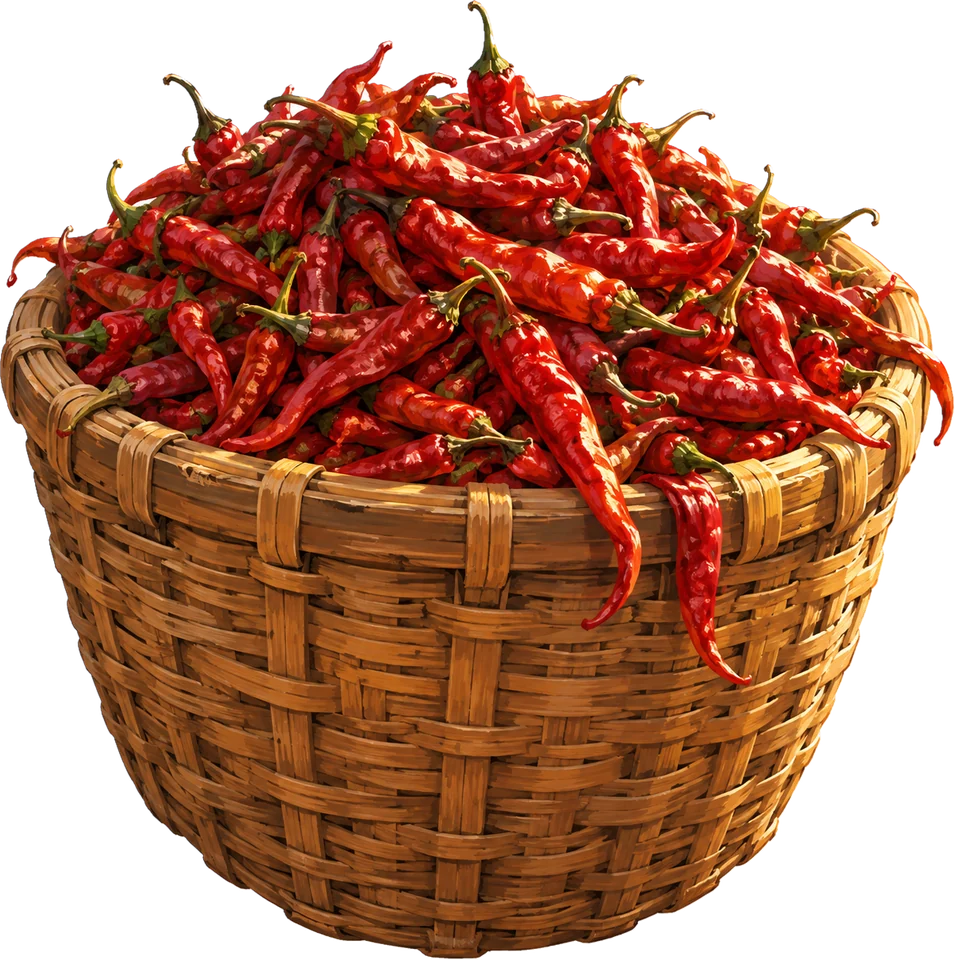
Fresh, dried, pickled, ground, or steeped into red oil.
The story
Chillies reached China in the late 1500s, carried from the Americas through the coast and up the Yangtze, and took another two centuries to become everyday food in Sichuan. The basin is humid and overcast most of the year, and people here believe chilli heat drives out the damp. Cooks who already loved pungent food, seasoning with Sichuan pepper and ginger, slotted the new plant straight in.
麻辣, málà, is the pairing the world knows: 麻 is the tingle of Sichuan pepper, 辣 the heat of chilli. Together, the numbing takes the edge off the burn, so you can keep eating. It is only one of Sichuan's flavour types, though. Cooks name more than twenty, 一菜一格, 百菜百味, each dish its own style: 鱼香, fish-fragrant, with pickled chilli, garlic and sweet vinegar and no fish in it; 家常, home-style, built on doubanjiang; 怪味, strange-flavour, where salty, sweet, sour, numbing and hot are all present and none wins; 荔枝味, lychee-flavour, sweet and sour like the fruit.
The chilli itself comes in kinds. 二荆条, the long slim Chengdu chilli, is for fragrance and colour and goes into doubanjiang and chilli oil; 朝天椒, the small pointed one, is for heat; 子弹头, the bullet, sits in between.
What people make with it
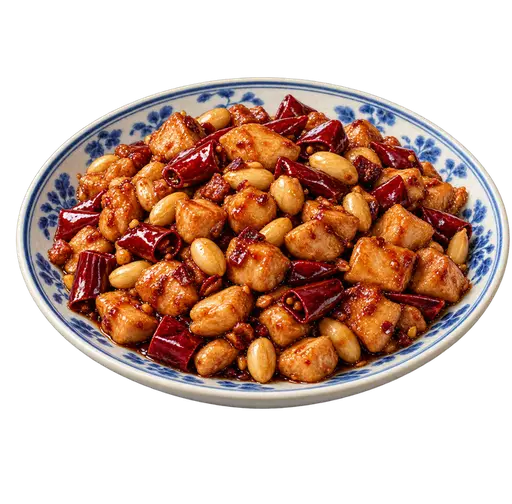 Kung pao chicken宫保鸡丁Diced chicken with peanuts and dried chillies in the sweet-sour sauce Sichuan cooks call lychee flavour.
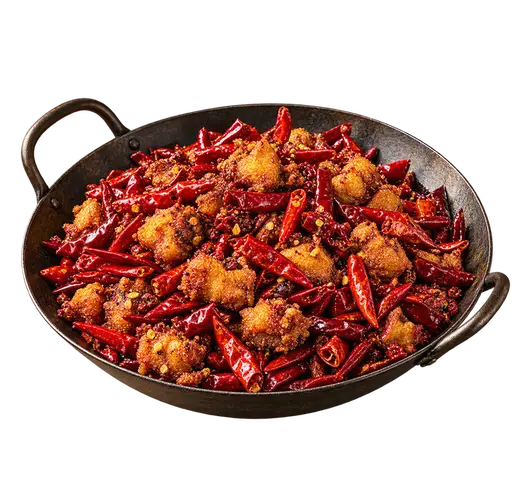 Chongqing chilli chicken辣子鸡Chicken fried hard and buried in a wok of dried chillies, from the Gele hills; you hunt for the meat.
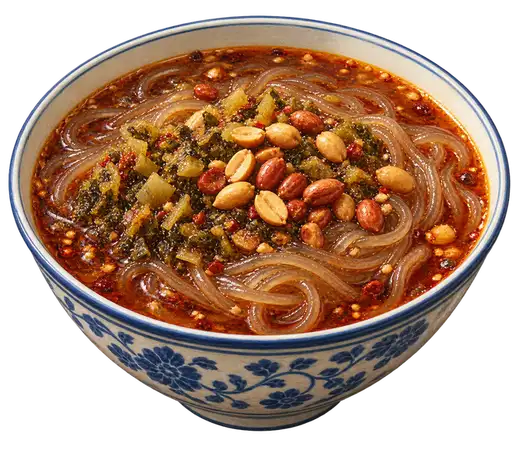 Hot-and-sour noodles酸辣粉Glassy sweet-potato starch noodles in a hot-and-sour broth with peanuts, preserved vegetable and a great deal of vinegar.