Signature flavour · Chengdu & Chongqing · 成都与重庆 · China
Doubanjiang豆瓣酱
Fermented broad-bean and chilli paste.
The story
Doubanjiang, 豆瓣酱, comes from Pixian outside Chengdu, where by tradition a Fujian migrant named Chen salvaged his mouldy broad beans with chillies in the late 1600s. It is the soul of Sichuan cooking: the base of mapo tofu, twice-cooked pork and every home-style, 家常, sauce.
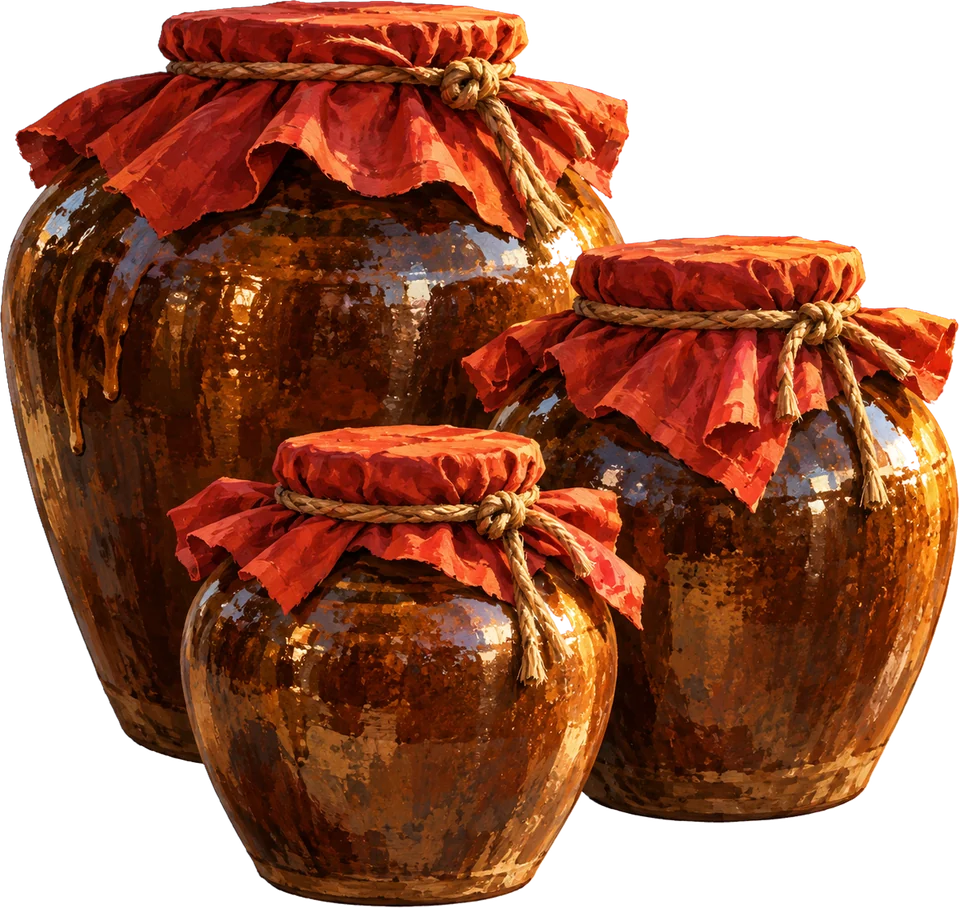
Making it is slow. Broad beans are soaked, peeled, left to grow a mould and salted; slim 二荆条 chillies are chopped and salted separately. The two go into open clay jars in the yard for a year or three, turned every morning, sunned by day and left to the night dew, 翻, 晒, 露, until the paste turns from bright red to the colour of old brick.
Beside it sit fermented black beans, 豆豉; sweet rice wine, 醪糟; dark vinegar from Baoning; and the water-sealed pickle jar, 泡菜坛, where cabbage, radish and long beans sit in a brine handed from mother to daughter.
All of it exists because of the weather. The basin is warm and humid, and nothing keeps. Sichuan has drawn salt brine from wells at Zigong since the Han dynasty, and by the 1830s they reached a kilometre down, the deepest in the world. With salt, a family could put a summer's vegetables and a winter's pig into jars and eat from them until the next harvest.
What people make with it
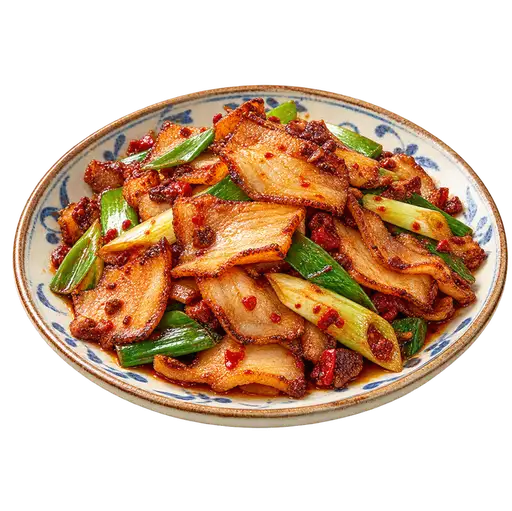 Twice-cooked pork回锅肉The dish a home cook is judged by: pork boiled, sliced thin, then fried with doubanjiang until the edges curl.
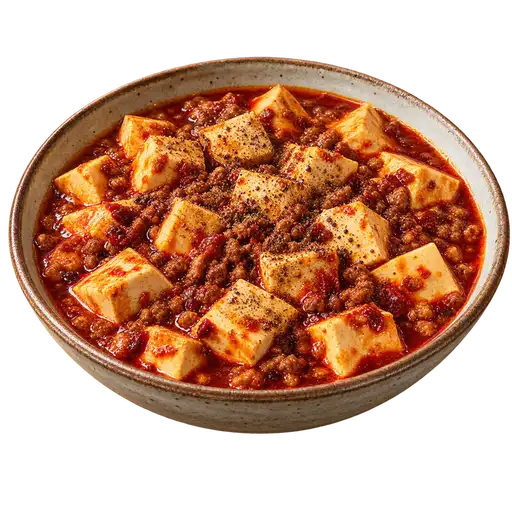 Mapo tofu麻婆豆腐Tofu simmered in chilli-bean paste with minced meat and a heavy dusting of ground Sichuan pepper at the end.
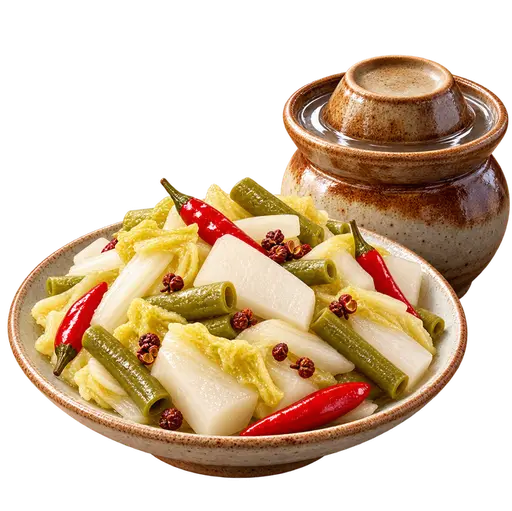 Pickled vegetables泡菜Radish, cabbage and long beans soured in a water-sealed jar, sold by the ladle to start a jar at home.