The story
Pigs were domesticated in China some 8,000 years ago, and by one old reading the character for home, 家, is a pig under a roof. Pork has been the default meat ever since, though for most families most of history it was festival food: a family raised one pig on scraps through the year and killed it before New Year, 杀年猪, inviting the neighbours to a feast of the fresh cuts.
What was not eaten that day was preserved. Belly and hams were rubbed with salt and Sichuan pepper, hung under the eaves and smoked over cypress and pine for weeks into 腊肉; minced pork went into casings with chilli and pepper for 腊肠. Cured at the winter solstice, they hung in the kitchen until spring and turned up sliced in stir-fries when there was nothing else.
Twice-cooked pork, 回锅肉, started the same way, as an offering: a piece of pork boiled whole for the ancestors, then sliced and fried with doubanjiang so nothing went to waste. Today pork is minced for sauces and fillings, sliced for stir-fries, or belly braised in soy and sugar.
What people make with it
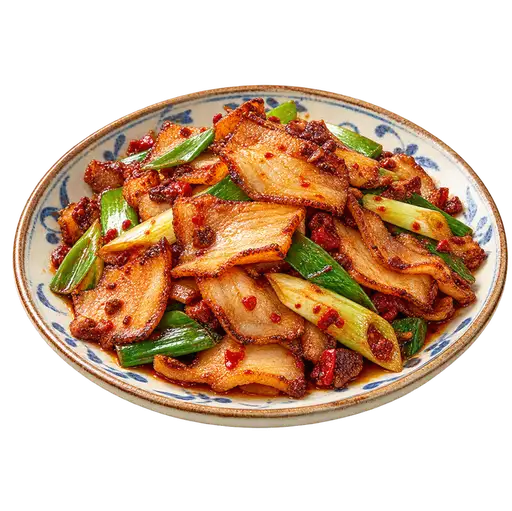 Twice-cooked pork回锅肉The dish a home cook is judged by: pork boiled, sliced thin, then fried with doubanjiang until the edges curl.
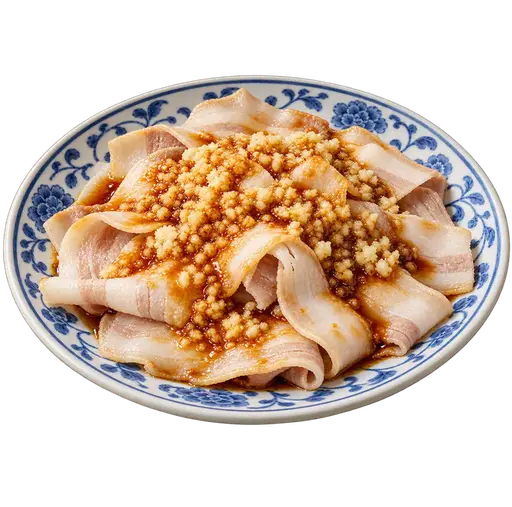 Garlic pork belly slices蒜泥白肉Boiled belly cut into wide thin slices and dressed with pounded garlic and sweetened soy sauce.
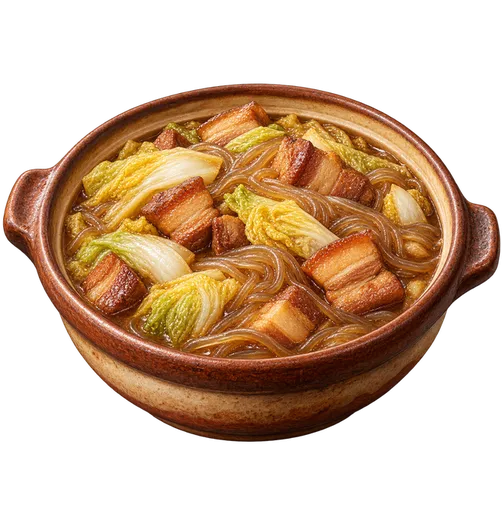 Pork, cabbage and glass noodles猪肉白菜炖粉条One pot for the table: belly pork stewed with cabbage from the pile by the wall and sweet-potato noodles.