The story
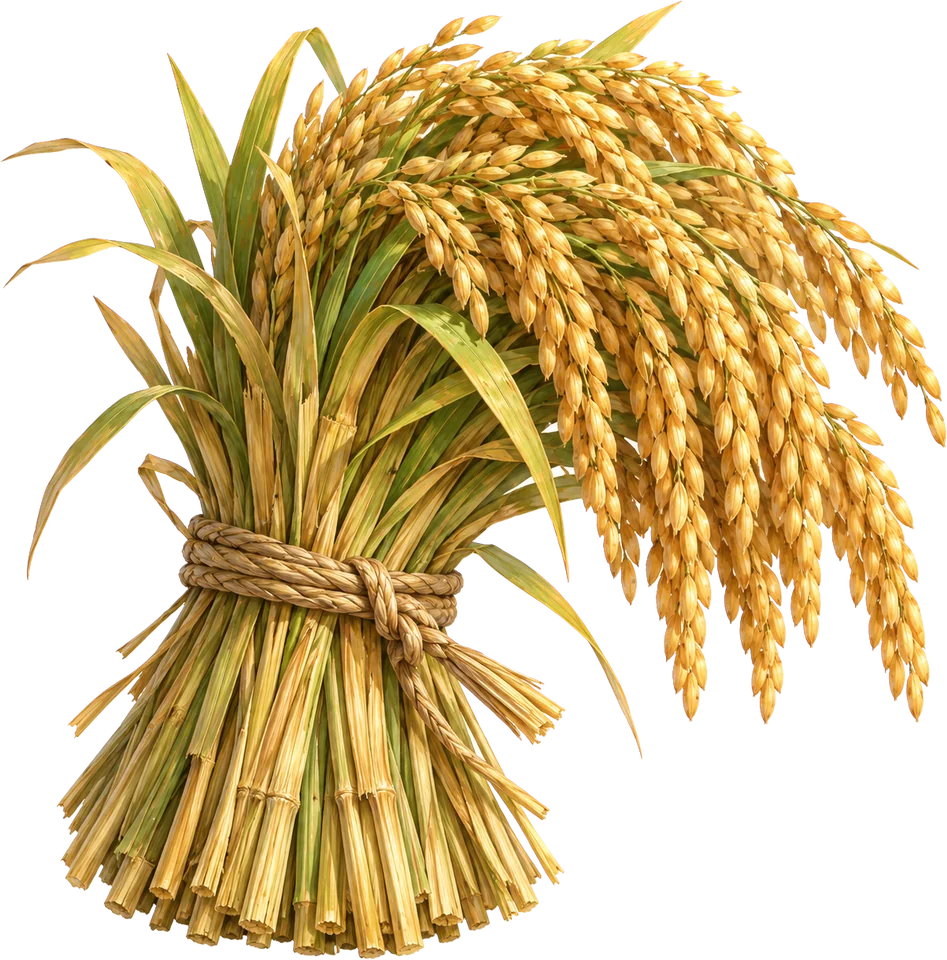
Rice was domesticated along the Yangtze about 9,000 years ago, and the river's lower reaches are still called 鱼米之乡, the land of fish and rice. Jiangnan's paddies flood every spring and carry two harvests a year.
China's food divides along a line: the Qinling mountains and the Huai river, roughly where 800 mm of rain a year gives out. South of it rice grows in flooded paddies and a meal means rice; north of it the land is dry and the meal is wheat, 南米北面, rice south, noodles north. Sichuan sits on the rice side but grows wheat in the drier north of its basin, which is why a Chengdu breakfast is noodles and supper is rice.
For most of history an ordinary family's day was rice porridge, 粥, with pickles in the morning, rice and a vegetable at noon, and rice, a vegetable and perhaps a scrap of cured pork at night; meat and white rice were for festivals, and in hard years sweet potato and corn stretched the grain. Steamed rice is still the quiet base under everything else on the table.
What people make with it
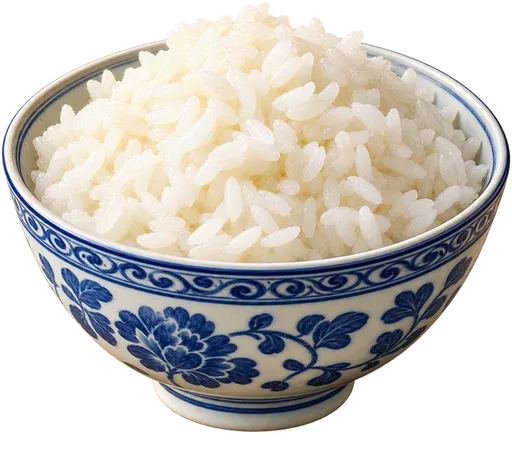 Steamed rice米饭Plain steamed rice is the everyday base for stir-fries, braises, steamed fish and preserved vegetables.
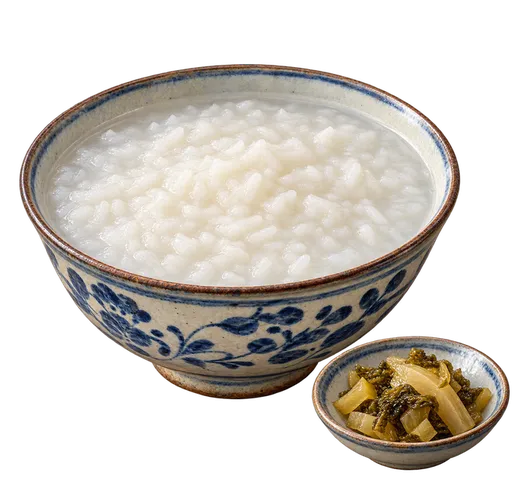 Rice porridge粥Rice cooks with extra water into soft porridge, served at breakfast with pickles, egg or fish.
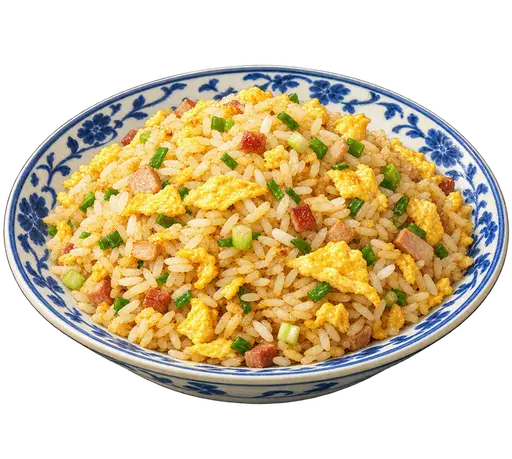 Egg fried rice蛋炒饭Cold cooked rice goes back into the wok with egg, scallion and any small leftovers worth using up.