Ingredient · Xi'an & Shanxi · 西安与山西 · China
The wheat harvest麦
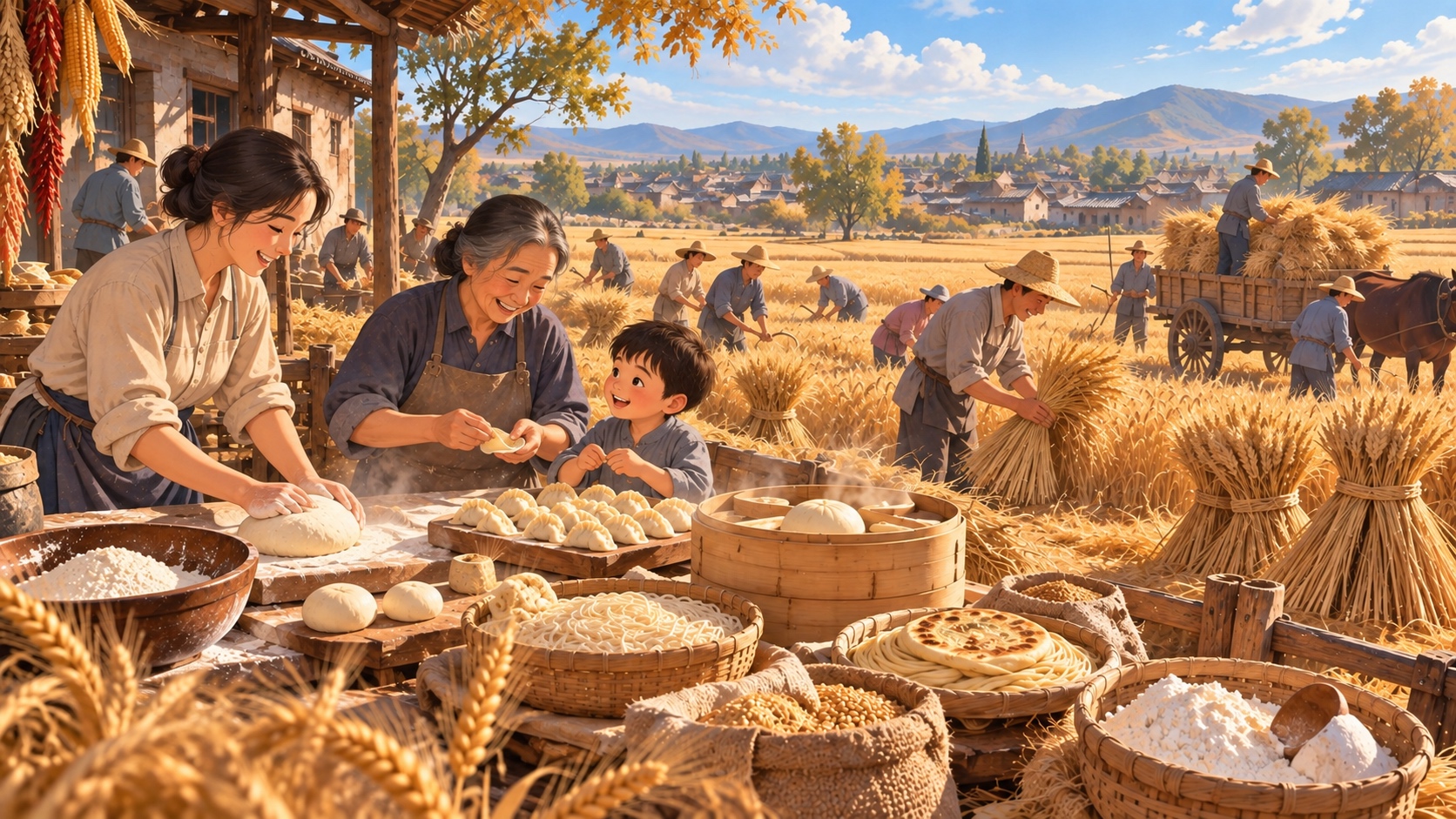
Sheaves bound in the field, grain winnowed on the threshing floor, the year's flour for noodles, dumplings and bread.
What to look for
A grain has three main parts
A wheat grain contains bran, germ and a starchy endosperm. White flour is mostly milled endosperm; whole-wheat flour includes all three parts.
Wheat becomes a whole menu
The same grain can become pulled noodles, steamed mantou or griddled bing. Changing the dough, shaping and cooking method changes the texture of the meal.
The story
Everything the north makes from wheat flour.
Wheat arrived from western Asia around 4,500 years ago; northerners had eaten millet before that. Once stone mills spread in the Han dynasty, flour became hand-pulled and knife-cut noodles, steamed buns, thin griddle pancakes and the wrappers folded around dumpling fillings, and wheat has been the north's staple ever since.
By tradition dumplings go back to Zhang Zhongjing, a Han dynasty physician, who folded medicine into dough to warm his patients' ears in winter.
What people make with it
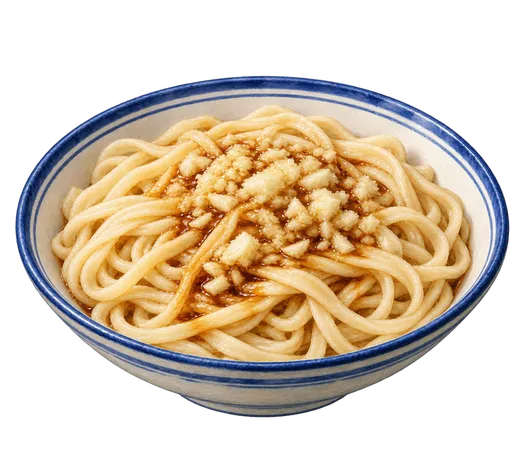
- New-wheat noodles新麦面条The first flour of the year is cut into noodles and eaten with garlic and vinegar on the threshing floor.
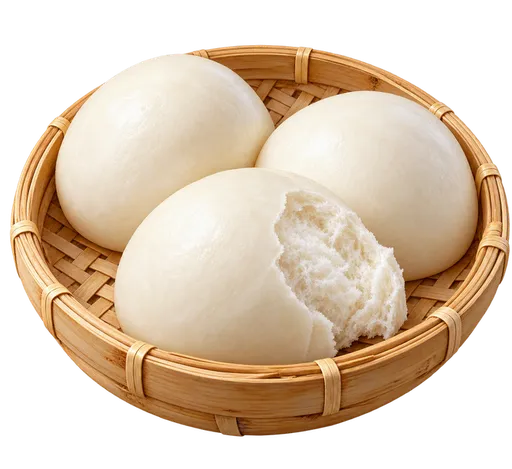 Mantou · plain steamed buns馒头Most of the flour goes to steamed bread, a basketful at a time, to feed the household through the year.
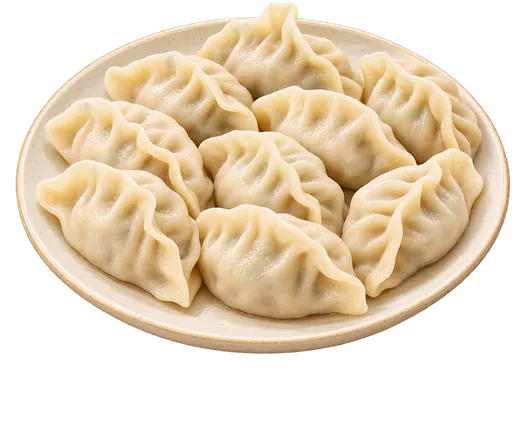 Dumplings饺子Winter festivals need a lot of dumplings, so the family works out how many wrappers each sack of flour will make.
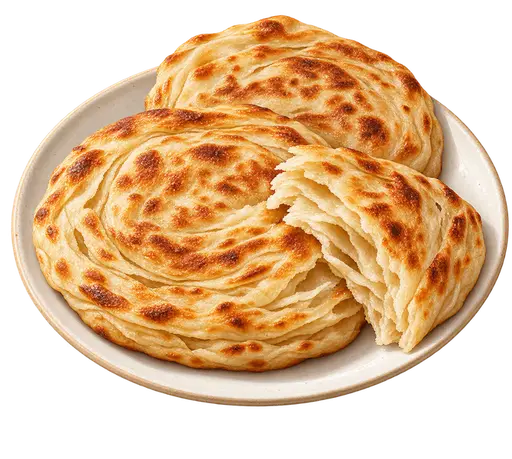 Griddle cakes烙饼Flat layered breads cooked at the field kitchen and carried out wrapped in a cloth while the cutting goes on.
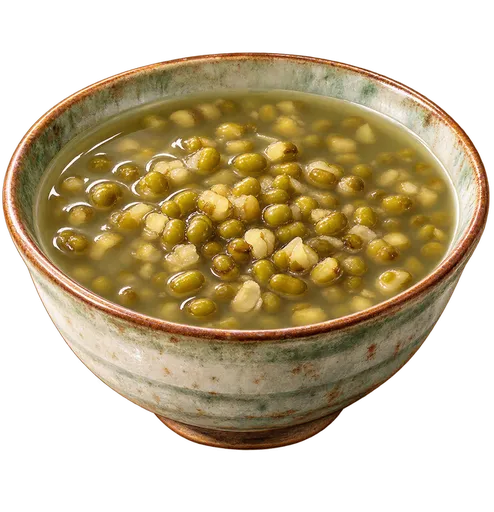 Mung bean soup绿豆汤Carried to the threshing floor in a bucket and drunk warm, the drink the harvesters most want.