Market / shop · Paris & the Île-de-France · Paris · France · around 1900
The Paris bakery before dawnBoulangerie
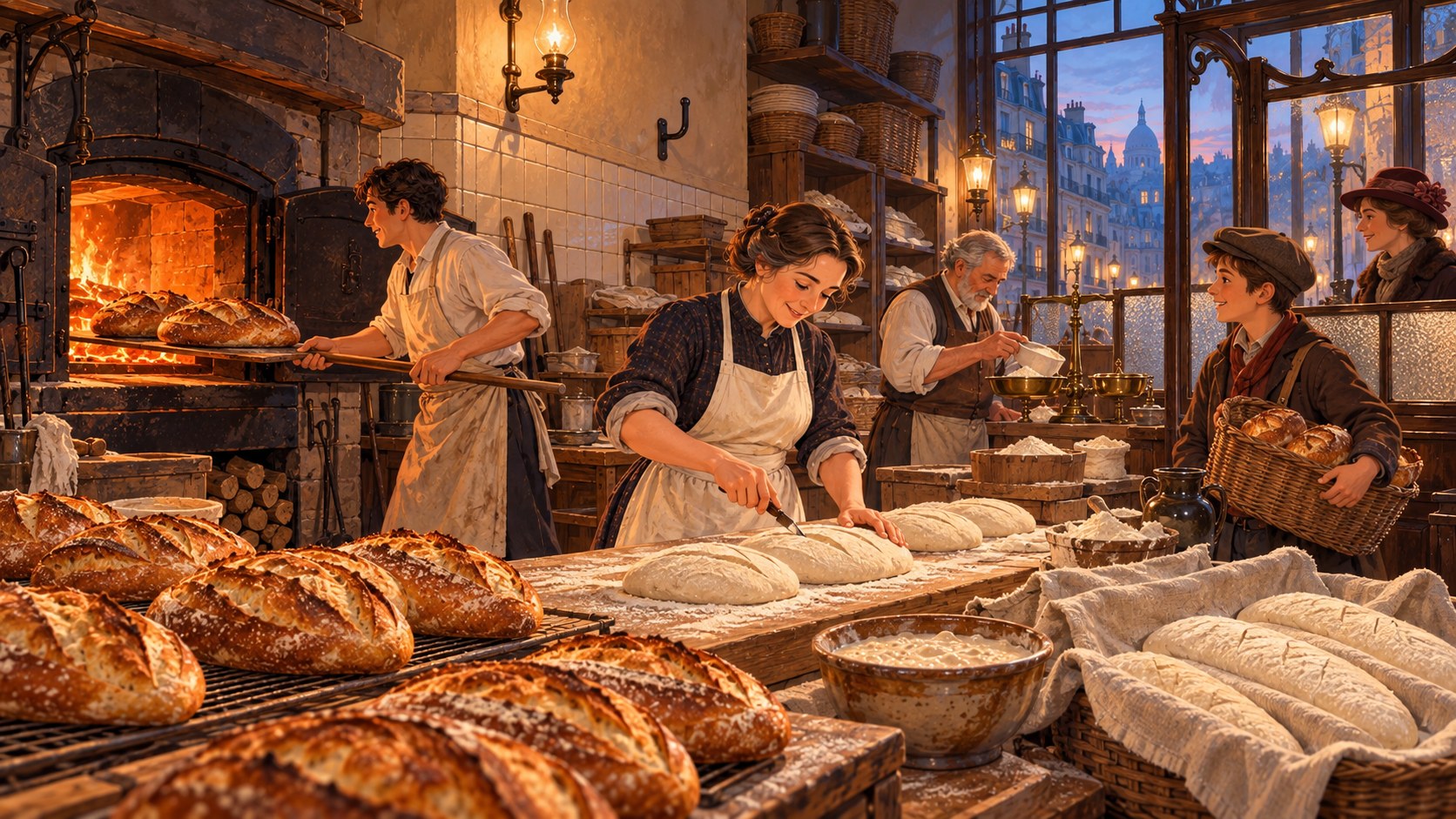
A neighbourhood bakery an hour before opening: loaves scored at the bench, proofed on linen and drawn from the wood oven on a long peel.
What to look for
The baker's lame
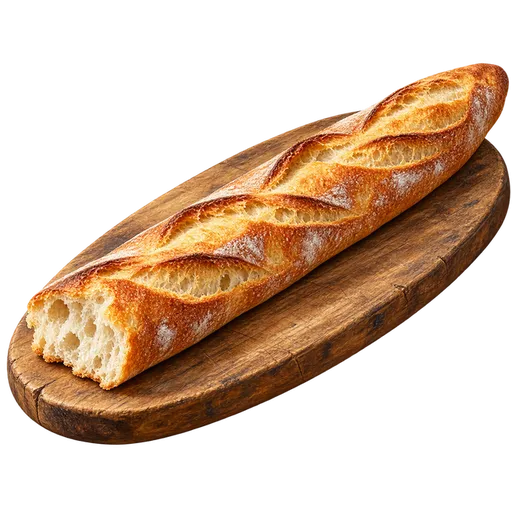
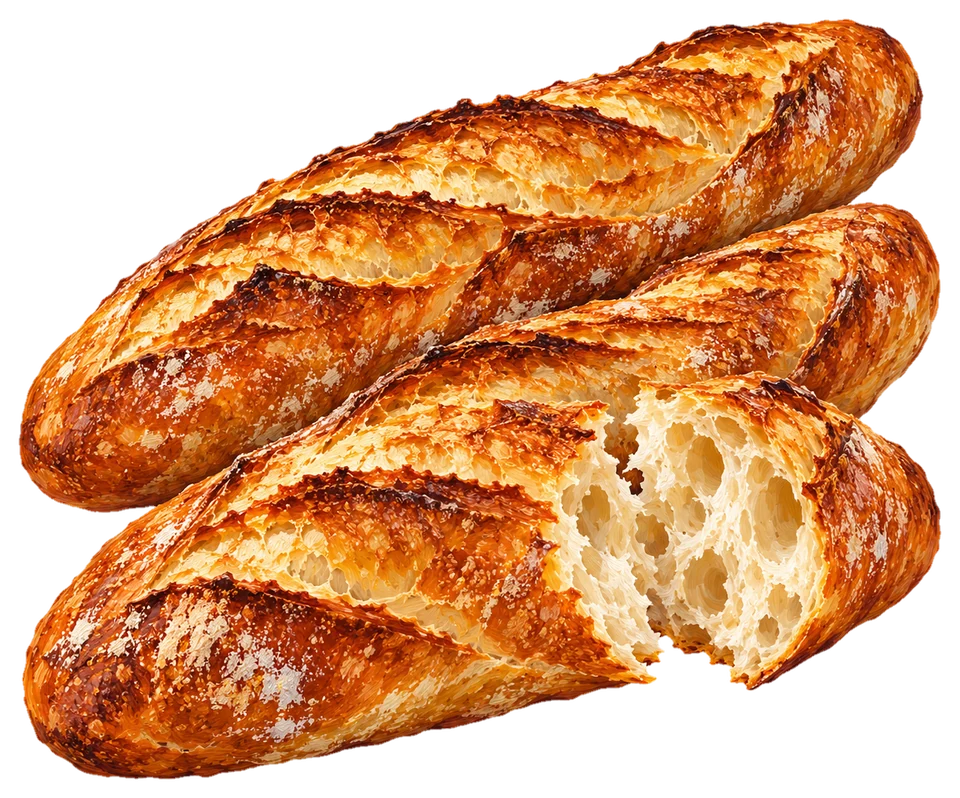
Before baking, the baker marks the dough with shallow cuts of a blade. The cuts are the baker's signature.
Loaves on the couche
After shaping, loaves rise a second time. This is called proofing, and how well they rise depends on the temperature and humidity of the room. Here they lie on a linen cloth called a couche.
The peel at the oven
Loaves are baked in small batches through the day, which gives the crisp crust and chewy crumb. The long peel carries them out of the oven mouth.
The story
Four ingredients, shaped by hand and baked before dawn.
A neighbourhood baker starts work in the dark. Around 1900 the counter holds big round loaves, the fendu with its deep split, and the long thin flûte. The word baguette is first recorded in 1920. Every loaf has four ingredients: flour, water, salt and leaven or yeast. Leaven, levain in French, is a starter of fermenting dough. The baker weighs, kneads, lets the dough rise, shapes each piece by hand and cuts shallow slashes, the baker's signature, before it goes into the oven.
Long narrow loaves had already been the Paris loaf for more than a century. Baguette means a wand, and the first ones were very thin; the bigger long loaves were called jockos. Why the thin loaf and its name appeared around 1920 is still open. A 1919 law on night work is often credited, but the papers of the time barely mention it, and the historian Jim Chevallier finds no source that settles it.
UNESCO listed the artisanal know-how of baguette bread in 2022. Go early and compare the crust of a baguette with a round country loaf.
Today
Since 1993 a baguette sold as Tradition must be made only from flour, water, salt and yeast or leaven, and may not be frozen. Bakeries still open early in every Paris neighbourhood.
What this kitchen cooks
- Long scored loafLa flûte (baguette)Flour, water, salt and leaven are weighed, kneaded, rested, shaped by hand, scored with shallow cuts and baked in a hot oven.
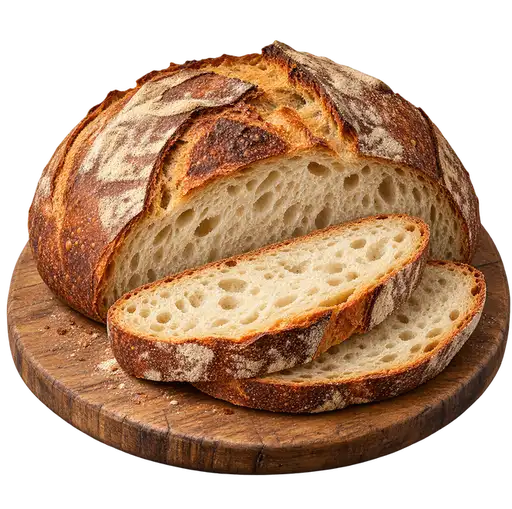 Country loafLe pain de campagneA large round loaf with a thick, dark crust and a chewy crumb, cut in slices and kept for several days.
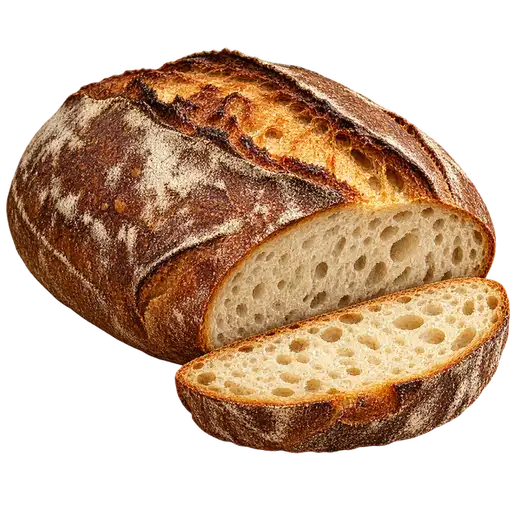 Sourdough loafLe pain au levainDough raised by a bowl of living levain instead of packaged yeast, which gives a slightly sour taste and a firm crumb.
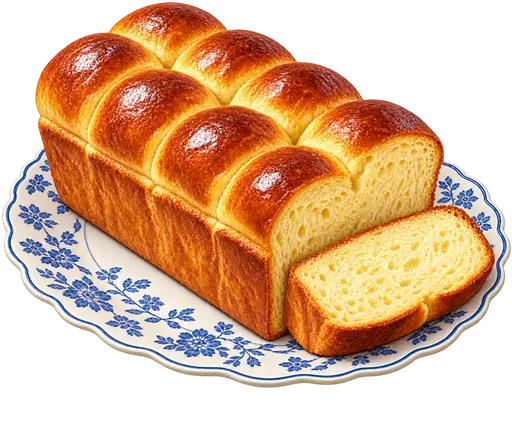 Nanterre briocheLa brioche de NanterreA loaf of enriched dough baked as a row of small balls in one tin, eaten for breakfast or toasted.
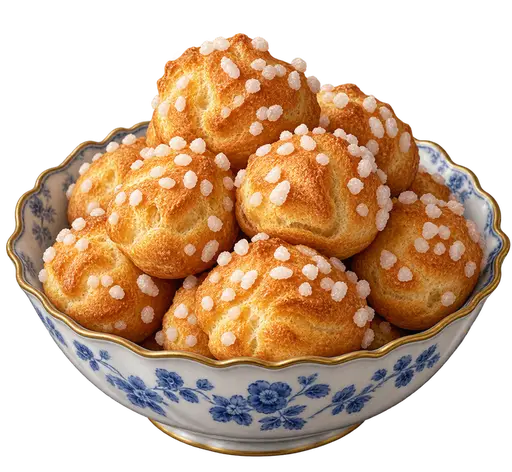 Choux puffsLes chouquettesSmall puffs of baked choux paste scattered with coarse sugar pearls, sold by the bag over the bakery counter.
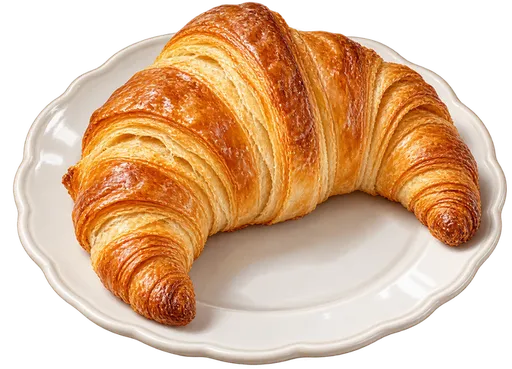 CroissantLe croissantA crescent of layered butter pastry baked until it shatters at the first bite. The all-butter version was only taking hold around 1900.
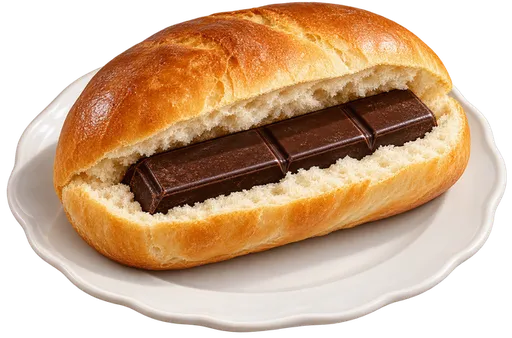 Pain au chocolatLe pain au chocolatA bar of dark chocolate tucked in a soft bread roll is the schoolchild's snack; the puff-pastry version came after 1900.
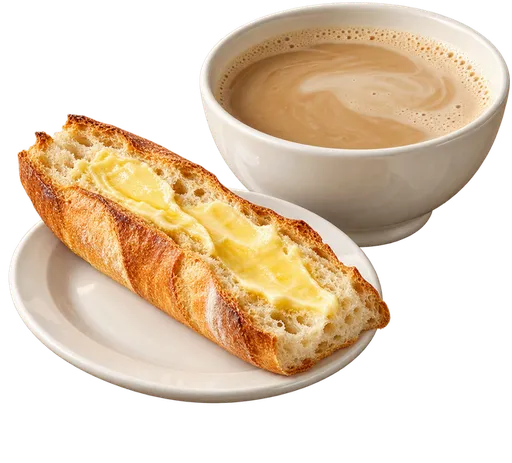 Buttered bread with milk coffeeLa tartine beurrée et le café au laitA split piece of long loaf spread with butter is dipped into a big bowl of hot milk and coffee, the usual Paris breakfast.
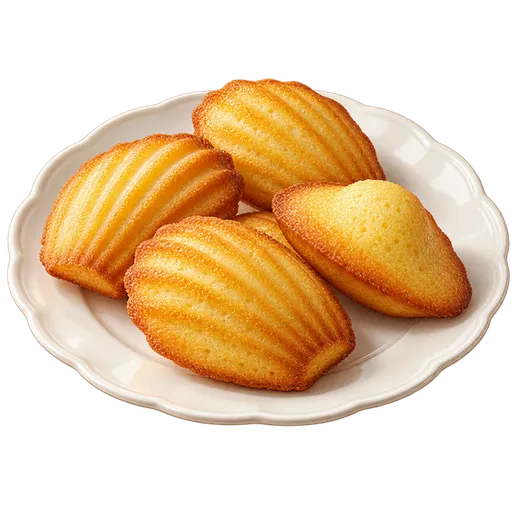 MadeleinesLes madeleinesLittle shell-shaped sponge cakes baked from eggs, butter, sugar and flour with a hint of lemon, eaten with tea.
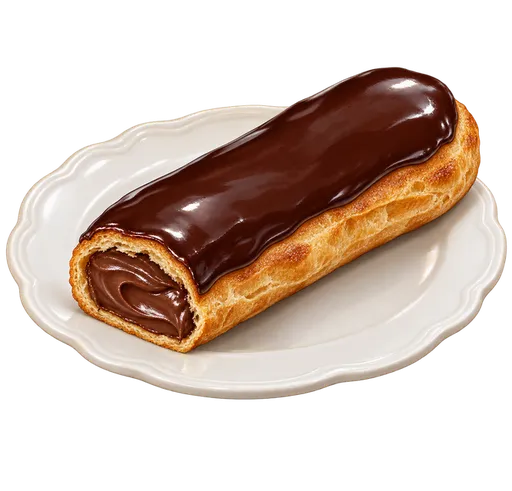 ÉclairL'éclairA finger of choux pastry is filled with coffee or chocolate cream and glazed on top with shiny fondant icing.
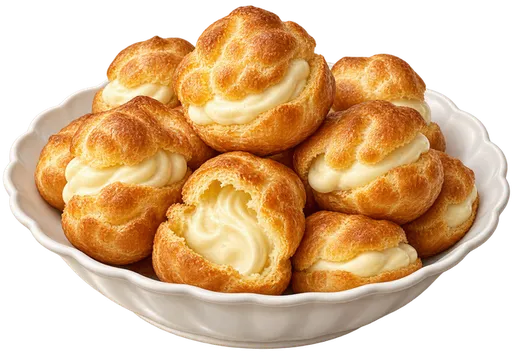 ProfiterolesLes profiterolesSmall choux puffs are filled with cream and piled in a dish. Hot chocolate sauce poured over them became the usual finish later.
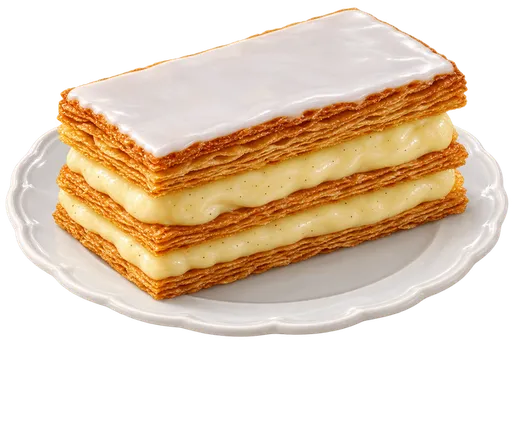 Mille-feuilleLe mille-feuilleThree layers of crisp puff pastry are stacked with vanilla pastry cream and topped with white icing.
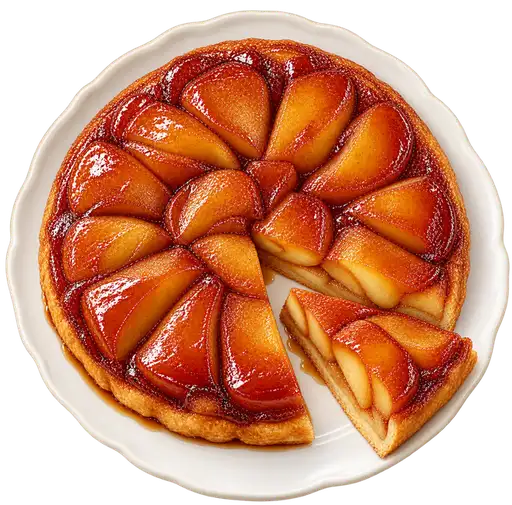 Upside-down apple tartLa tarte TatinApples cook in butter and sugar under pastry, then it is turned out caramel side up. A Loire sweet, it reached Paris soon after 1900.
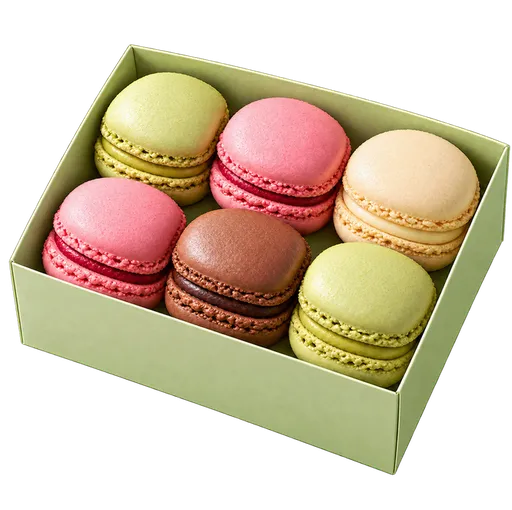 Macarons · almond sandwich biscuitsLes macarons parisiensTwo almond meringue shells joined by a filling; single macarons are old, and the filled Paris pair is credited to Ladurée in the early 1900s.
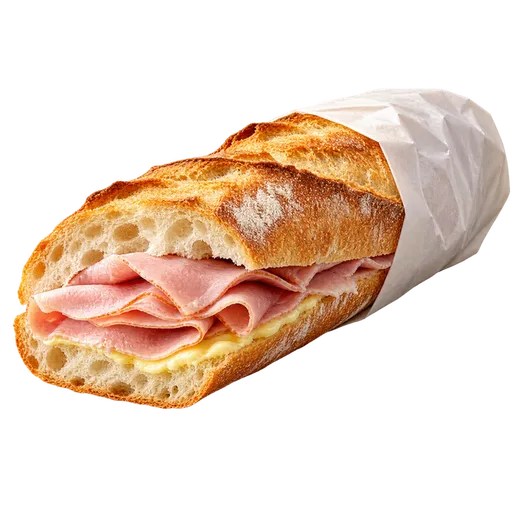 Ham and butter baguetteLe jambon-beurreA length of baguette split and spread with butter around slices of cooked ham, the sandwich Paris eats at lunch.