Workshop / producer · Normandy & Brittany · Normandie · Bretagne · France · around 1900
The oyster quayPort ostréicole
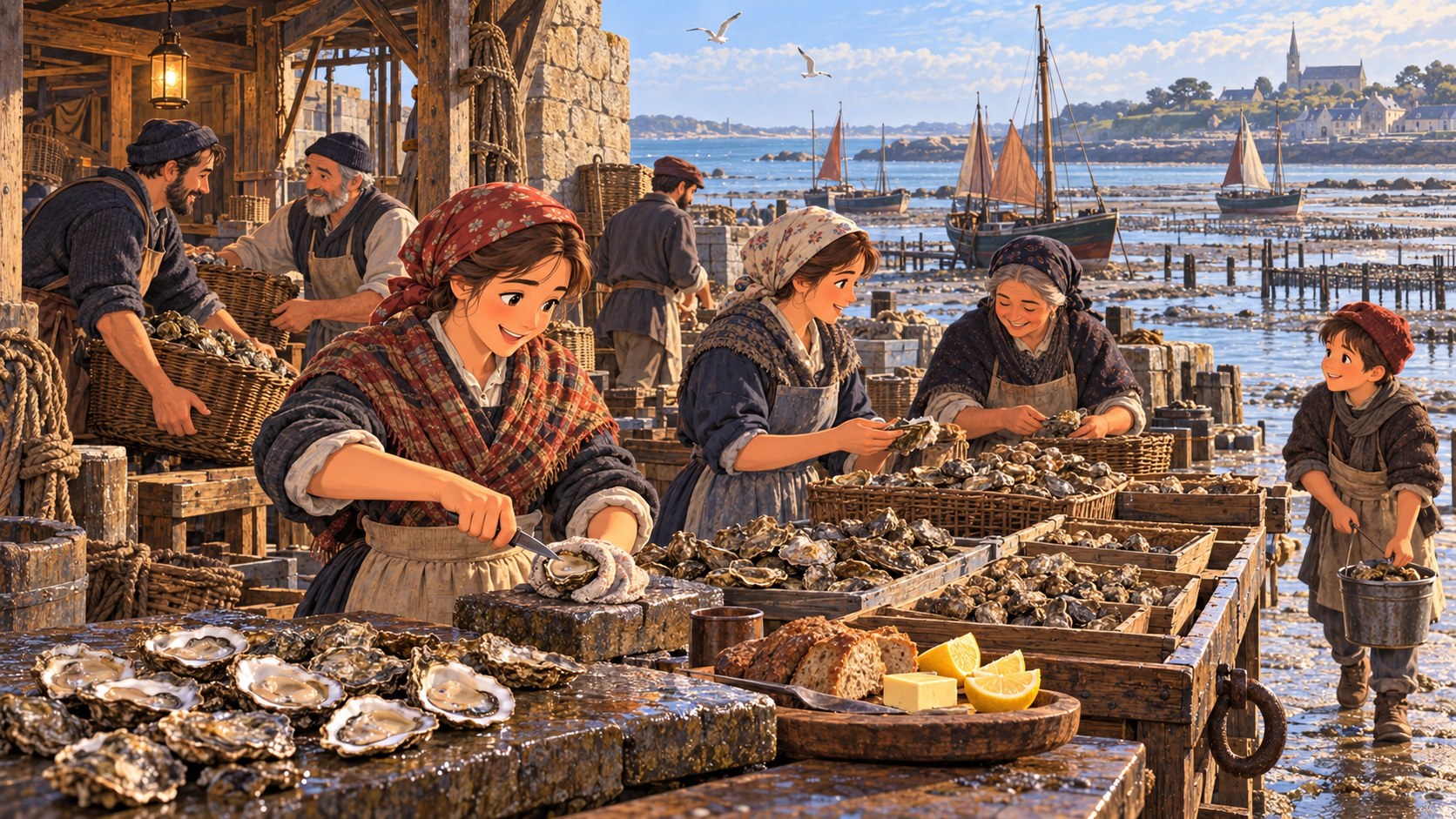
An oyster held in a cloth and opened at a granite quay, with graded baskets, bread and lemon and the boats on the tide flats behind.
What to look for
The knife and the cloth
An oyster is held in a folded cloth and opened with a short, thick knife; a practised shucker opens one in seconds.
The graded baskets
French cupped oysters are sold by size number, from 0, the largest at over 150 grams, to 5, the smallest.
Bread, butter and lemon
The Breton way is oysters with rye bread and salted butter, and a squeeze of lemon or a shallot vinegar.
The story
Oysters grown on the tidal flats and sold beside the harbour.
Cancale, on the bay of Mont-Saint-Michel, is known for its flat oysters. For centuries boats dredged wild oysters offshore for markets all over France, Paris included. Crews landed them in the harbour and sorted them, and the smallest went to beds to finish growing.
Young oysters grew under wire-mesh covers on hollow tables, sheltered from predators and weather, and needed about three years to reach market size. The beds were stakes and interlaced wood that needed constant repair. Women looked after the beds through the tides and gathered oysters that waves had washed out.
The flat oyster of Cancale has firm white flesh and a hazelnut taste. Hollow oysters taste more strongly of iodine. Sizes run from number 5, the smallest, to number 0, the largest. Eat them at the oyster market on the Port de la Houle, where farmers sell daily and you look out over the bay.
Today
Parasite diseases in 1968 and 1979 destroyed most French flat oyster beds. Since the 1970s the hollow Pacific oyster, brought from Japan, has made up most of the farmed oysters.
What this kitchen cooks
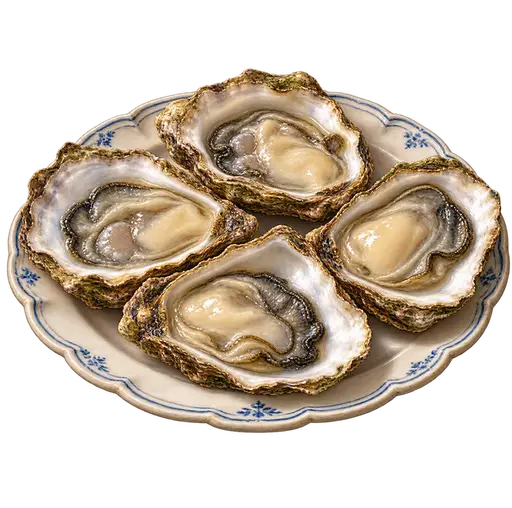
- Flat oyster of CancaleL'huître plate de CancaleThe oyster knife slips into the hinge, cuts the muscle and opens the shell so the oyster is eaten raw, just as it is.
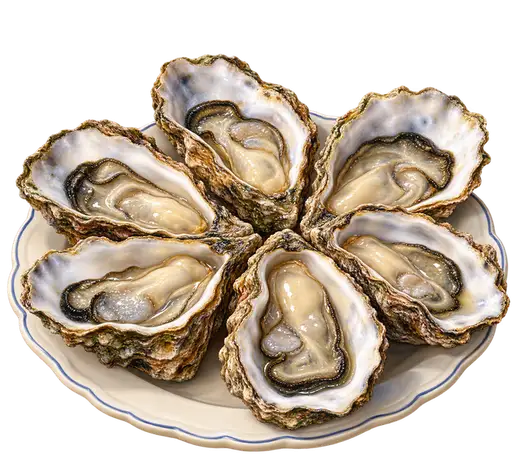 Hollow oysterL'huître creuseA deeper-shelled oyster farmed in tidal beds, sorted by size and sold by the dozen on the quay.
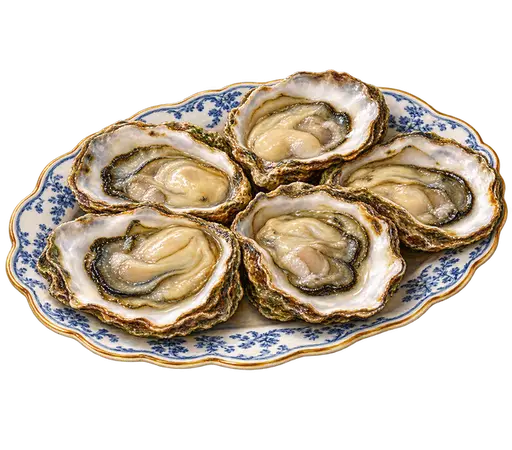 Belon oysterL'huître de BelonFlat oysters finished for months in the mixed salt and fresh water of the Belon river give a delicate, nutty flavour.
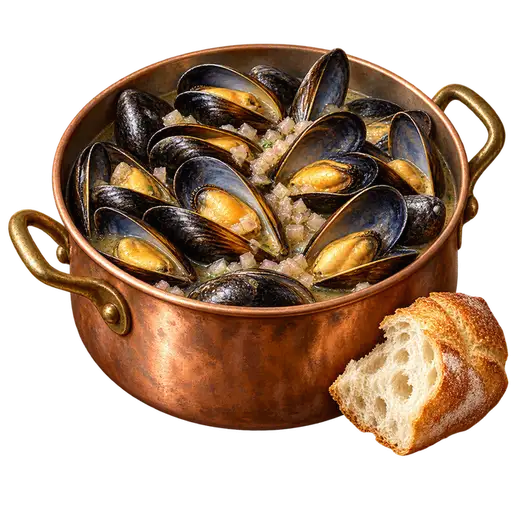 Mussels in white wineLes moules marinièresMussels steamed open in a pot with shallots and white wine and eaten with bread for the broth.
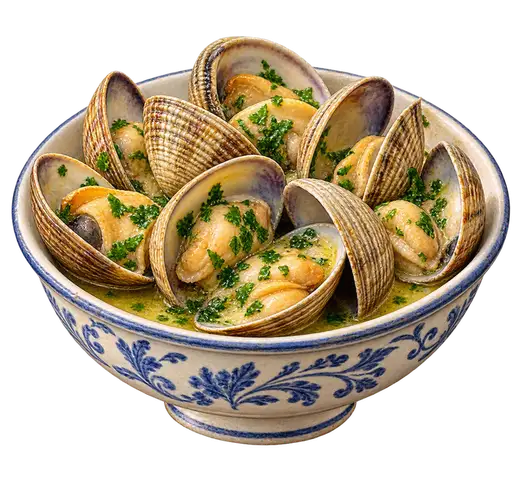 ClamsLes palourdesClams dug from the shore at low tide are eaten raw, or steamed open with butter and parsley.