Ingredient · Normandy & Brittany · Normandie · Bretagne · France · around 1900
The salt pansMarais salants
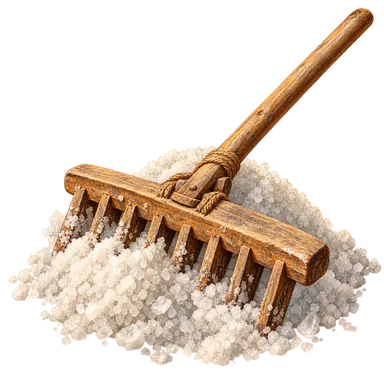
Sea salt raked from clay pans on the Breton coast.
The story
The salt marshes of Guérande lie on Brittany's Atlantic coast and have been worked for more than 2,700 years. A paludier, a salt worker, lets tidewater flow through basins where sun and wind concentrate it, then into small crystallising ponds, the oeillets. Harvest runs from June to September.
There are two salts. Gros sel, the grey salt, is raked from the clay bottom and keeps a light grey colour from algae and plankton. Fleur de sel forms as a thin film on the surface in dry, sunny weather with an east wind, and the paludier skims it off by hand in the late afternoon. Rain destroys it. Salt was prized for preserving fish and curing meat, and the craft nearly died in the 1960s before workers revived it in the 1970s.
Both salts carry a protected geographical indication. Use grey salt in cooking water and salt crusts, and scatter fleur de sel over vegetables, fish, steak and desserts.
Today
Refrigeration ended the large trade in salt for curing fish and meat. Guérande salt is now sold as a cooking and table salt, at producer shops and markets.
What people make with it
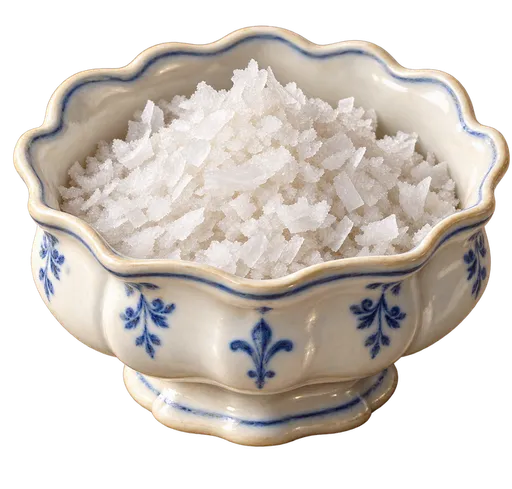 Fleur de selLa fleur de selThe thin white crust that forms on the clay pans on a dry, sunny day is skimmed by hand and sprinkled on food at table.
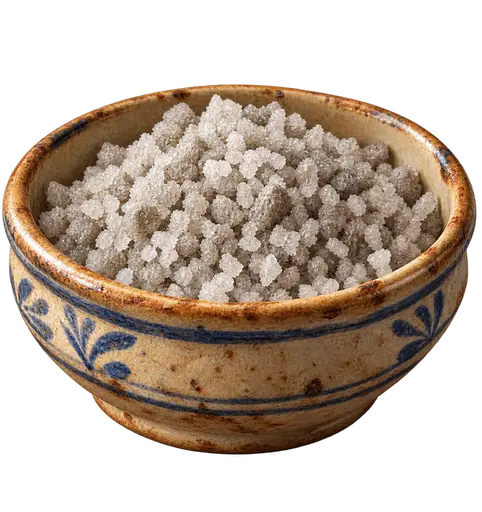 Coarse grey saltLe gros selSalt that sinks and is raked to heaps takes a grey tint from the clay, used for curing, cooking water and preserving.
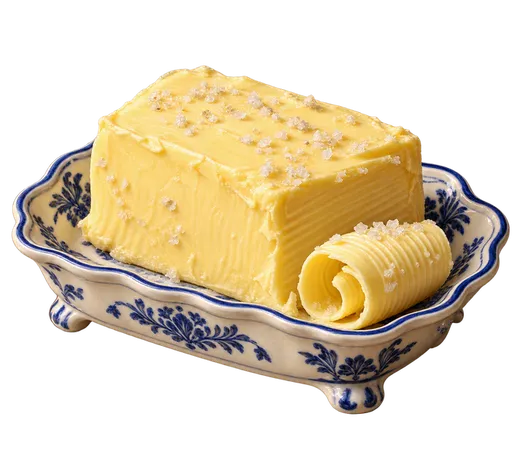 Salted butterLe beurre saléBreton butter is salted with the coarse grey salt, then spread on bread and brushed on crêpes and galettes.