Workshop / producer · The Southwest & the Basque coast · Sud-Ouest · Pays basque · France · around 1900
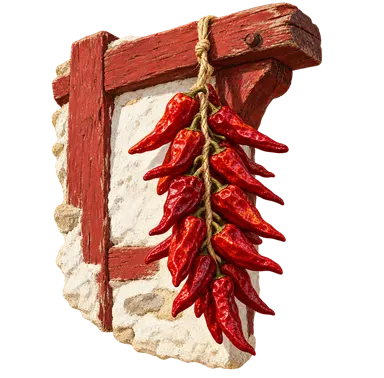
The pepper farmhousePiment d'Espelette
Red peppers strung on a Basque farmhouse wall to dry.
The story
Chilli peppers reached Europe from the Americas in the sixteenth century. At first they served as medicine, then as a seasoning and a way to preserve meat. In Basque cooking the Espelette pepper gradually replaced black pepper.
Harvest comes in late summer. In September, strings of peppers are hung on balconies and house walls to dry, and the village of Espelette turns red. The dried peppers are sold as strings, ground to a powder, puréed or pickled. Piperade is a traditional Basque dish built on them.
The pepper won appellation status in 2000 and protected status in 2002. Today about 160 producers grow it. A festival of the pepper brotherhood has run since 1968 on the last weekend of October in Espelette. The powder goes over eggs or ham, and piperade is the dish to order.
Today
Espelette pepper powder is now sold in jars across France, and chefs far from the Basque Country use it.
What this kitchen cooks
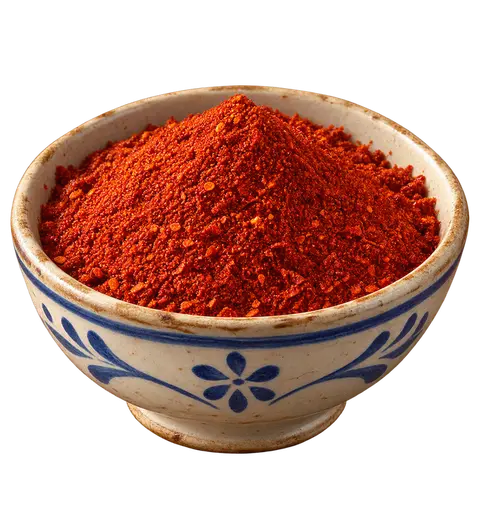 Espelette pepperLe piment d'EspeletteRed peppers hung in strings on the farmhouse wall are dried, then ground to a mild, fruity powder.
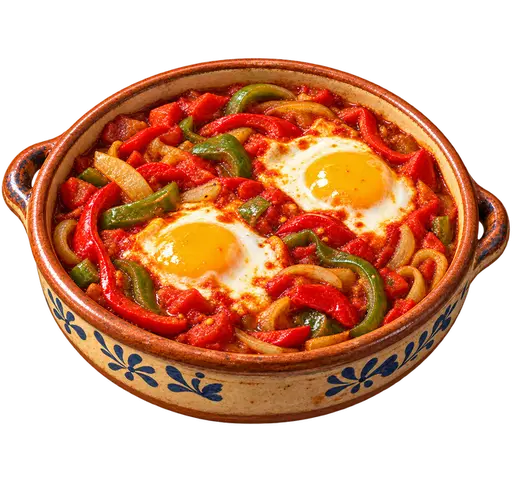 PiperadeLa piperadePeppers, tomatoes and onions stewed slowly in oil with a pinch of dried pepper and often topped with eggs.
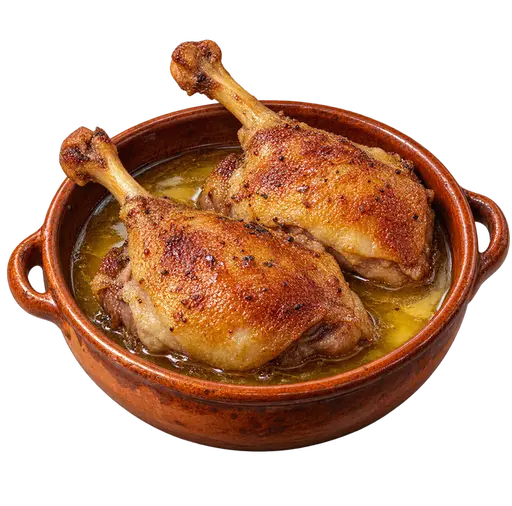
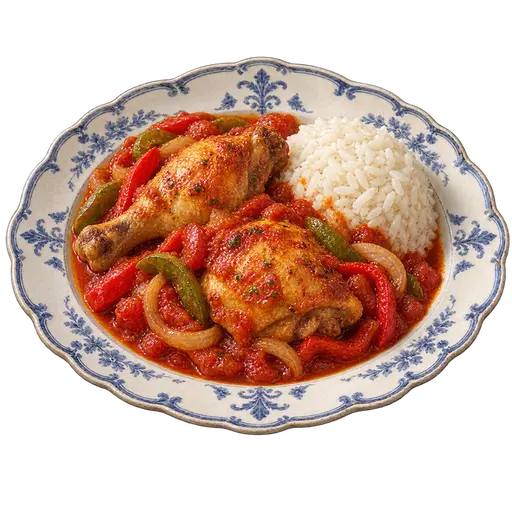 Basque-style chickenLe poulet basquaiseChicken braised in a sauce of tomatoes, onions and peppers, served with rice or potatoes at the farm table.