Home kitchen · The Southwest & the Basque coast · Sud-Ouest · Pays basque · France · around 1900
The Southwest preserving kitchenCuisine du Sud-Ouest
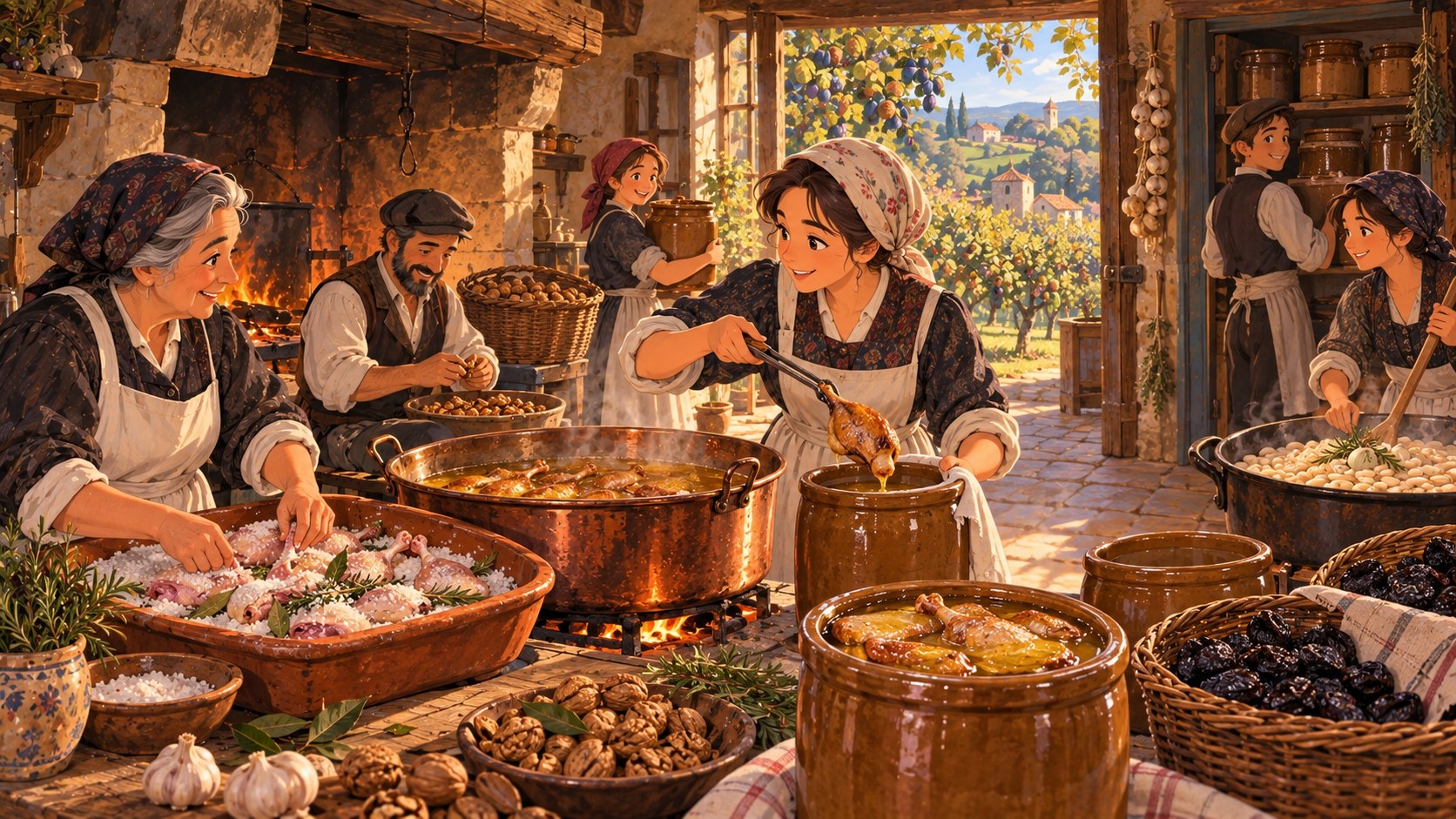
Cooked duck lifted from its fat with tongs and lowered into a glazed crock, with beans on the boil and walnuts and prunes in store.
What to look for
The duck into the crock
Once cooled and sealed beneath a layer of fat, the cooked duck was protected from the air, an old way to keep meat for months.
The salted duck legs
Confit starts with duck legs cured in salt, then cooked slowly in rendered duck fat.
Walnuts and prunes
Agen prunes are dried Prune d'Ente plums, and it takes about three kilograms of fresh plums to make one kilogram of prunes.
The story
Duck salted, cooked slowly in its own fat and put up in crocks.
Gascony and the Southwest cook in fat, above all the fat of ducks and geese. Confit de canard is how they keep the meat. Duck legs are rubbed with salt and left overnight with garlic, thyme and juniper. They are then covered in melted fat and cooked slowly, about three hours at a low heat, until the meat is ready to fall from the bone. Sealed under the set fat in a crock, the legs keep for up to six months. The method is older than refrigeration.
Foie gras, garbure, a thick vegetable soup, and confit are the pillars of the regional table. Salted ham, mild chillies and cèpe mushrooms are staples beside them. Armagnac is both a drink and a cooking ingredient.
To eat it, reheat a leg in a pan so the skin crisps, and cook the potatoes in the fat that comes off it. Look for it in farm restaurants and markets across Gascony and the Périgord, and follow it with a prune in Armagnac.
Today
Confit now also comes in sterilised jars and tins that keep unopened for a long time. Farms and Gascon markets still sell it fresh.
What this kitchen cooks
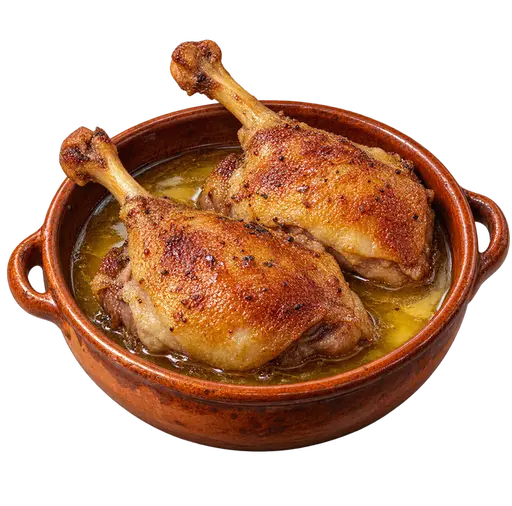
- Duck confitLe confit de canardSalted duck is cooked slowly in its own fat, then lowered into a glazed crock and sealed to keep for months.
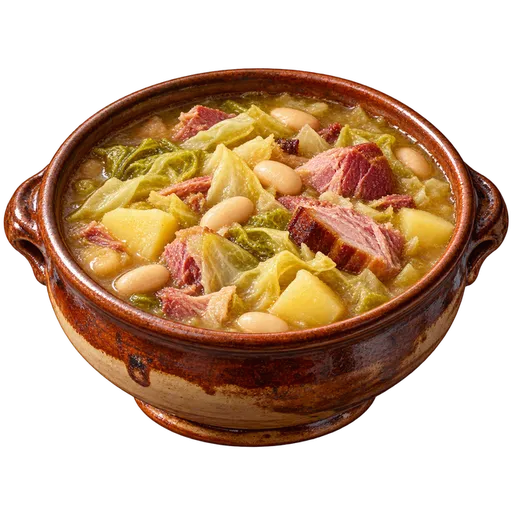 Cabbage and ham soupLa garbureA thick soup of cabbage, beans, potatoes and preserved meat, simmered in the farmhouse fireplace.
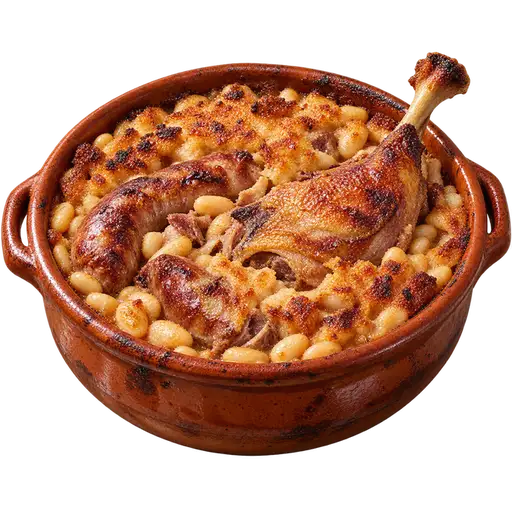 CassouletLe cassouletWhite beans baked slowly with sausage and preserved duck or pork until a crust forms on top.
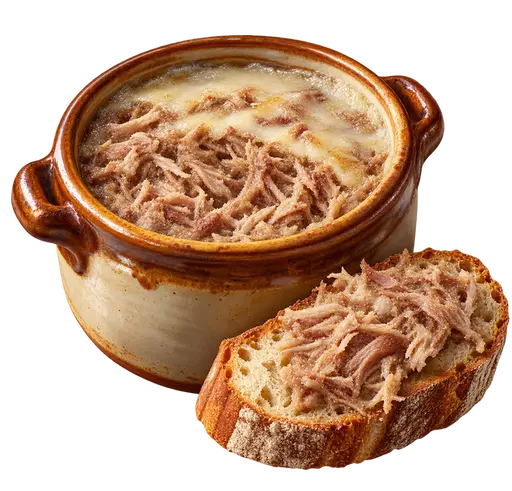 Potted goose and duckLes rillettesGoose or duck meat cooked in fat, shredded and packed into a pot to keep and spread on bread.
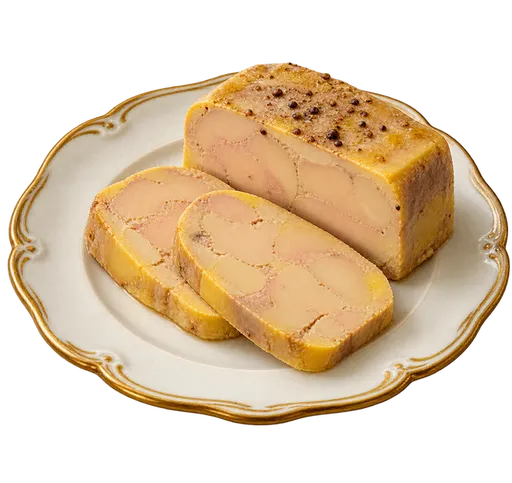 Foie grasLe foie grasFattened duck or goose liver is seasoned, gently cooked and preserved, a traditional farm product of the Southwest.
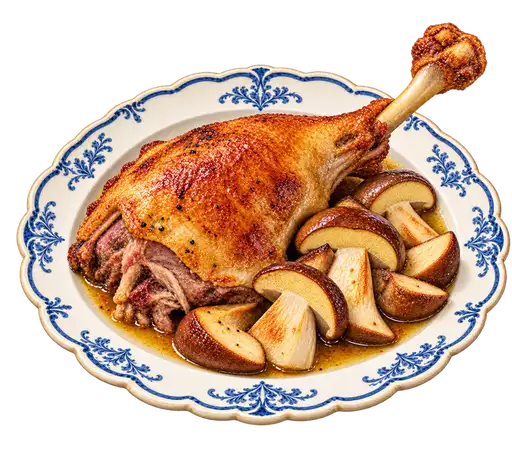 Goose with cepsLe confit d'oie aux cèpesPreserved goose is heated in its own fat and served with wild ceps gathered in the autumn woods.
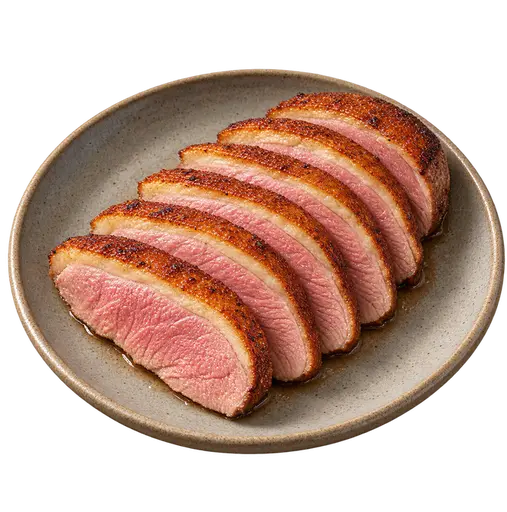 Duck breastLe magret de canardBorn later: a fattened duck's breast seared on its skin and served pink like a steak; André Daguin is credited with it in 1959.
 Canelé · caramelised rum cakeLe canelé de BordeauxA small fluted Bordeaux cake of rum and vanilla batter baked in copper moulds, dark and crisp outside, custardy inside; famous since the 1980s.
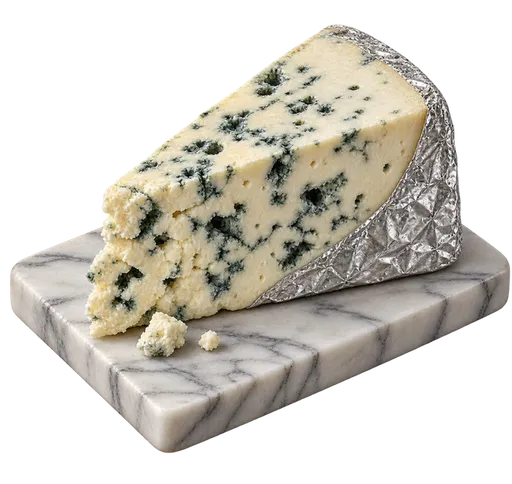 Roquefort · sheep's milk blue cheeseLe roquefortRaw ewe's milk cheese ripened in the limestone caves of Roquefort-sur-Soulzon, where cracks in the rock keep the air cool and damp.