Ingredient · The Southwest & the Basque coast · Sud-Ouest · Pays basque · France · around 1900
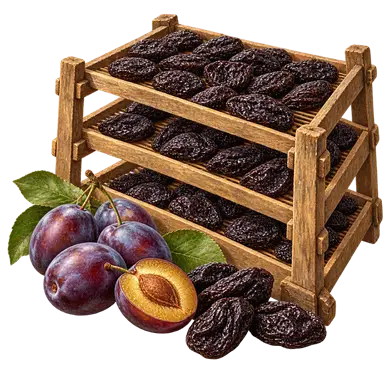
The prune racksPruneaux d'Agen
Ente plums dried into the prunes of Agen.
The story
Agen prunes come from one plum, the prune d'Ente. Tradition says Benedictine monks of Clairac abbey grafted local trees in the twelfth century with Damascus plums brought from Syria by the Crusaders. Boats carried the dried fruit from Agen down the Garonne to Bordeaux, and it took the name pruneaux d'Agen.
The fruit is shaken from the tree so only the ripest falls, then washed, sorted and dried. Modern ovens run at 70 to 80 degrees for up to twenty-four hours. Semi-dried mi-cuit prunes get 15 to 20 hours and stay moister.
The protected geographical indication Pruneau d'Agen covers Lot-et-Garonne, which produces about two-thirds of the output. Cooks steep them in Armagnac as a dessert, add them to game dishes and terrines, and wrap them in bacon or duck breast for an aperitif.
Today
Orchards still stand in Lot-et-Garonne and the plums are still picked in late summer. Agen prunes are now sold in boxes and jars across France.
What people make with it
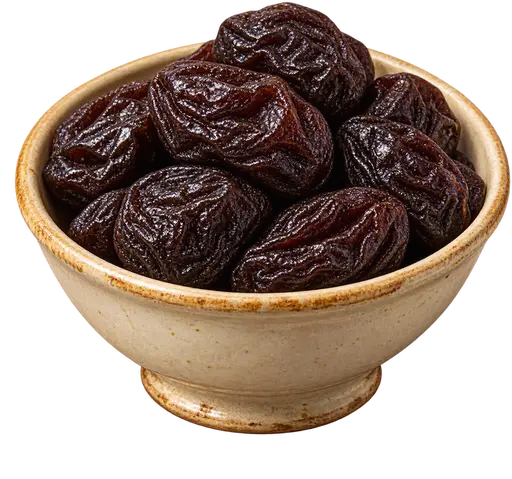 Agen prunesLe pruneau d'AgenEnte plums are dried on slatted trays until dark and sweet, then kept in sacks and eaten all winter.
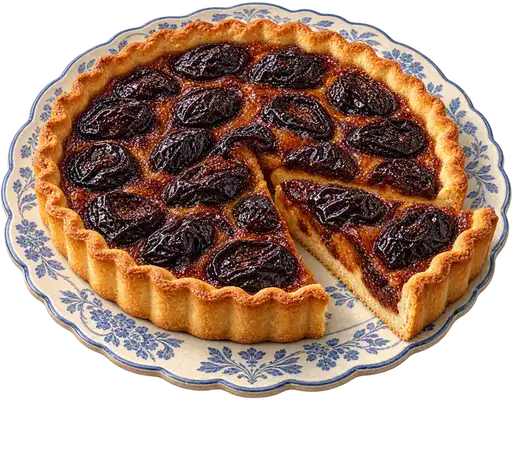 Prune tartLa tarte aux pruneauxSoaked prunes are baked in a short pastry or an egg custard and eaten cold at the end of a farm meal.
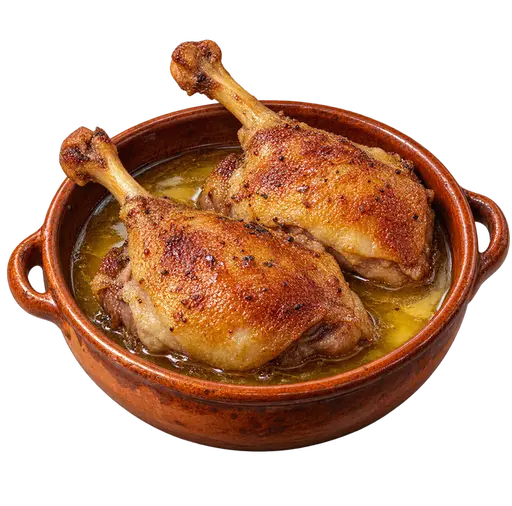
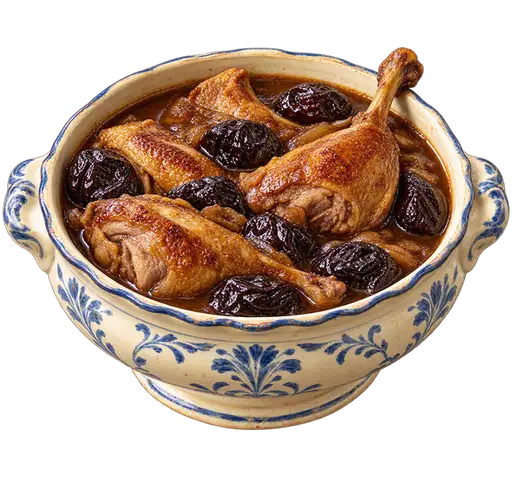 Prunes with pork or duckLes pruneaux en ragoûtDried prunes are simmered with pork, duck or rabbit, adding sweetness and softness to the rich gravy.