Workshop / producer · The Southwest & the Basque coast · Sud-Ouest · Pays basque · France · around 1900
The walnut groveNoyeraie
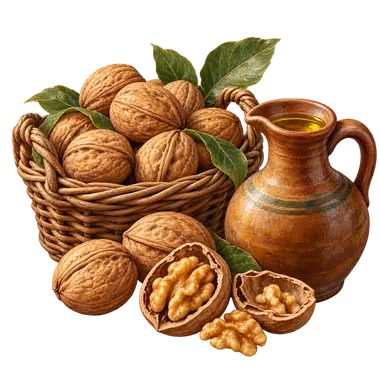
Walnuts beaten down and pressed into oil.
The story
Noix du Périgord, the walnuts of the Périgord, have had a protected name since 2004. They are collected from mid-September to early October, once the nuts fall from the tree. The green husk separates as the fruit ripens, and a little help removes it. The nuts are then washed and dried in hot air, down to 12 percent moisture, so they keep all year.
Many nuts go to oil. Oil-makers were already widespread in the Périgord in the twelfth century, and the oil now has its own protected name, from 4 February 2021. A mill crushes the kernels, heats them a little or not at all, and presses them. It is first-press oil, obtained by mechanical means alone. The varieties are Marbot, Corne, Grandjean and Franquette.
The two styles taste different. Cold-extracted oil is pale gold with a dry walnut taste. Heat-extracted oil is darker, with a taste of baked bread crust and light toast. Dress a green salad with each and the difference shows.
Today
Walnuts are now mostly harvested by machines that shake the trees or sweep up the nuts, instead of being gathered by hand.
What this kitchen cooks
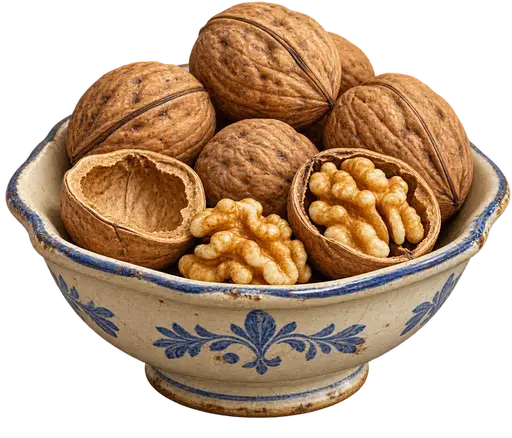 Périgord walnutsLa noix du PérigordNuts beaten from the branches are dried in their shells, cracked by hand and eaten fresh or stored for winter.
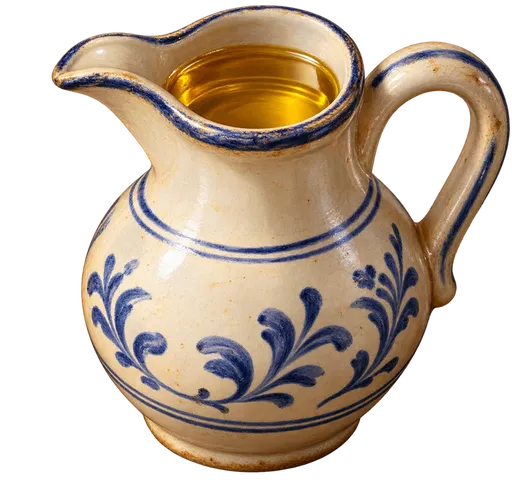 Walnut oilL'huile de noixKernels are ground and pressed in a small mill into a golden oil, used cold on salads and bread.
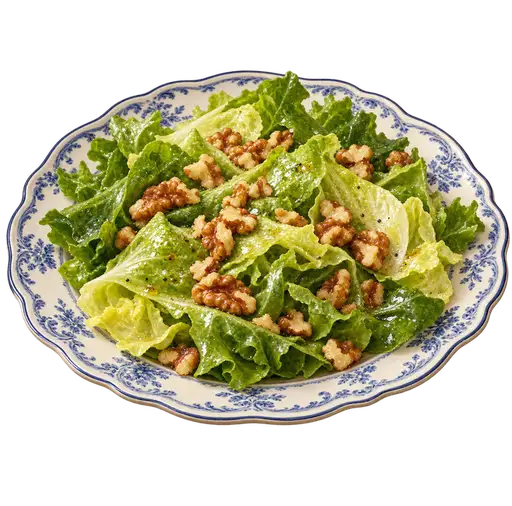 Walnut saladLa salade aux noixCrisp green leaves dressed with walnut oil and vinegar and scattered with broken walnut kernels, served beside roast meat.