Market / shop · Venice · Venezia · Italy · around 1900
The PescariaLa Pescaria
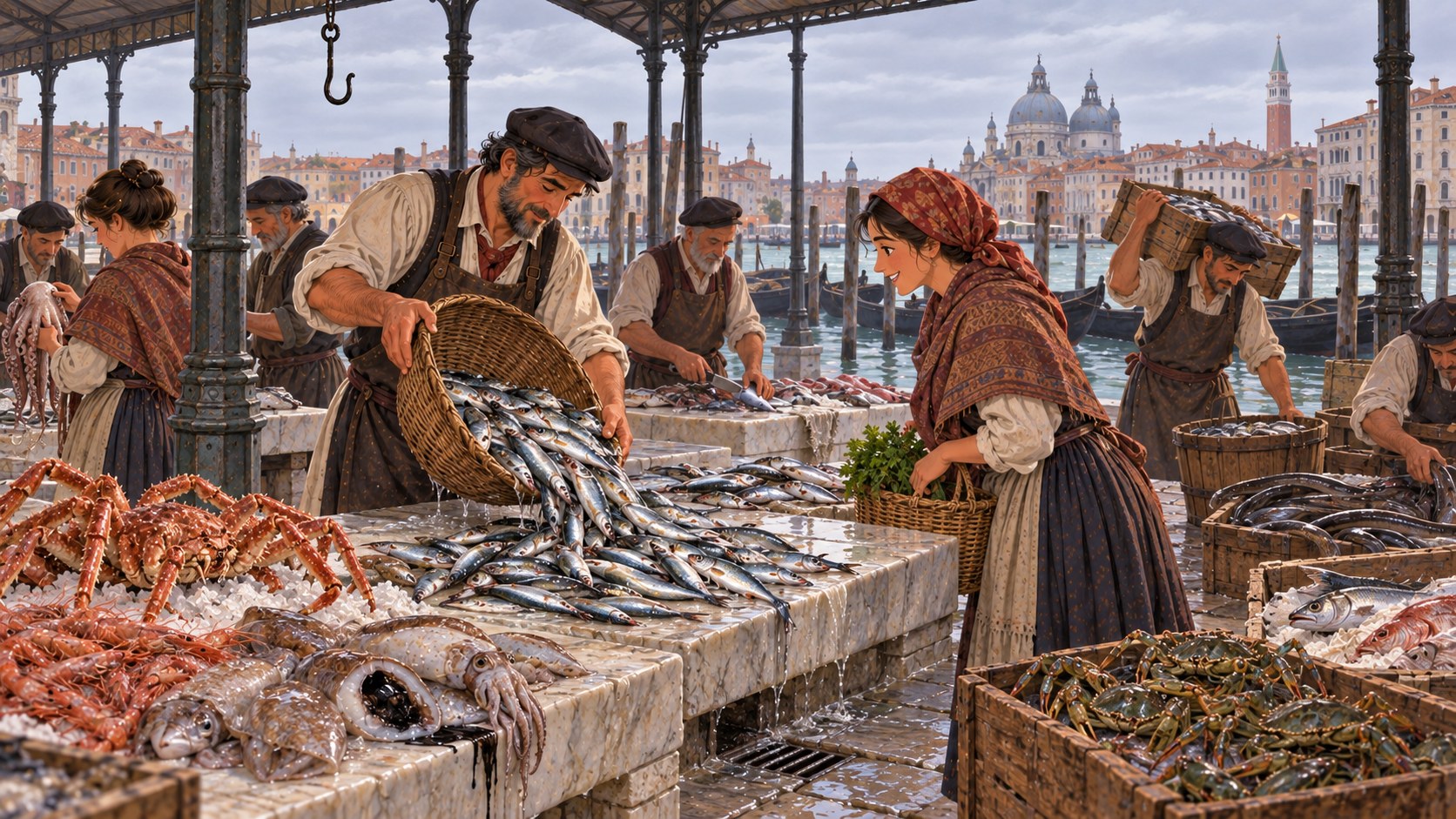
The Rialto fish market at first light, under the plain iron canopy of 1884, before a stone loggia replaced it.
What to look for
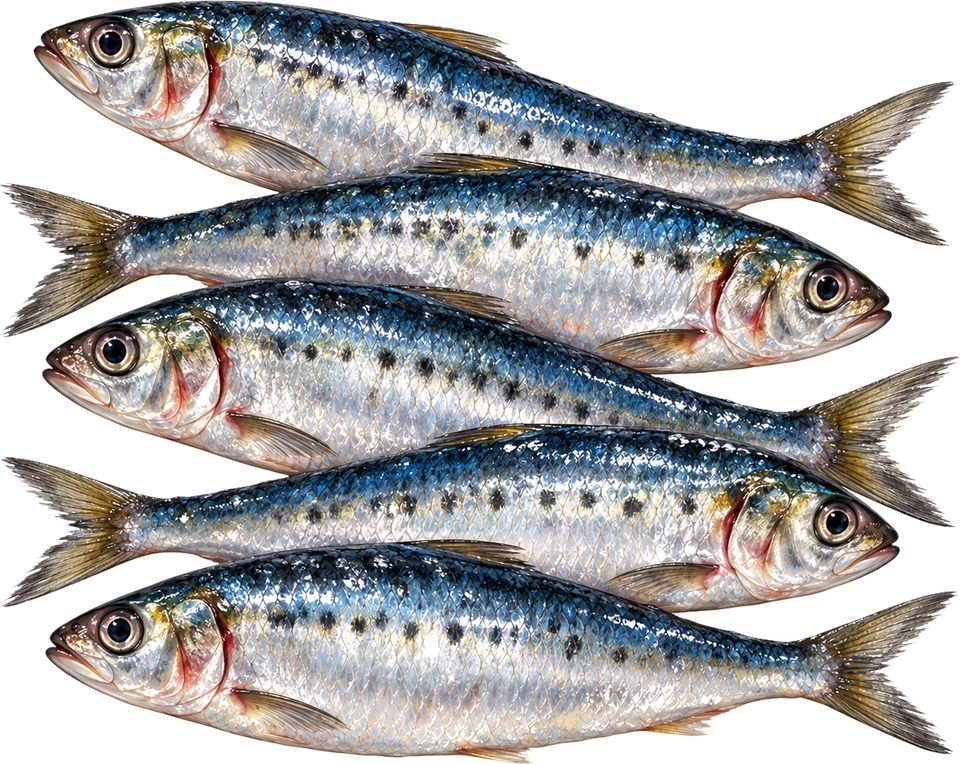
Spread the sardines
A marble plaque at this market gives minimum selling lengths: seven centimetres for a sardine, twenty-five for an eel. Nobody can say how old the plaque is.
Look in the crab box
The green crabs are only worth taking in the two short seasons when they shed their shells, in April and May and again in October and November. The rest of the year they are put back.
Lift the cuttlefish
The ink sac becomes the sauce: cuttlefish are stewed black in their own ink and served over white polenta. The iron canopy overhead was built in 1884; the stone loggia that replaced it was approved in 1900 and opened in 1907 or 1908.
The story
Lagoon fish, crabs and cuttlefish laid on wet stone at dawn.
The Rialto fish market receives catches from the Venetian lagoon and the Adriatic. Sardines, eels, grey mullet, sea bass, cuttlefish and crabs arrive by boat before the city wakes. Buyers choose by season, size and the waters where the fish was taken.
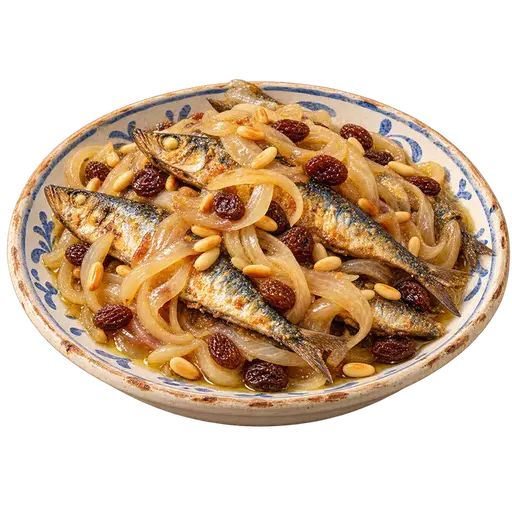
Venetian cooks use onion, vinegar, raisins and pine nuts for sarde in saor. Cuttlefish ink colours sauce and risotto. Spider crab is picked and returned to its shell, while white polenta accompanies many fish dishes. These methods keep the delicate taste of the fish, and the vinegar in saor helps some catches keep longer.
Visit the market early, then look for a nearby osteria serving the day's fish. Ask what came in from the lagoon that morning, and order that.
Today
The stone Gothic-style loggia over the market was built in 1907. The Rialto fish market still opens on Tuesday to Saturday mornings.
What this kitchen cooks
- Sweet-and-sour sardinesSarde in saorFried sardines layered with onions cooked soft in vinegar, with raisins and pine nuts; Boerio's dictionary has the word in 1867.
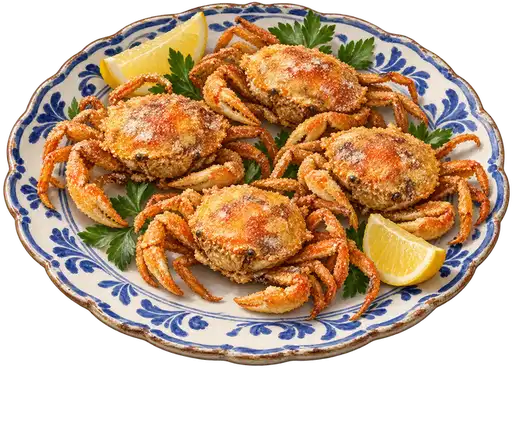 Soft-shell crabsMoecheGreen crabs taken in the few days they have shed their shells, floured whole and fried, eaten shell and all.
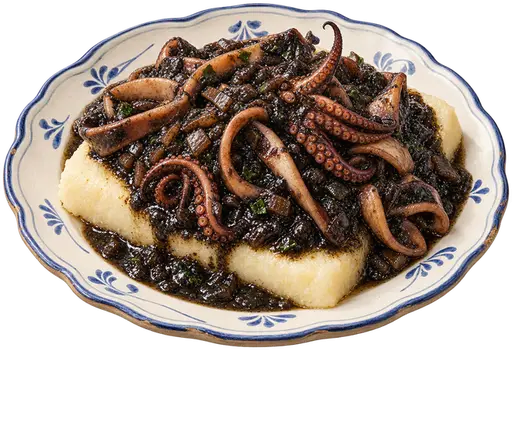 Cuttlefish in inkSeppie in neroCuttlefish cooked in their own ink until the sauce goes black, spooned over a slab of white polenta.
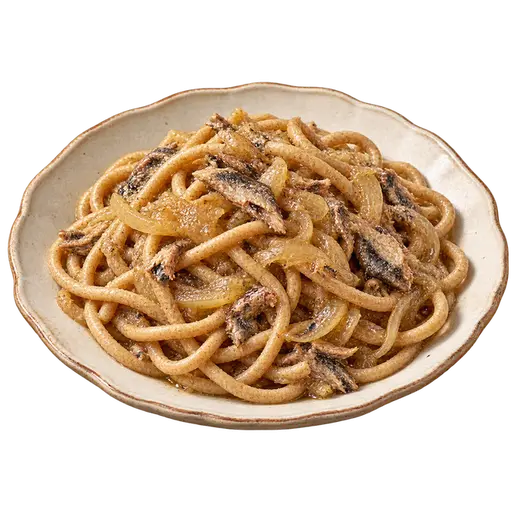 Wholemeal strings with onionBigoli in salsaThick strings pressed through a bronze bigolaro, dressed with onions melted into salted sardines, for fast days.
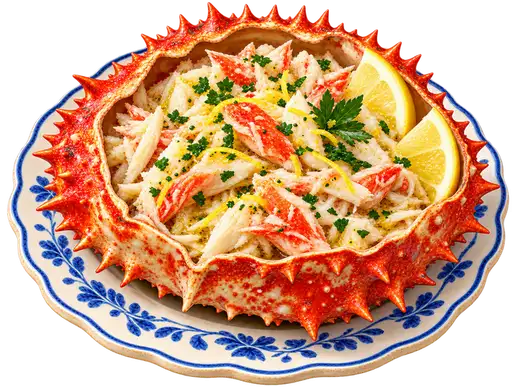 Spider crabGranseolaThe lagoon's spider crab boiled, picked clean and put back into its own shell with oil and lemon.
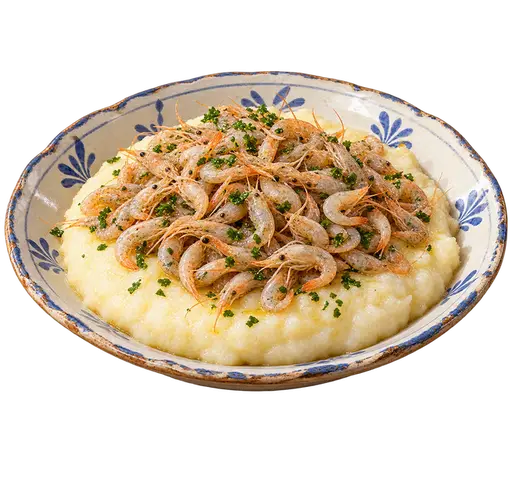 Grey shrimps with polentaSchie con polentaTiny grey lagoon shrimps boiled and piled on soft white polenta, the smallest thing this market sells.
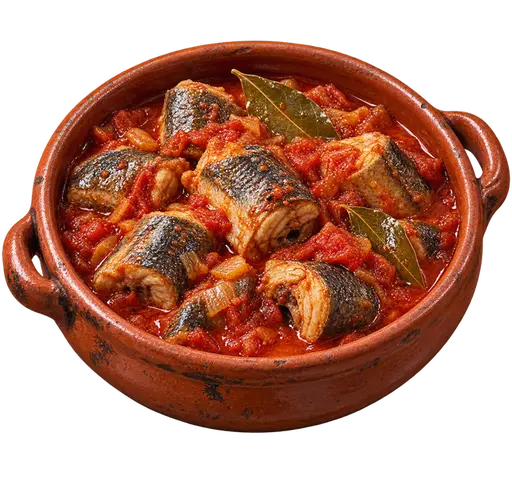 Stewed eelBisato in teciaEel from the lagoon fish farms (valli) or from Comacchio cut into lengths and stewed slowly with tomato and bay.
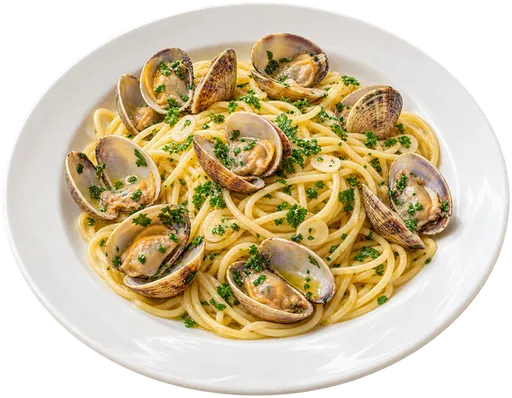 Spaghetti with clamsSpaghetti alle vongoleSpaghetti tossed with small lagoon clams opened in oil, garlic and white wine, finished with parsley and no tomato.