Signature flavour · Madrid & La Mancha · Madrid · Spain · around 1900
The saffron plotAzafrán de La Mancha
Purple at dawn, crimson threads by noon.
The story
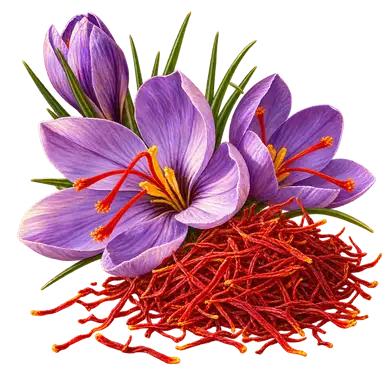
For two or three weeks in late October a dry brown plot in La Mancha turns purple overnight. Crocus sativus flowers before its leaves, opens at dawn and closes the same day, so the whole crop is picked by hand in the cold early hours and carried indoors in baskets.
Then comes the monda. Sitting at a long table, the pickers open each flower and pinch out the three crimson stigmas where the style turns white, dropping them onto cloth. The threads are toasted over gentle heat until they lose most of their weight, which fixes the colour and the smell. It takes a very large number of flowers to fill a small jar, which is the whole explanation of the price.
The Denominación de Origen Protegida Azafrán de La Mancha was recognised in 1995, with its Consejo Regulador at Camuñas in Toledo. A pinch of the toasted threads, crushed and steeped, is what turns the rice in the Valencian pan yellow and gives it its smell.
Today
Iran now grows most of the world's saffron, and La Mancha's crop is far smaller than a century ago. Consuegra holds a saffron rose festival in late October.
What people make with it
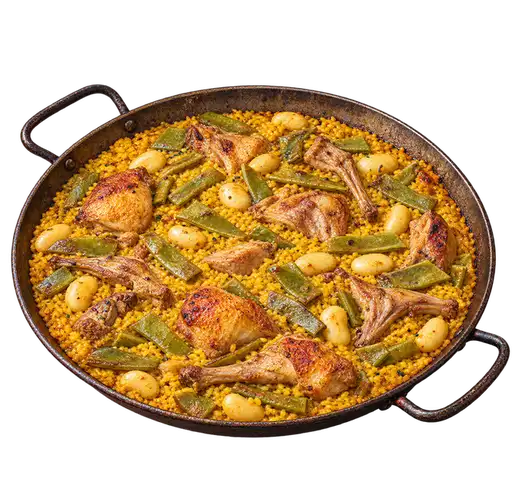 Valencian paellaArròs a la valencianaChicken, rabbit, flat beans and garrofó under rice one grain deep, cooked over a fire of vine prunings.
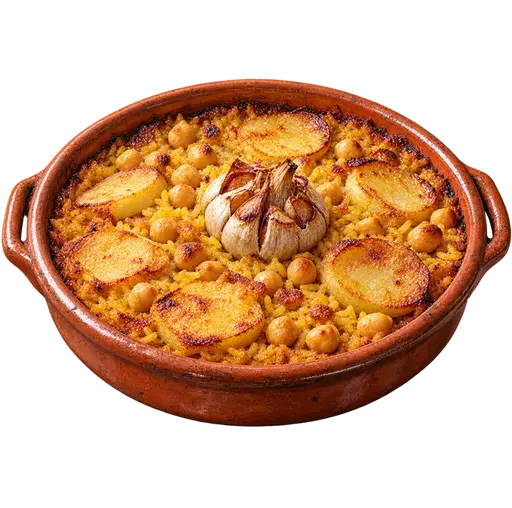 Baked riceArròs al fornRice baked in an earthenware dish with chickpeas, potato slices and a whole head of garlic, from the day's leftover broth.
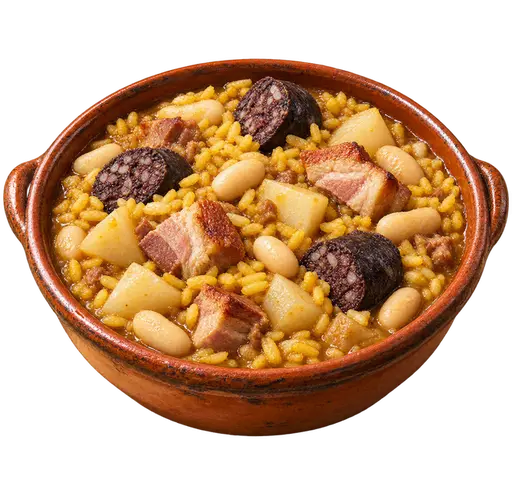 Rice with beans and turnipsArròs amb fesols i napsThe winter rice of the same kitchens, simmered with white beans, turnips, blood sausage and pork, and eaten from a bowl.