Ingredient · Valencia & the Coast · València · Spain · around 1900
Fish & prawnsPescado y gambas
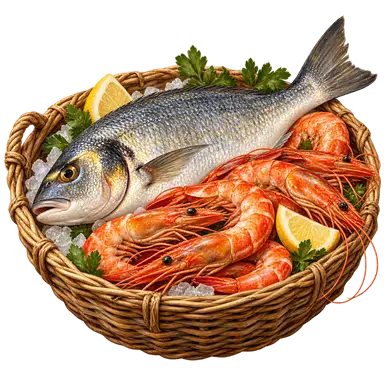
Landed at dawn, on the grill or in the pan by noon.
The story
The Phoenicians were salting Atlantic tuna at Cádiz by about 800 BC, and garum, the fermented fish sauce Rome ate on everything, was made on the same coast. Salting is still what this coast does with the catch it cannot sell fresh.
After Portugal, Spain is the biggest fish eater in the EU. Merluza (hake) and rape (monkfish) simmer with chickpeas and paprika; sardinas go on skewers over a driftwood fire on the sand; gambas hit the hot iron of the plancha with garlic and nothing else; a whole bream is baked in a case of salt and broken out at the table. In the north, salmon is roasted with tomato, olives and capers.
Two things leave the quay and travel. Cantabrian anchovy is salt-packed in tins and barrels for the pintxo counters of the north coast, and octopus was dried and carried inland to the Galician fairs long before ice existed, which is where the cauldron at the fair comes from.
Today
The almadraba tuna traps still work this coast each spring, at Barbate, Zahara de los Atunes and nearby towns, and salted tuna, mojama, is still sold there.
What people make with it
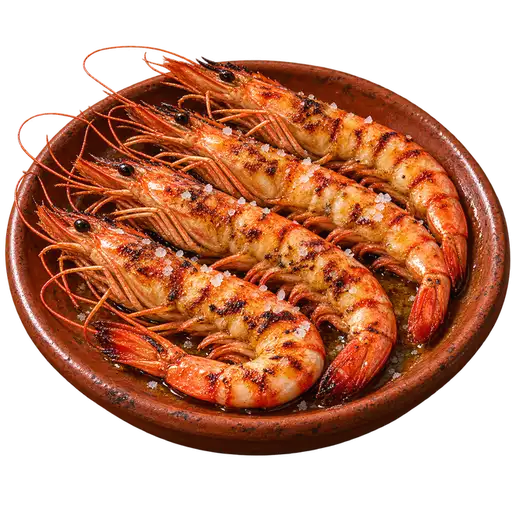 Griddled prawnsGambas a la planchaWhole prawns straight onto the hot iron with salt and oil; the dish is named for the plancha, the griddle.
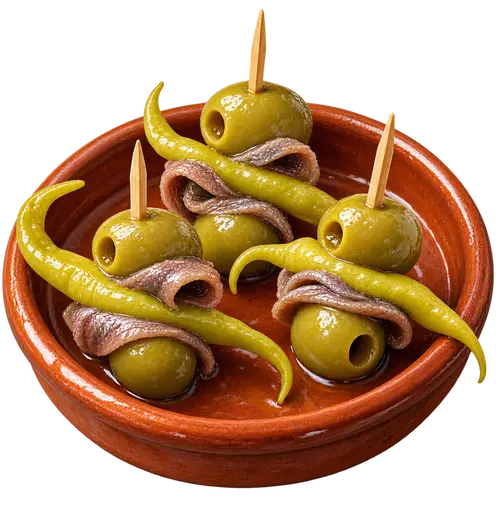 GildaGildaGreen olive, salt-cured anchovy and a pickled guindilla on one stick, the skewer this counter is known by.
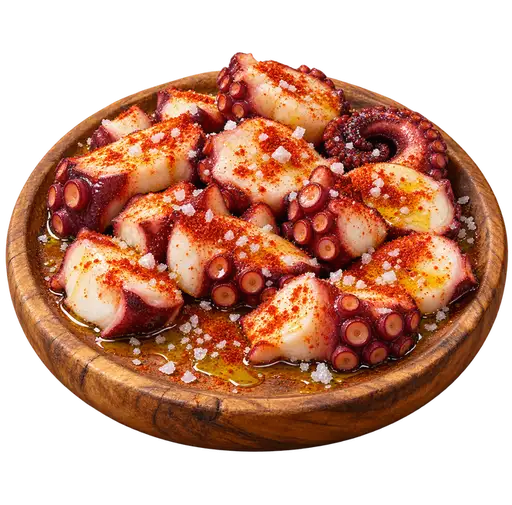 Fair-style octopusPolbo á feiraOctopus boiled in a copper pot, cut with scissors onto wood and dressed with oil, coarse salt and paprika.