Restaurant · Madrid & La Mancha · Madrid · Spain · around 1900
The tapas barLa barra de tapas
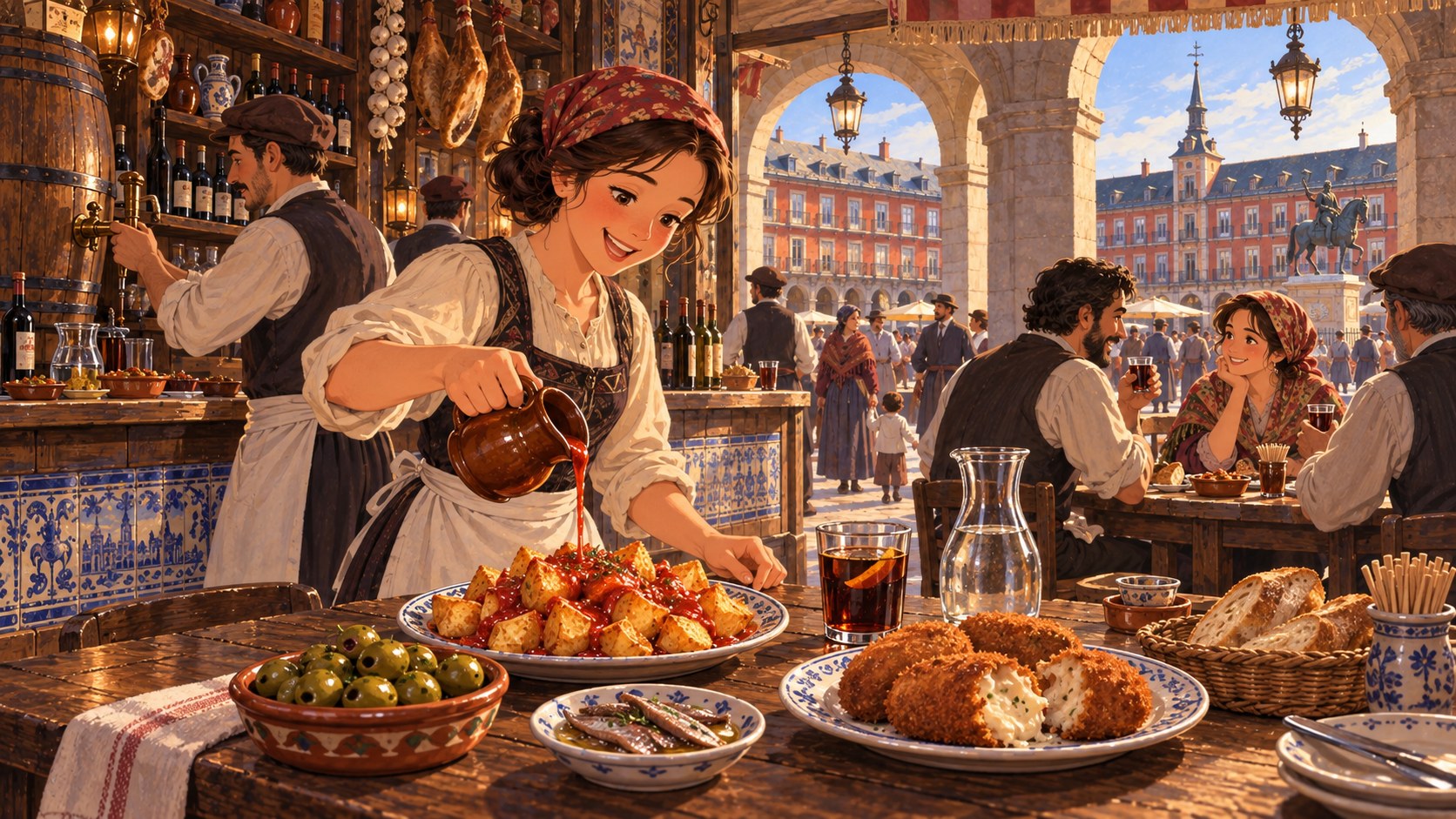
Small plates under the Plaza Mayor arcade: bravas, croquetas, olives and a glass of vermouth.
What to look for
The bravas
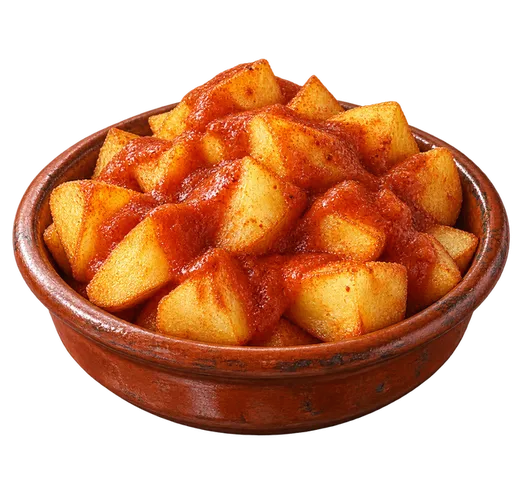
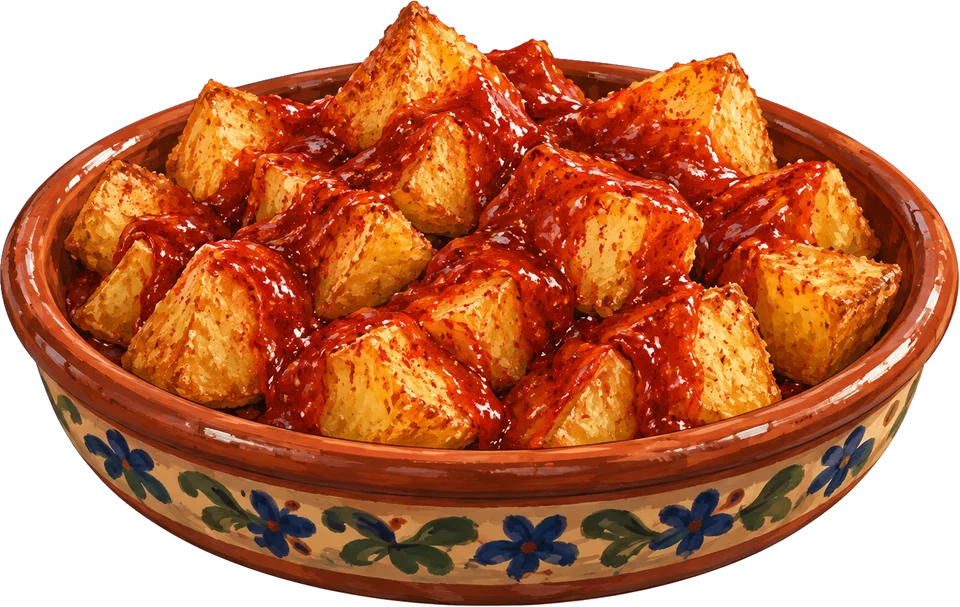
The sauce is built on paprika and oil, and the potato is fried, not boiled.
The croqueta
The filling is a thick béchamel, which is why it runs when it is cut.
The olive dish
Putting a bite of food on top of a glass is an old habit. The word tapa first appears with its food meaning in the Real Academia’s dictionary of 1939, labelled as an Andalusian word.
The story
A bar counter of small plates, eaten one stop at a time.
A Spanish tapas bar serves small dishes built for sharing with a drink. You might find patatas bravas, fried potatoes with paprika sauce; croquetas filled with thick béchamel; anchovies, olives, prawns cooked on a hot metal plate and slices of cured ham. A caña is a small beer, useful when the next bar is close.
Tapeo means moving from bar to bar for one drink and one bite at each. The custom developed through taverns and market districts, with each city building its own repertoire. Madrid, Seville and Granada each have their own house plates, and the busiest counter is the safest place to start.
Today
Patatas bravas became a bar standard only in the twentieth century. In Granada many bars still bring a free tapa with each drink.
Cooked here
the plancha, a hot griddle
What this kitchen cooks
- Patatas bravasPatatas bravasFried potato under a paprika and oil sauce, the plate that arrives first on this counter and is eaten standing.
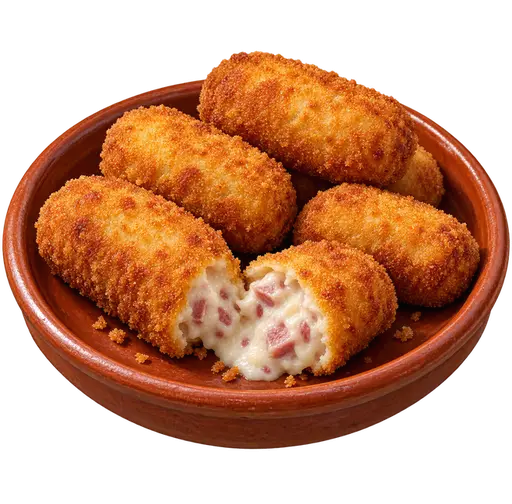 Ham croquettesCroquetas de jamónA thick béchamel with chopped ham, breaded and fried, which is why it runs the moment it is cut.
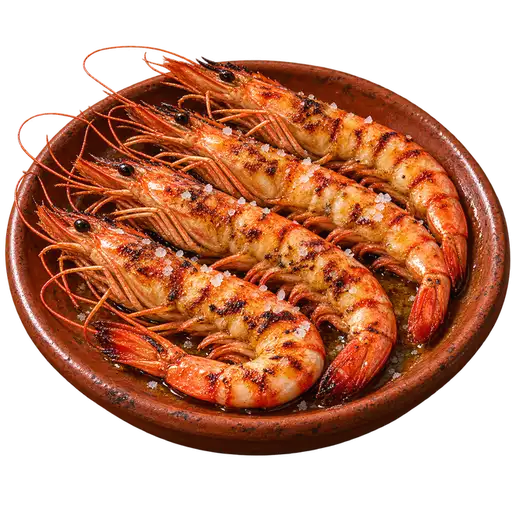 Griddled prawnsGambas a la planchaWhole prawns straight onto the hot iron with salt and oil; the dish is named for the plancha, the griddle.
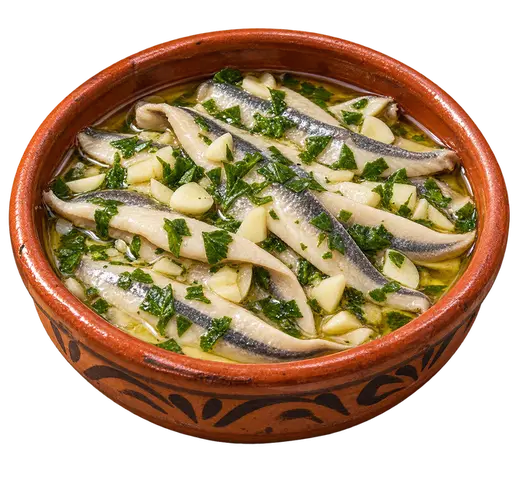 Marinated anchoviesBoquerones en vinagreFresh anchovy filleted and cured in vinegar, garlic and parsley, served cold in oil beside the vermouth.
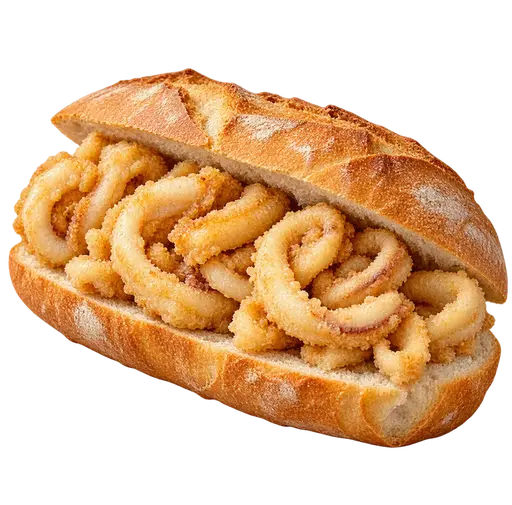 Calamari rollBocadillo de calamaresRings of squid fried and packed into a bread roll, the sandwich Madrid eats on the Plaza Mayor.
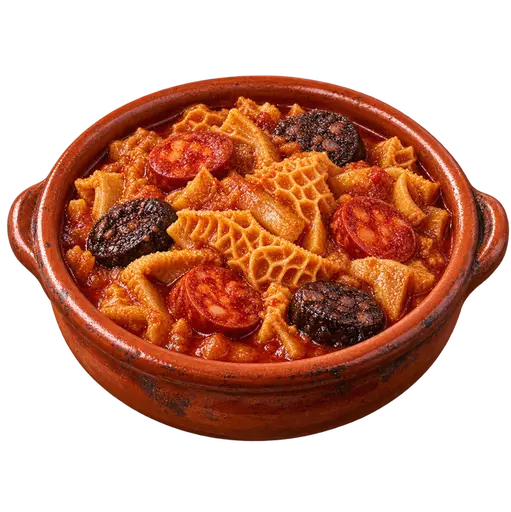 Tripe, Madrid styleCallos a la madrileñaTripe simmered with chorizo, morcilla and paprika until the sauce turns sticky, the winter dish of this city's taverns.
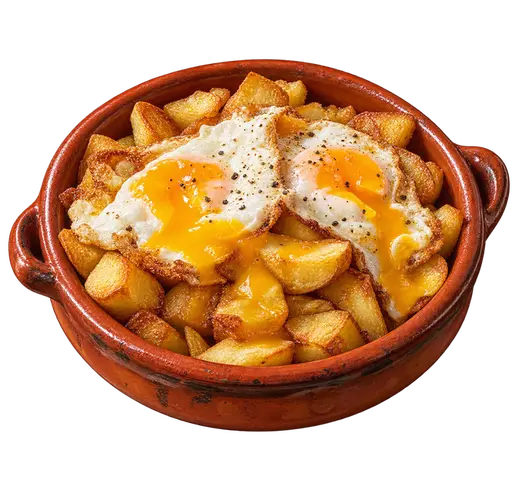 Broken eggsHuevos rotosFried eggs broken over fried potatoes, sometimes with ham on top, eaten with a fork straight from the dish.
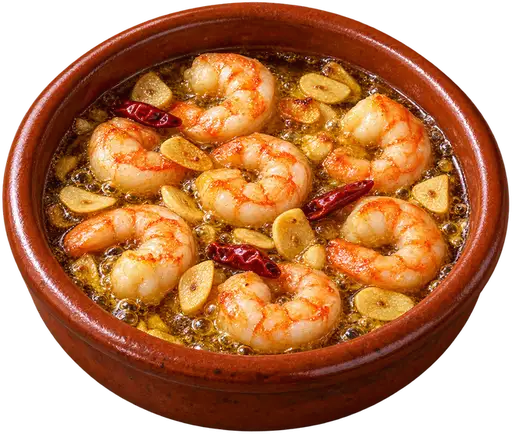 Garlic prawnsGambas al ajilloPeeled prawns dropped into a small clay dish of sizzling olive oil, garlic and dried chilli; a tapas-bar favourite of the 20th century.
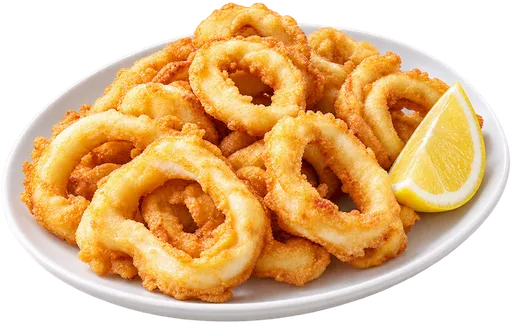 Fried squid ringsCalamares a la romanaSquid rings dipped in flour and egg and fried, served on a plate with lemon; the same rings fill Madrid's calamari roll.
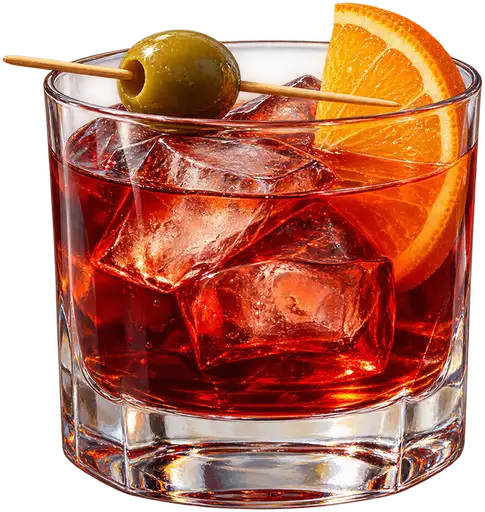 VermouthVermutSweet red vermouth from Reus, drawn from the tap with an olive and a slice of orange before Sunday lunch: the hora del vermut.
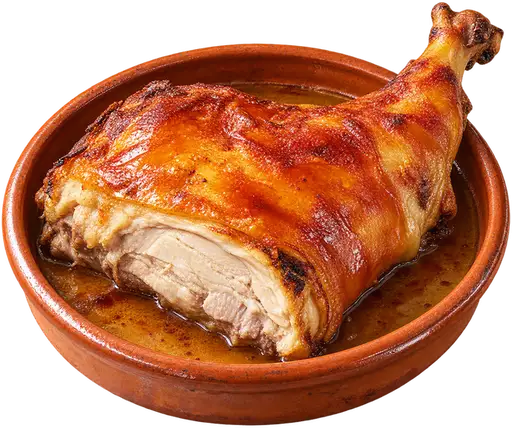 Roast suckling pigCochinillo asadoA suckling pig roasted in a wood oven until the skin crackles and cut with a plate's edge; Botín, open since 1725, still roasts it.
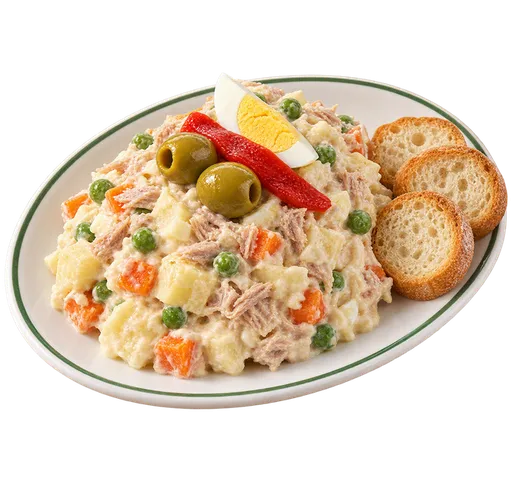 Russian saladEnsaladilla rusaPotato, carrot, peas and tuna bound in mayonnaise, a cold tapa named after the Olivier salad of Moscow's Hermitage restaurant.