Signature flavour · The south and the Andaman · ภาคใต้ · Thailand · around 1900
Turmeric and the southern bedsขมิ้น
The south is yellow because of one root.
The story
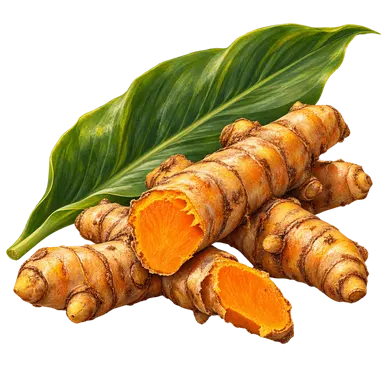
Behind the Gulf shore the ground is dug into low beds of turmeric, black pepper on poles at the end of them and krachai, fingerroot, in the rows between. The rhizomes are lifted when the leaves go yellow, and they stain everything: the hands that dig them, the mortar, and every curry they go into.
That is the difference between southern Thai cooking and the rest of the country's, stated in one ingredient. Turmeric is in nearly every southern curry, which turns them yellow-orange where central curries are red or green. Cooks use it fresh and grated. The south also uses more chilli and more coconut than anywhere else, so the food is hotter and richer at once.
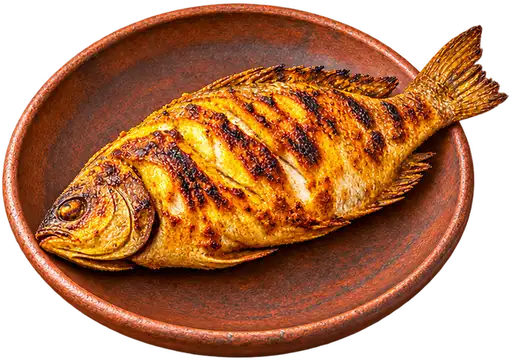
It does two things beyond colour. On fish it goes on with salt before the fire, and it firms and seasons the skin as much as it tints it. In kaeng som, the sour curry, it works with tamarind and chilli in a paste that carries no coconut milk at all, which is why that curry looks thin and is not.
Today
Fresh turmeric is still sold in every southern market. It colours the south's curries and goes on fish before frying or grilling.
What people make with it
- Fish grilled with turmericปลาย่างขมิ้นRubbed with pounded turmeric and salt and laid on green sticks over driftwood coals until the skin lifts away.
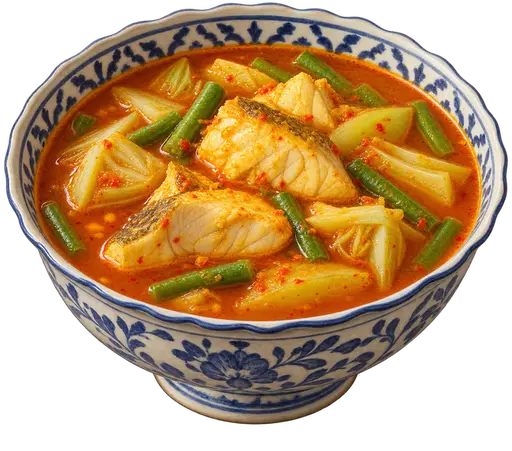 Kaeng som · sour curryแกงส้มTamarind, turmeric and chilli with fish and green papaya, thin-looking, no coconut in it, and properly hot.
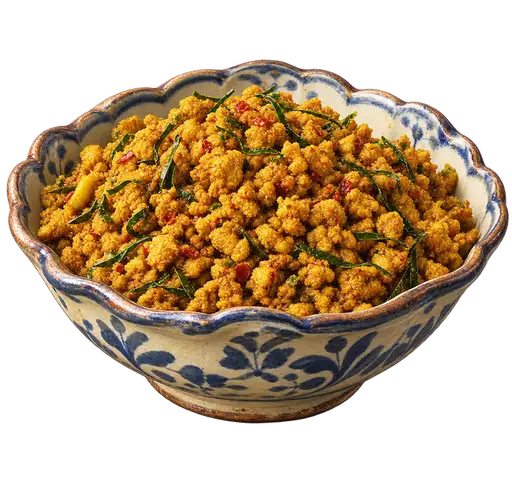 Khua kling · dry minced-pork curryคั่วกลิ้งMinced meat fried dry with a turmeric-heavy paste until no liquid is left, only the spice and the heat.