Ingredient · The south and the Andaman · ภาคใต้ · Thailand · around 1900
The salt pansนาเกลือ
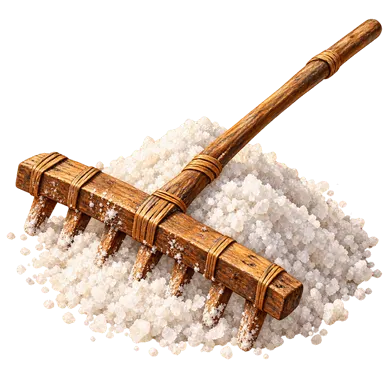
Salt raked from shallow pans on the Gulf coast.
The story
Where the plain meets the Gulf the land goes flat and brackish and is cut into shallow rectangular pans with hard levelled floors. Sea water is let in on a high tide, moved from pan to pan as it concentrates, and left to the sun through the dry season from January to April; the crust is then raked into white cones and carried off on a shoulder pole.
The industry sits on a very short stretch of coast. About 98 per cent of Thailand's sea salt comes from Phetchaburi, Samut Sakhon and Samut Songkhram, and Phetchaburi's pans have a documented history reaching into the reign of Rama IV, which ended in 1868. Samut Sakhon turned paddy into salt fields later, in 1938.
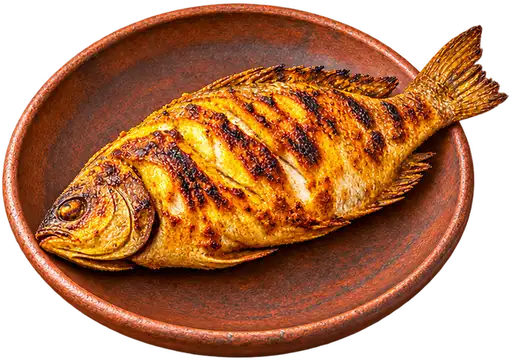
Everything preserved in a Thai kitchen waits on these pans. The pla ra jars on the Isan plateau, the budu jar in the deep south, the kapi in the curry kitchen, the dried river fish and the split squid above the Andaman sand all begin with salt from these pans and need only time.
Today
Salt is still made on seaside flats in Samut Sakhon and Phetchaburi, and the harvest runs through the dry season.
What people make with it
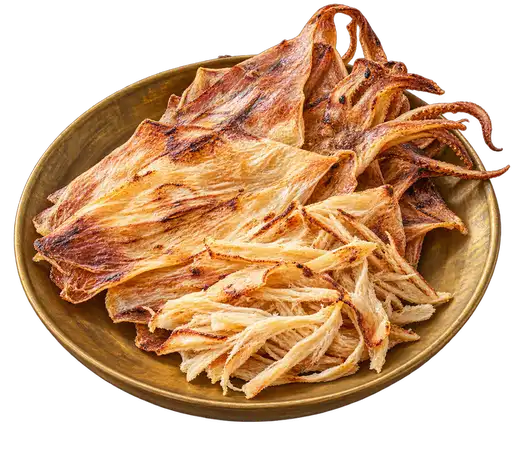 Dried squidปลาหมึกแห้งSplit, salted and hung on a line in the sea wind, then grilled and beaten soft against the board.
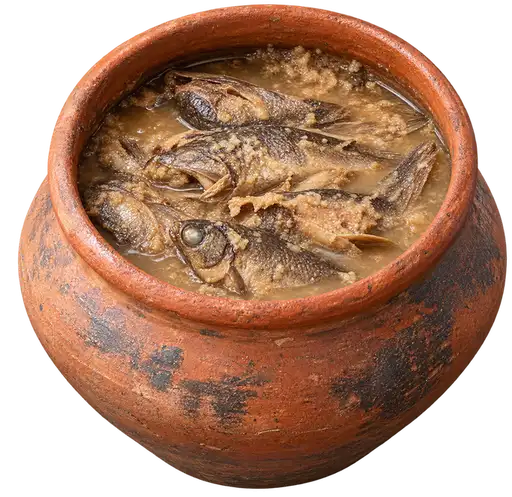 Pla ra · fermented fishปลาร้าFreshwater fish under salt and rice bran for six months; in Isan it is both the seasoning and the protein.
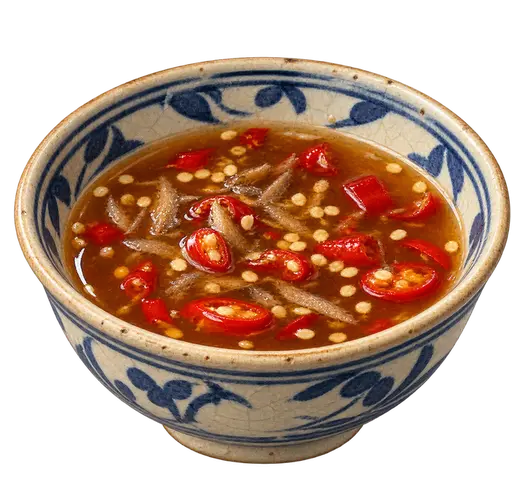 Budu · fermented fish sauceบูดูAnchovies and salt sealed for months; the deep south's own fish sauce, thinned with lime and chilli for the table.