Signature flavour · Isan · อีสาน · Thailand · around 1900
The pla ra jarsปลาร้า
Six months in a jar, and the whole plateau tastes of it.
The story
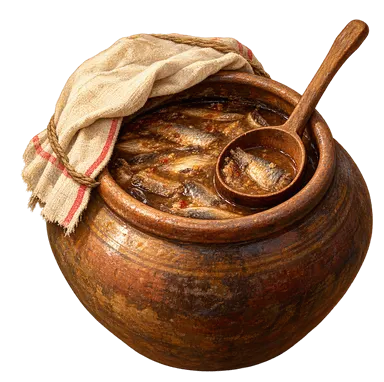
A yard of earthenware jars in the shade under a raised Isan house. Freshwater fish (gourami, snakehead, catfish, whatever the pond and the flooded field give up) are layered with salt and rice bran, pressed down, sealed, and left for at least six months. What comes out is pla ra: soft, brown, strong, and the backbone of this region's cooking.
It supplies protein where meat is occasional, and it seasons the papaya in the mortar and the larb on the board. The practice is old and documented. Simon de La Loubère's Du Royaume de Siam, written after his embassy of 1687 and 1688, describes it.
Bottled nam pla became common only in the twentieth century; before that the northeast seasoned with the liquid drawn off the bottom of these jars.
Today
Pla ra is still made in jars across Isan, and bottled versions are sold in shops. It is the base of many Isan salads and dips.
What people make with it
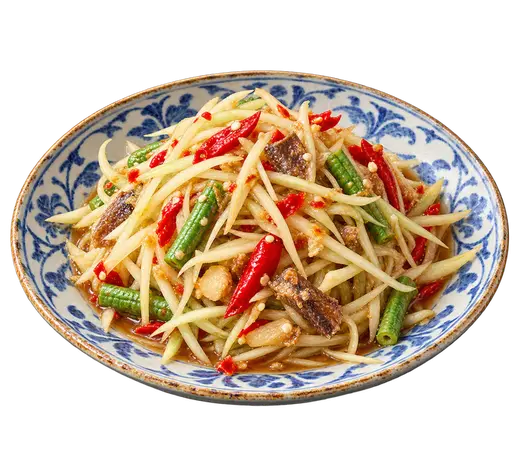
- Som tam · green papaya saladส้มตำGreen papaya shredded and bruised in a clay mortar with chilli, lime, garlic, long bean and fermented fish.
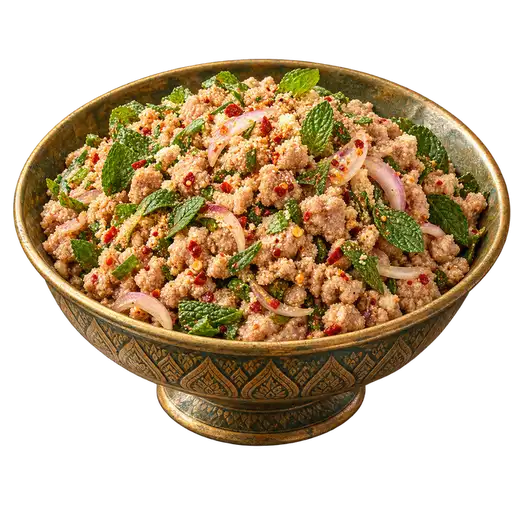 Larb · minced meat saladลาบMeat chopped fine with toasted rice powder, mint, shallot and chilli, dressed with lime and eaten warm.
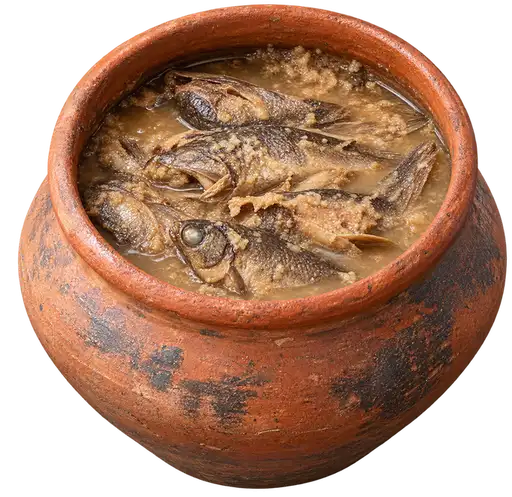 Pla ra · fermented fishปลาร้าFreshwater fish under salt and rice bran for six months; in Isan it is both the seasoning and the protein.