Ingredient · The central plain · ภาคกลาง · Thailand · around 1900
The river fish and the trapsปลาน้ำจืด
So cheap it seasons the labourer's bowl of rice.
The story
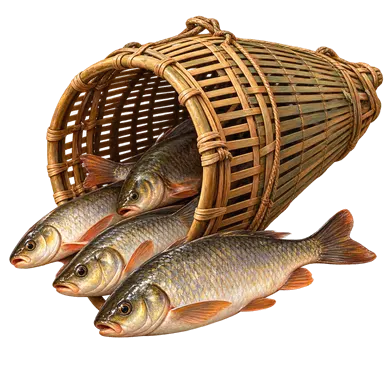
The canals, ponds and flooded fields of this plain are a fishery, and they are worked with bamboo. Woven traps are set in the gaps of a bund, a lift net dropped from a frame, and when the water falls at the end of the wet season the fish come down the channels into whatever is waiting. Snakehead, pla chon; catfish, pla duk; gourami, pla salit.
That abundance is the base of the Siamese table. Anna Leonowens wrote in 1870 that fish was so abundant and cheap that it formed a common seasoning to the labourer's bowl of rice, and the same fish is in the written record of the kitchen: the first tom yum recipe, of 1888, is tom yum pla chon, made with snakehead. The prawn version that now carries the dish's name abroad came later.
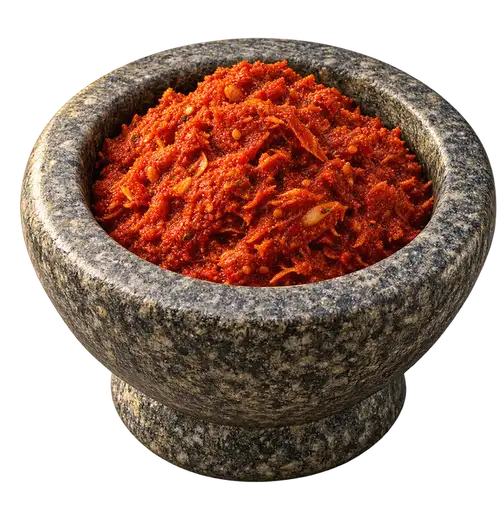
What is not eaten fresh is preserved three ways: grilled and dried in the sun, salted, or layered with salt and rice bran into a jar as pla ra for six months, which is how a household keeps protein through a year without ice.
Today
Much of Thailand's freshwater fish now comes from farm ponds. Traps are still used in rural areas, and fermented fish is still part of everyday seasoning.
What people make with it
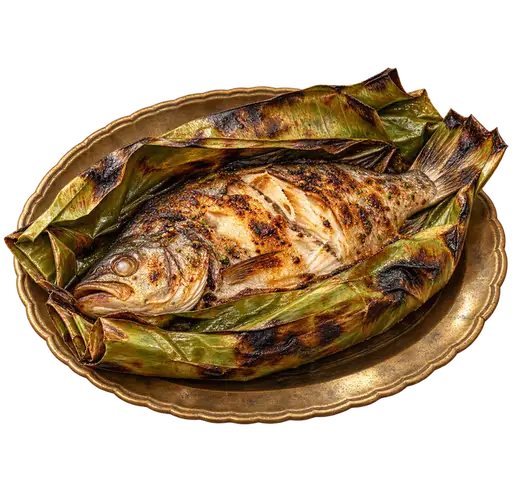 Fish grilled in banana leafปลาเผาใบตองA whole fish wrapped in leaf and laid on the straw fire, the leaf charring while the flesh steams inside.
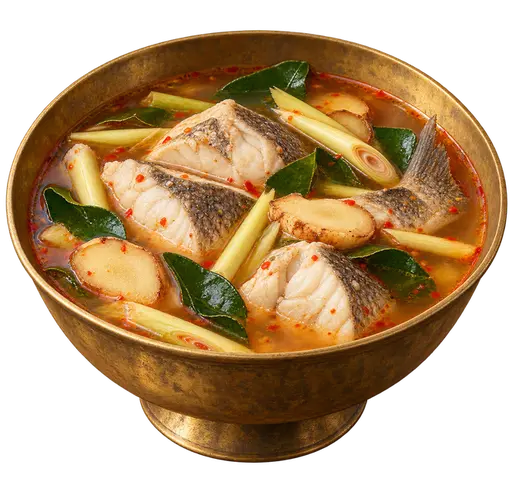 Tom yum with river fishต้มยำปลาLemongrass, galangal and lime leaf in water with the fish that came out of this same flooded field.
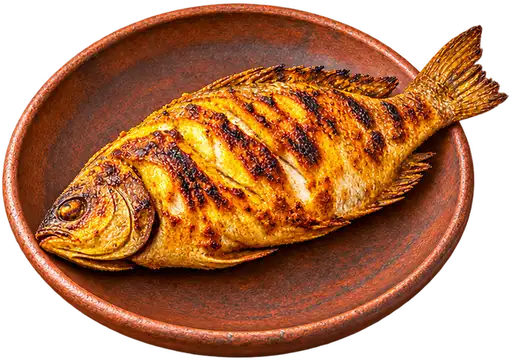 Fish grilled with turmericปลาย่างขมิ้นRubbed with pounded turmeric and salt and laid on green sticks over driftwood coals until the skin lifts away.