Workshop / producer · Lanna, the north · ล้านนา · Thailand · around 1900
The tea gardensเมี่ยง
Northern tea leaves fermented for chewing with ginger, coconut or salt.
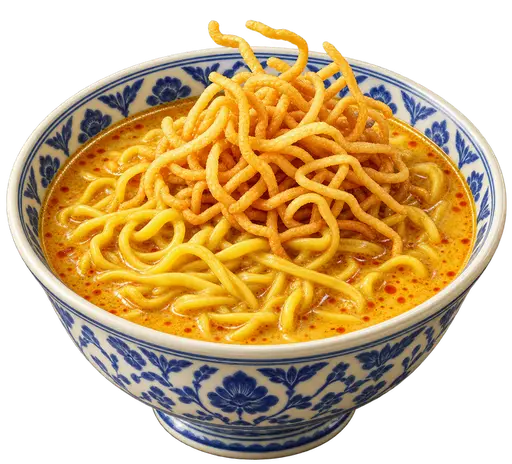
The story
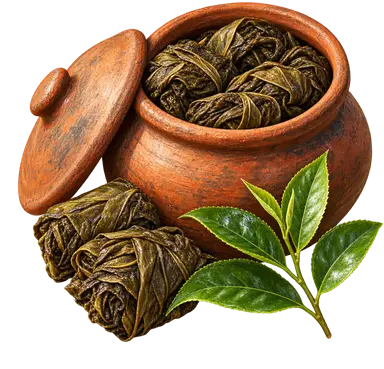
Miang is Assam tea leaf prepared as food. Growers steam the leaves, pack them tightly in bamboo baskets and ferment them for weeks or months. A small wad is chewed plain or with ginger, roasted coconut, salt or palm sugar. Its taste is sour, earthy and gently bitter.
The gardens look like woodland. Assam tea grows as tall shrubs in the shade of the forest on the hills above Chiang Mai, and pickers work through that shade from the rains into the cool season. Hill villages there, some still named for the leaf, lived on it and carried the packed baskets down to the valley markets.
Northern households once offered miang to guests and served it at weddings, funerals and shared meals. The leaf keeps well, which helped it travel along highland trading routes. Lanna markets sell it, and it sometimes sits on a khantoke tray, the low table of a traditional northern meal.
Today
Miang is still made in northern hill villages and sold in northern markets, wrapped in small leaf packets with ginger, coconut or salt.
What this kitchen cooks
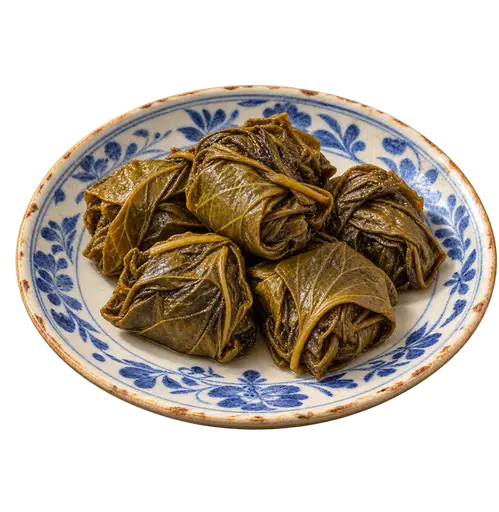 Plain fermented miang · fermented tea leafA small wad of sour fermented tea leaf is chewed slowly after a meal.
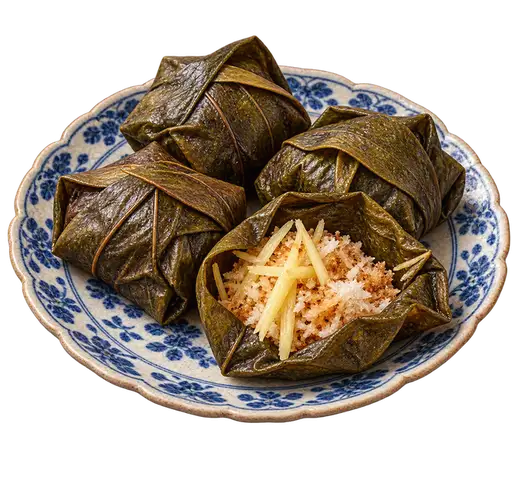 Miang with ginger and coconut · tea-leaf wrapsFermented tea leaf wraps roasted coconut, ginger, salt or palm sugar, so one bite has several flavours.
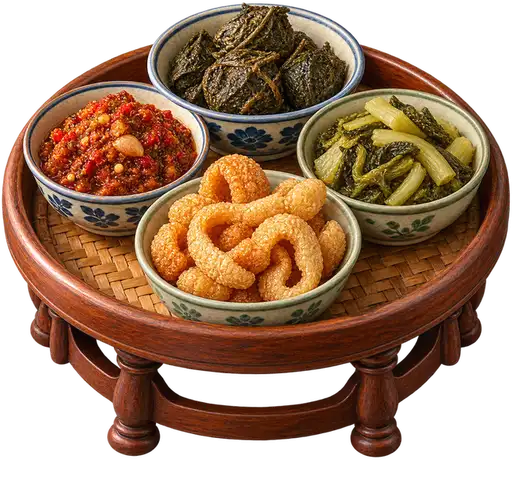 Khantoke miang tray · shared tea-leaf snack trayNorthern shared meals may include miang beside chilli relishes, pickled greens and crisp pork skin.