Landmark · Isan · อีสาน · Thailand · around 1900
The mor lam stageหมอลำ
A singer, a khaen and a night of verse on a plank stage.

The story
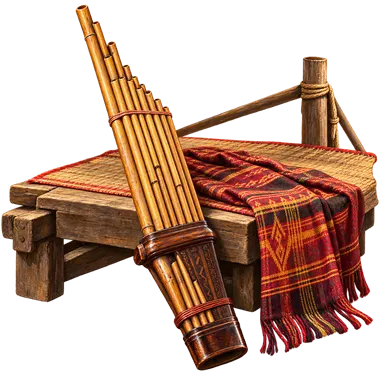
Mor lam is the sung storytelling of Isan. Mor means master and lam is a style of singing that came to the plateau with the Lao-speaking people who make up most of its population. A singer, often with a partner, trades verses about love, merit, farm work and village gossip, and improvises for the crowd in front of the stage. The khaen is the instrument at the centre: a free-reed organ of bamboo pipes tied in two rows around a small wooden wind chest, played by breathing in and out so that the tune and its drone never stop.
A phin, a small plucked lute, and a pair of ching cymbals often join it. The stage is wherever the fair is, usually a temple festival after the harvest, with planks on posts, a thatched roof, hanging lamps, and benches and mats for the village. Food sellers set up beside it with grilled chicken, sticky rice in banana leaf and papaya salad, so a night of mor lam is also a night of Isan cooking. Today the stage may have speakers and a dance troupe, but the khaen is still there.
Today
Mor lam is still performed at temple fairs and festivals, now often with electric instruments and a full band, and it is also heard on radio and television.