Ingredient · The central plain · ภาคกลาง · Thailand · around 1900
The paddy and the buffaloนาข้าว
Ten thousand tons a year became eight hundred thousand.

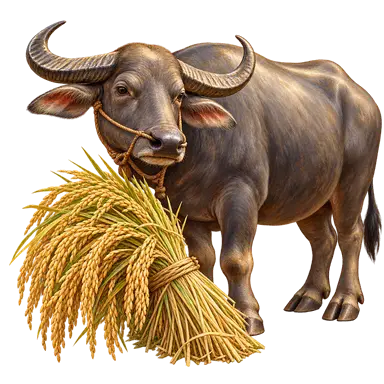
The story
The central plain is the flattest large landscape in Southeast Asia and it is farmed in bunded squares that are flooded on purpose. The monsoon runs from May to October, the water is let in and held, the seedlings transplanted by hand into mud, and a buffalo drags the plough through it because it can work ground no wheel will cross.
What turned this into an industry was a treaty. The Bowring Treaty of 1855 abolished the royal trade monopolies and permitted rice to be exported freely. Exports grew from roughly 10,000 tons a year in the 1860s to about 845,000 tons by 1904, and people cleared the delta, built dikes and canals, and settled there to grow it. The canals carried that trade.
The grain changes across the country. The plain and the south grow long-grain rice, boiled and eaten from a bowl; Isan and the north grow glutinous rice, steamed in a bamboo cone and eaten with the fingers. The difference decides how every other dish in its region is served.
Today
Small engine ploughs, nicknamed iron buffaloes, and tractors have replaced most water buffalo for ploughing. Buffalo are now kept in far smaller numbers.
What people make with it
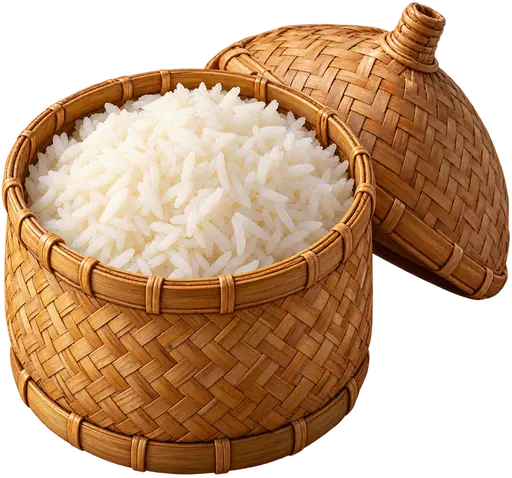 Rice from the basketข้าวสวยCooked at the house before dawn and carried out in a lidded basket, still warm at mid-morning.
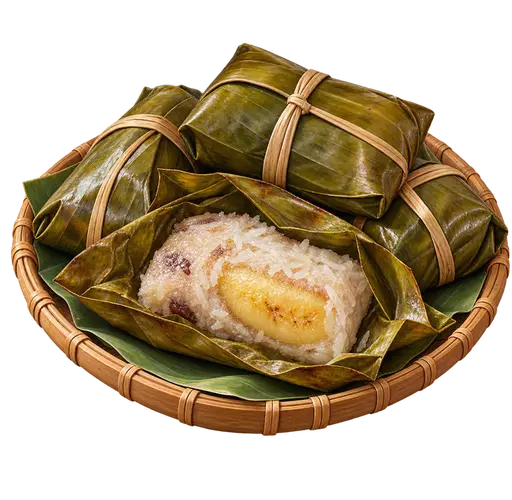 Steamed rice parcelsข้าวต้มมัดGlutinous rice, coconut and banana bound in a leaf and steamed, the parcel that travels out to the field.
 Rice congeeโจ๊กRice boiled until the grains dissolve, with pork, ginger and a raw egg broken in at the counter.