Ingredient · Bangkok and the river · กรุงเทพฯ · Thailand · around 1900
Mangoes, rambutan & durianผลไม้
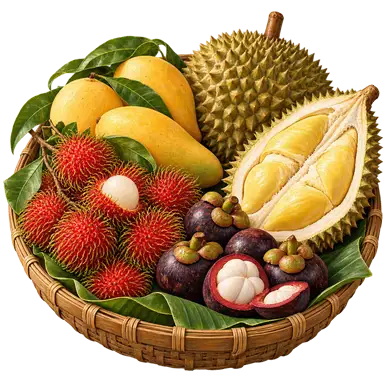
Mangosteen by the boatload, and the durian of Nonthaburi.
The story
One hull in the basin carries nothing but fruit, in shallow baskets and on banana leaf so nothing bruises against the planking. Mangosteen and rambutan come in by the boatload with the rains and the price falls with them; bananas arrive still on the stem; nam dok mai mango has its few weeks in March and April; and the durian is the one the boat is really known for.
The orchards behind it are upriver at Nonthaburi, on raised beds with a water channel between each pair, and they have grown durian for centuries. The trade was rebuilt once: John Crawfurd's account records a flood in 1831 that destroyed most of the province's fruit trees, and Chinese immigrant growers put the orchards back commercially.
The fruit is sold the way water allows: opened by thumb over the side of the boat and tasted before it is bought, nothing weighed, and a durian taken only when it has fallen by itself. What is ripe and unsold by mid-morning goes to the seller's own family, which is why this boat leaves early.
Today
Fruit is still sold from carts and market stalls across Bangkok. Most durian now comes from Chanthaburi and the east, though Nonthaburi still grows it.
What people make with it
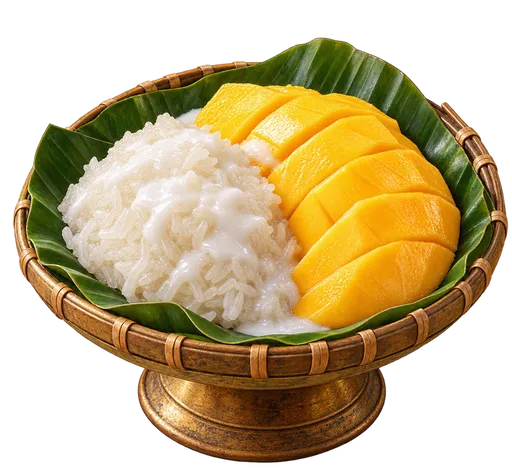 Mango with sticky riceข้าวเหนียวมะม่วงRipe nam dok mai mango beside glutinous rice steeped in sweetened coconut cream, sold from the boats each April.
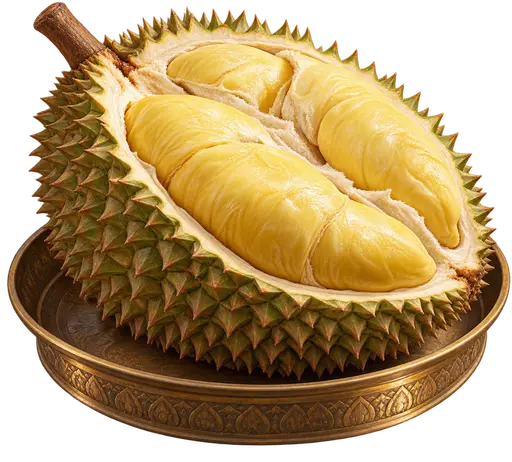 DurianทุเรียนGrown in the river orchards upstream since long before this market; a good one costs a week's rice.
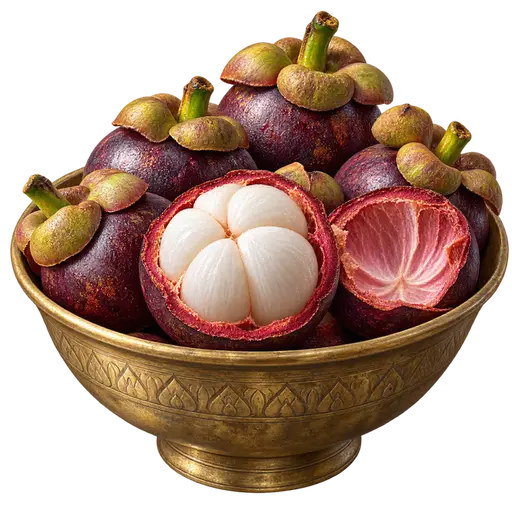 MangosteenมังคุดTwisted open by thumb into five white segments; it comes in with the rains and the whole canal smells of it.
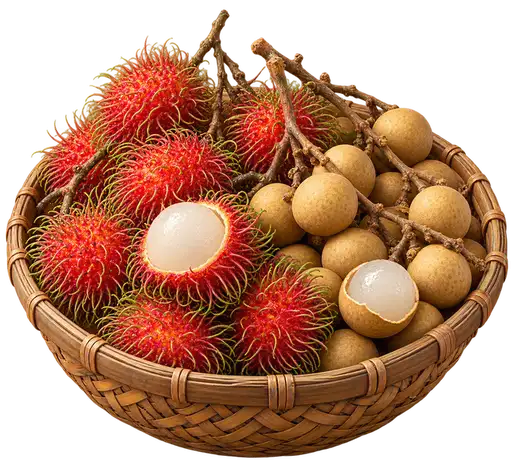 Rambutan and longanเงาะและลำไยSold on the branch by the armful in the wet season, cut off with a knife over the side of the boat.