Workshop / producer · The central plain · ภาคกลาง · Thailand · around 1900
The river orchardsสวนผลไม้
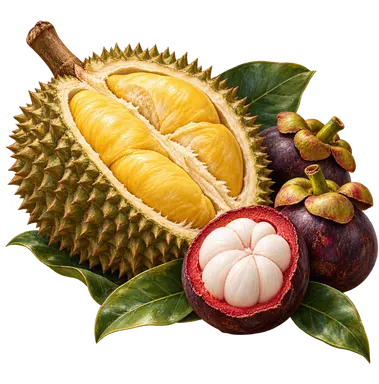
Durian and mangosteen on ridged beds between water channels.
The story
Along the river above the city the ground is cut into long raised beds with a water channel between every pair of them, so that the roots stay above the flood and the water is always within reach. That arrangement, and the silt the river leaves, is why the orchards of Nonthaburi are the ones the fruit boats come from.
Durian has grown here for centuries and is the crop the province is known for, with mangosteen, rambutan and mango beside it. The trade has been rebuilt once: John Crawfurd's account records a flood in 1831 that destroyed most of the province's fruit trees, and commercial planting by Chinese immigrant growers put the orchards back.
The fruit reaches the eater by water and on its own timetable. A durian is taken when it falls by itself, mangosteen and rambutan come in by the boatload with the rains and the price falls with them, and the nam dok mai mango has a few weeks in March and April, eaten with glutinous rice and sweetened coconut cream, and then is gone.
Today
Orchards on Bangkok's western bank still sell fruit, though housing has replaced many. Most durian now comes from Chanthaburi and the east.
What this kitchen cooks
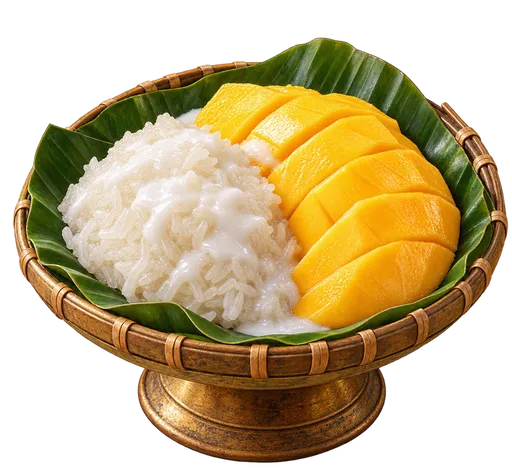 Mango with sticky riceข้าวเหนียวมะม่วงRipe mango beside glutinous rice steeped in sweetened coconut cream, sold from a boat through the March and April season.
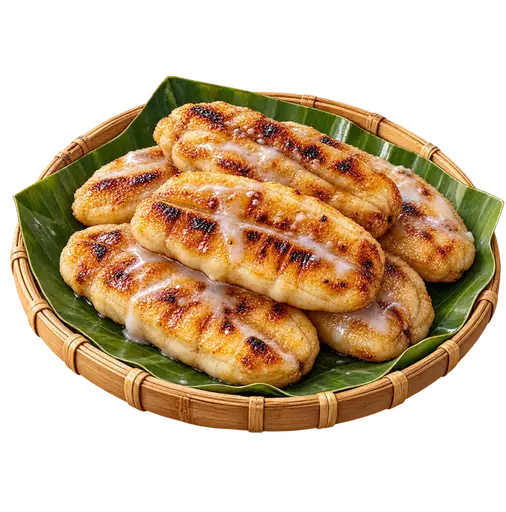 Grilled bananaกล้วยปิ้งShort sweet bananas flattened and grilled over charcoal in the boat, brushed with salted coconut cream while still hot.
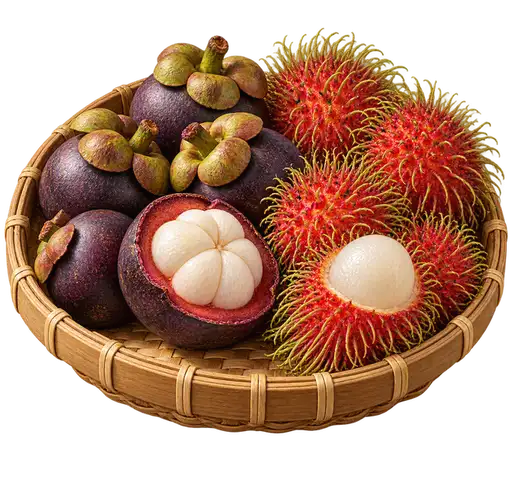 Mangosteen and rambutanมังคุดและเงาะOpened by thumb over the side of the boat; the rains bring them in by the boatload and the price falls.