Ingredient · Black Sea · Karadeniz · Turkey · around 1900
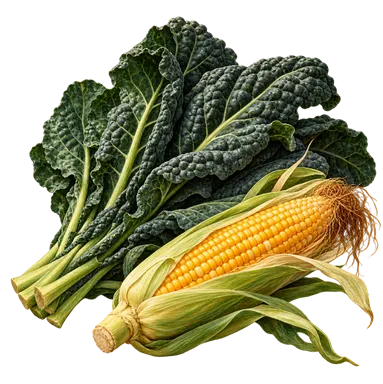
Kale and maize bedsKaralahana ve mısır
The two plants behind every Black Sea soup and bread.
The story
Karalahana, literally black cabbage, is the tall dark kale of the Black Sea coast. It grows through the wet winters when little else does, and it goes into karalahana çorbası, a soup thickened with beans and cornmeal, and into sarma, where the blanched leaves are rolled around rice and meat.
Maize, a crop from the Americas, became the region’s staple grain because it thrives in the rain. Mısır ekmeği is a dense cornbread baked without a raising agent; muhlama or kuymak is cornmeal cooked with butter and a stringy local cheese until it pulls in threads.
Kale is picked for the evening pot while the corn dries on the stalk, and the two meet in one meal: soup, then cornbread to mop the bowl.
Today
Karalahana soup is still a Black Sea winter staple, and lokantas from Trabzon to Istanbul serve it.
What people make with it
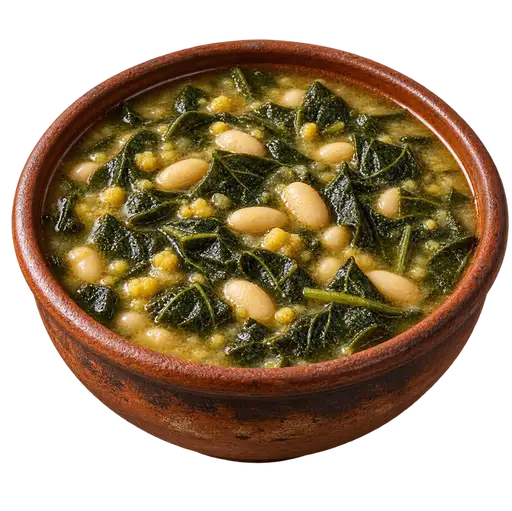 Kale soupKaralahana çorbasıBlack cabbage simmered with beans and cornmeal into a thick soup for the wet winter.
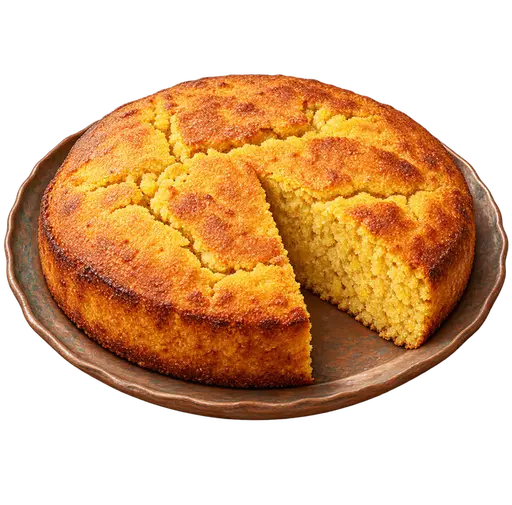 CornbreadMısır ekmeğiDense cornbread baked without a raising agent, the daily bread of a coast too wet for wheat.
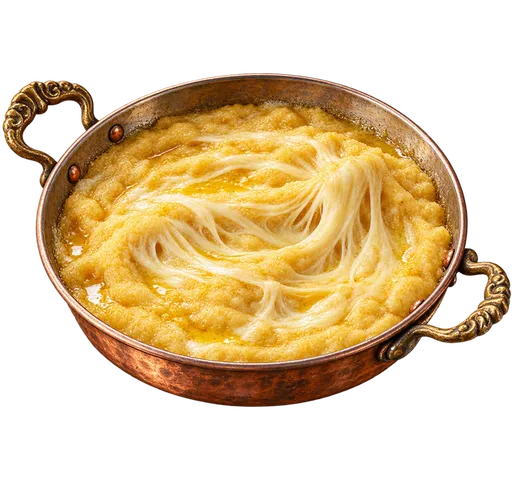 Cheese and cornmealMuhlamaCornmeal cooked in butter with fresh mountain cheese until it pulls in threads from the pan.