Home kitchen · London · Westminster & the Docks · United Kingdom · around 1900
The seamen's kitchenলস্কর রান্নাঘর
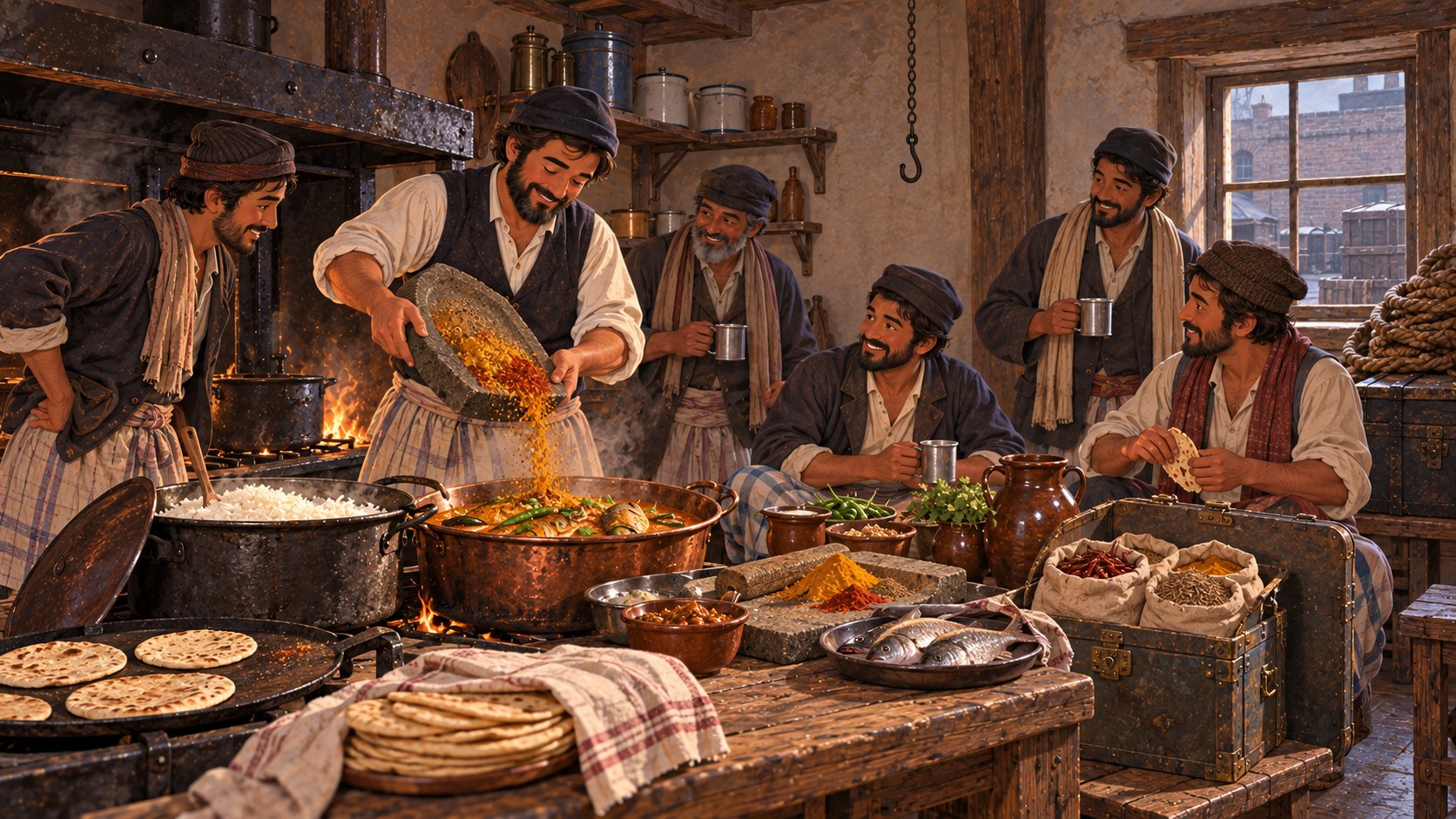
A Shadwell back room, a stone slab of ground spice going into an iron pan, and six men from one ship cooking for each other.
What to look for
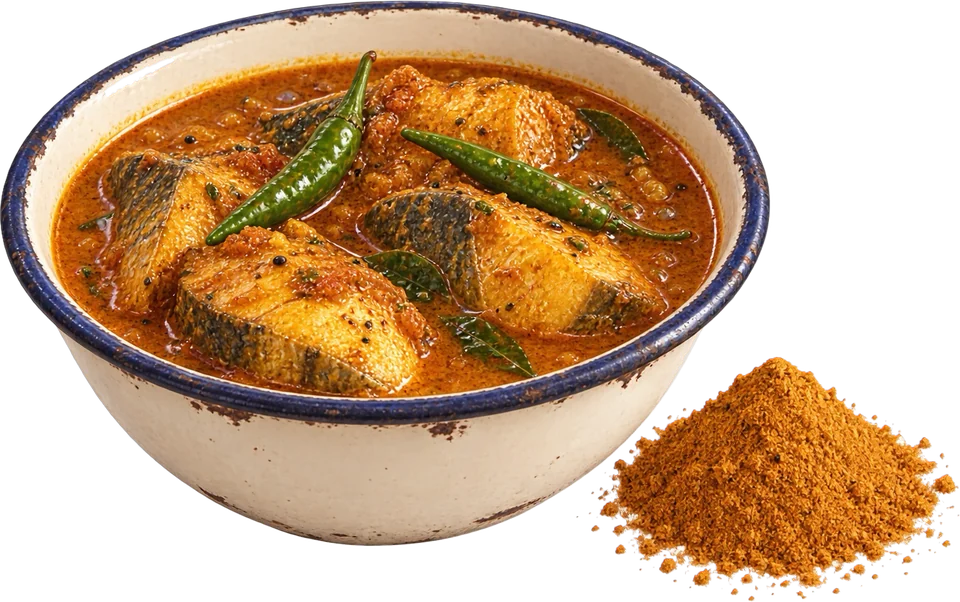
Scrape the spice slab
Spices are ground fresh on the stone every day, because ground spice does not keep and because nothing else was for sale. The roller is worked with the whole body, not the wrist, and the slab is the most valuable thing in the room.
Look in the curry pot
Lascars were sailors recruited across South Asia to crew British ships. They were always to be found in the docks, and the largest groups came from Sylhet and Chittagong. They cooked for each other around Shadwell and Limehouse because there was nowhere to buy the food.
Lift the rice lid
Sake Dean Mahomed opened the Hindoostane Coffee House, an Indian restaurant, at 34 George Street in London in 1810 and was bankrupt by 1812. Salut e Hind is reported to have opened in Holborn in 1911 and Veeraswamy in Piccadilly in 1926. Between 1880 and 1914 there was no curry house in the East End, only kitchens like this one.
The story
How Bengali sailors cooked in London before curry houses reached the high street.
London's docks brought South Asian crews into the East End. In Shadwell boarding houses, sailors from Sylhet and Chittagong cooked fish curry, plain rice, dal, spiced potatoes and flatbread between voyages. The fish came from nearby markets. The recipes and spicing came from home, carried across the sea by the sailors.
Mustard seed, chilli and turmeric went into the curry. Cumin, coriander, ginger and garlic were ground on a stone slab. Fried onion and whole spices started the dal, and potatoes helped feed several men from one pan. During the nineteenth century, these meals were cooked mainly in ships' kitchens and lodging-house kitchens.
From the 1920s, former seamen and Bengali settlers opened lodging houses and cafes. Their cooking helped form Britain's curry-house culture. In London today, seek out Bangladeshi or Sylheti cafes in the East End and ask for fish, dal or vegetable dishes alongside the familiar restaurant curries.
Today
The Sylheti community stayed in the East End. Bangladeshi-run restaurants still fill Brick Lane, and Tower Hamlets is home to one of Britain's largest Bangladeshi communities.
What this kitchen cooks
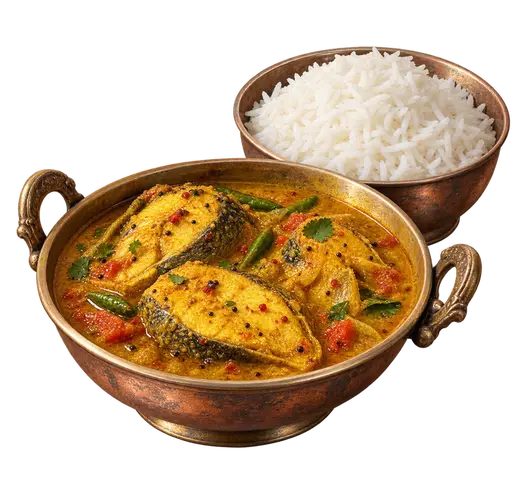
- Fish curry and riceমাছের ঝোল ভাতMarket fish simmered with ground turmeric, chilli and mustard, eaten with plain boiled rice by men off one ship.
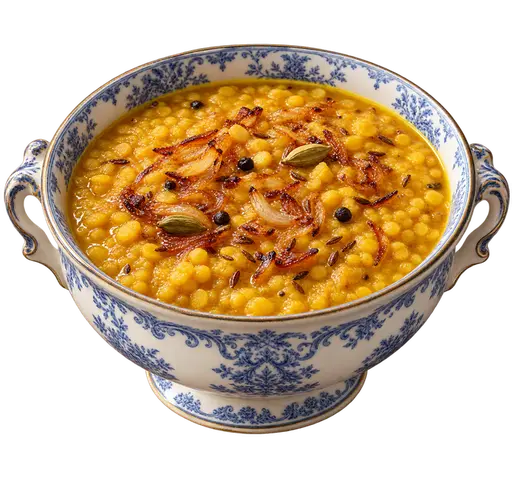 LentilsডালSplit lentils boiled soft and finished with onion and whole spices fried in fat, the cheapest pot on the fire.
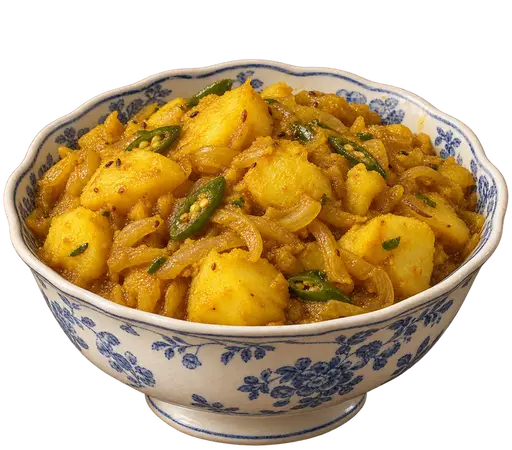 Spiced potatoআলুর তরকারিPotatoes cooked down with onion, turmeric and green chilli, the dish that stretches when another man arrives.
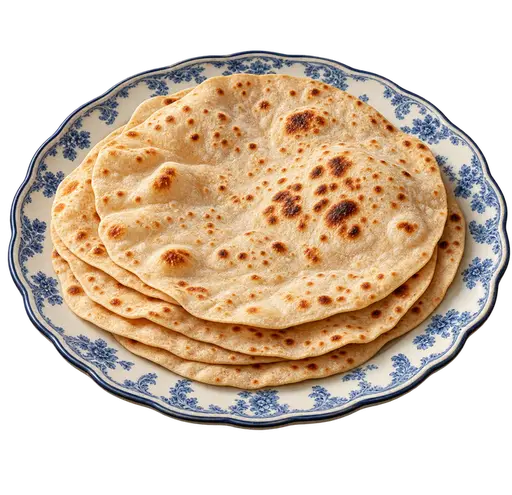 FlatbreadরুটিFlour and water rolled thin and cooked dry on a griddle, turned by hand, made fresh at every meal.
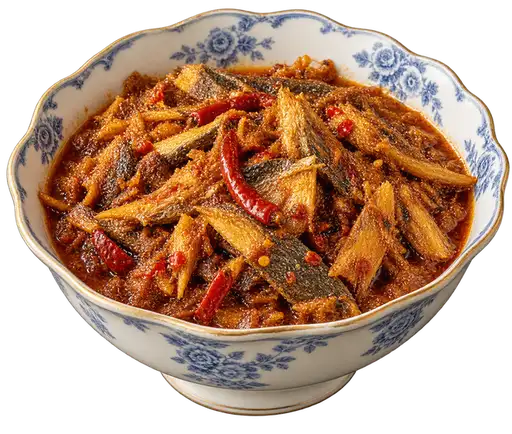 Dried fish curryশুঁটকিDried fish from the same market, soaked and cooked hard with chilli, and it announces itself down the street.
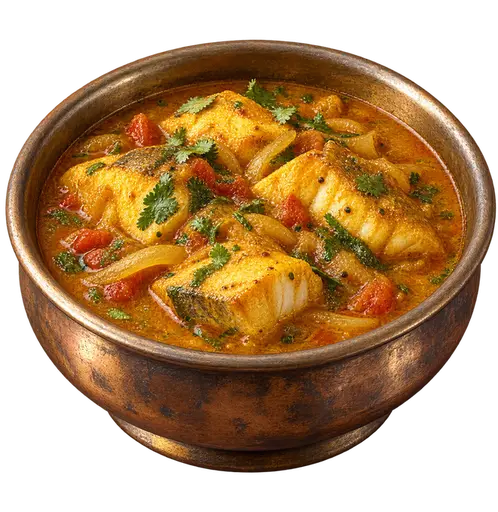 Ship's curryThe galley potThe same cooking done at sea for a crew of forty, which is how these spices crossed to London at all.