Signature flavour · The Mekong Delta · Đồng bằng sông Cửu Long · Vietnam · early 1900s
The Phú Quốc barrelsNước mắm Phú Quốc
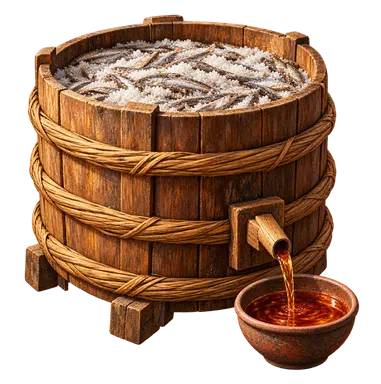
Anchovy and salt in a wooden vat, drawn off a year later.
The story
Nước mắm is made by layering anchovy and salt in a large wooden vat. Over many months the fish dissolve into a clear amber liquid, and the first draw from the tap is kept apart. It is the salt of the Vietnamese table: it seasons the pot, it sits in a small bowl on the table, and thinned with water, lime, sugar, garlic and chilli it becomes nước chấm.
The island's fish sauce has a protected name. In 2012 the European Union registered Phú Quốc as a protected designation of origin for fish sauce. The rules name the island and certain waters around it as the area, so the law draws a boundary around a fishery.
The skill of a barrel house is in the tap. The sauce is drawn off in grades, so the tap is opened for a measured run and closed at exactly the right moment. Mixing the grades wastes the first one.
Today
Phú Quốc fish sauce has had protected status in the European Union since 2012. Producers on the island still ferment anchovies with salt in large wooden vats.
What people make with it
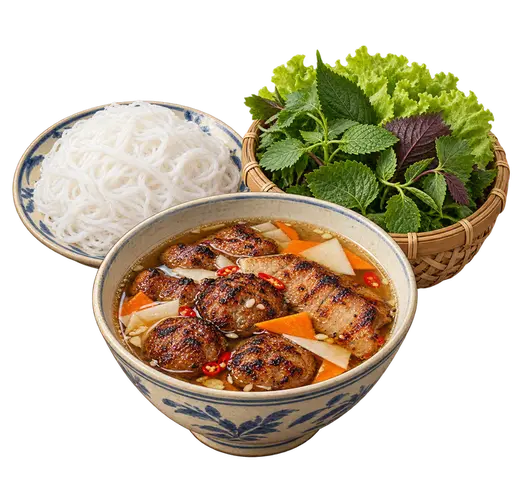 Hanoi grilled pork with vermicelliBún chả Hà NộiCharcoal-grilled pork patties and belly sit in seasoned fish-sauce broth beside cool vermicelli and a large herb basket.
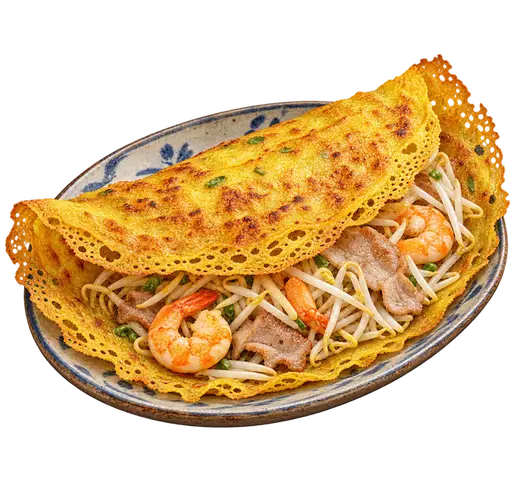
- Mekong sizzling crêpeBánh xèo miền TâyRice-flour and coconut batter swirls around shrimp, pork and bean sprouts, crisping yellow with turmeric.
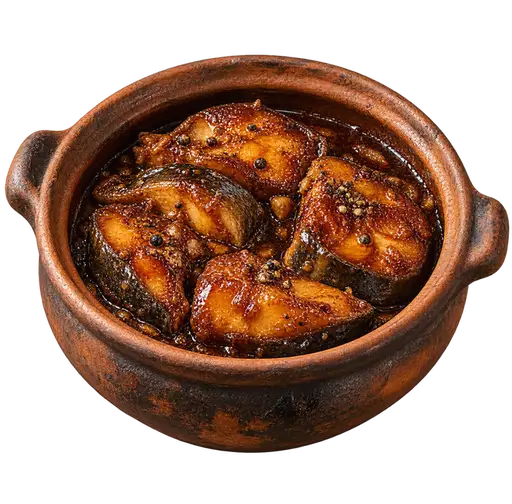 Caramelised fish in a clay potCá kho tộRiver fish simmers with fish sauce, palm sugar and pepper until the clay pot holds a dark glaze.