Ingredient · The central plain · ภาคกลาง · Thailand · around 1900
The sugar palmsตาลโตนด
Up thirty metres of trunk for a cylinder of sap.
The story
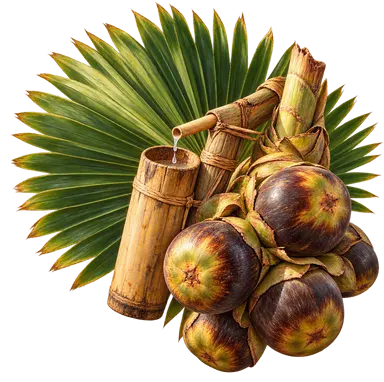
Phetchaburi's toddy palms stand in lines along the field edges, and much of Thailand's palm sugar comes out of the top of them. A worker climbs the trunk on a notched bamboo ladder, thirty metres or more, cuts the flower stalk and ties a bamboo cylinder under it to catch what runs. The cylinders come down twice a day.
The sap is filtered and simmered in a wide flat pan over a wood fire until it thickens, then poured out to set into the soft brown cakes a Thai kitchen measures sugar in. It tastes of caramel and smoke as well as sugar, which is why it seasons savoury dishes too. A palm begins to produce at about fifteen years old and keeps yielding for decades.
The trade was large enough to name a town. After rice, palm sugar was Phetchaburi's biggest business, and the town's own nickname is the City of Three Flavours: palm sugar, sea salt and lime. All three come from the same province, and sweet shops and curry mortars both depend on the first.
Today
Palm sugar is still made by hand in Phetchaburi and Samut Songkhram, where climbers cut the flower stalks for sap.
What people make with it
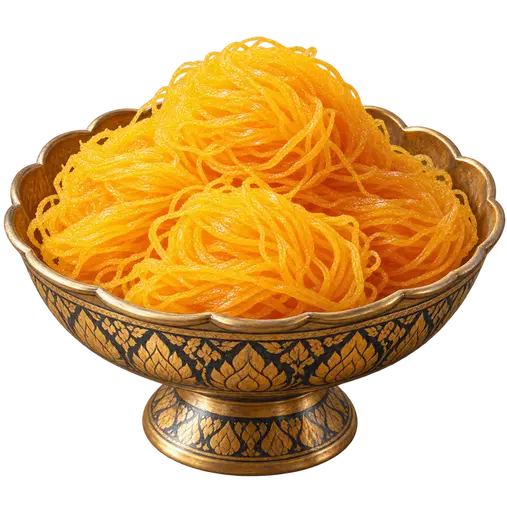 Foi thong · golden egg threadsฝอยทองEgg yolk drawn in threads through a cone into boiling syrup; the Portuguese fios de ovos, made here since Ayutthaya.
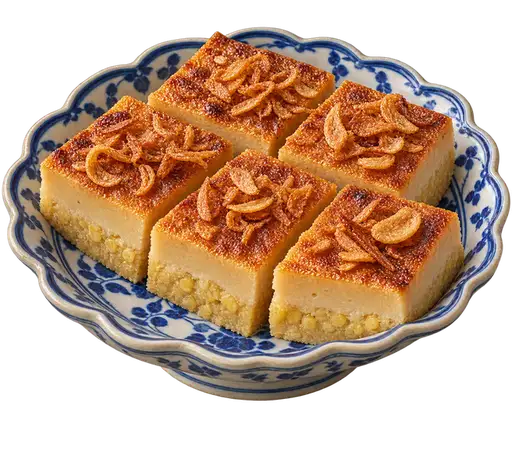 Khanom mo kaeng · baked coconut custardขนมหม้อแกงA baked custard of duck egg, coconut milk and palm sugar over mung bean, browned under fried shallot.
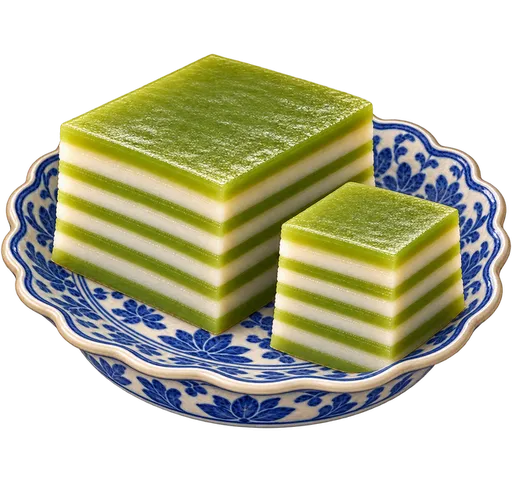 Khanom chan · layered coconut cakeขนมชั้นNine steamed layers of rice flour, coconut milk and palm sugar, peeled apart one layer at a time.